how to get a wedding ring out of a sink drain
A ring that falls down a kitchen or bathroom drain almost always lands in the P-trap — the U-shaped pipe directly below the sink. Knowing how to get a wedding ring out of a sink drain quickly is crucial, because the P-trap holds a small pool of standing water (to block sewer gas), and heavy objects like rings settle to the bottom of that curve. If you act before running more water, the ring is almost certainly still there.
If your sink has a garbage disposal, do NOT turn it on. The ring may be sitting in or just past the grinding chamber, and running the disposal could damage both the ring and the unit.
Tools required to remove a stuck wedding ring
- Bucket or large bowl
- Adjustable pliers or wrench (for slip nuts)
- Flashlight
- Towel
- Gloves (optional)
Step-by-Step: Retrieve the wedding Ring
Step 1: Stop the Water Flow
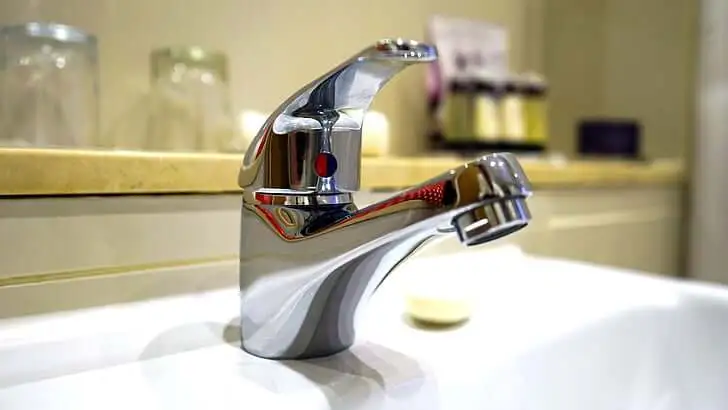
Turn off the faucet. Do not run any more water. Every second of water flow pushes the ring further into the plumbing. If others share the drain line (double bowl sink, dishwasher), stop those too.
Step 2: check if you can see it
Shine a flashlight down the drain. If the ring is visible in the disposal chamber or drain opening, use tongs or needle-nose pliers to grab it. Do not reach into a garbage disposal with your fingers — even with power off, the grind components are sharp-edged.
Step 3: Place a Bucket Under the P-Trap
The P-trap is the curved pipe under the sink. Position a bucket directly beneath it to catch the water (and the ring) when you open it.
Step 4: Remove the P-Trap
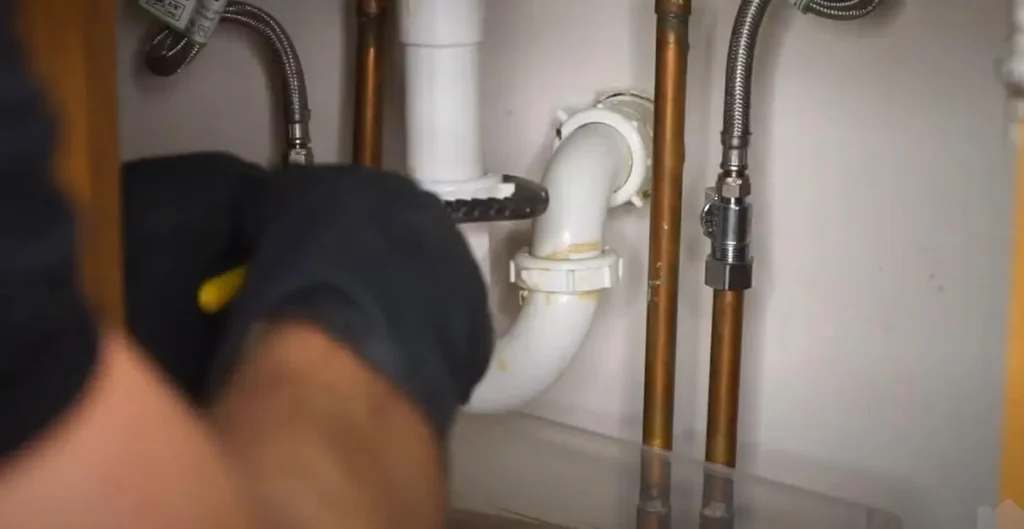
- Loosen the two slip nuts on either end of the curved pipe section — turn counterclockwise
- Most slip nuts can be loosened by hand; use adjustable pliers if they are tight
- Support the pipe with one hand as you loosen the second nut
- Carefully lower the P-trap into the bucket
- Water and debris will pour out — this is normal
Be gentle with PVC pipes — overtightening or forcing the nuts can crack plastic fittings.
Step 5: Find the Ring
Check the P-trap first — the ring is most likely sitting at the bottom of the curve. If it is not there:
- Look inside the pipe stub going into the wall (the horizontal drain line)
- Check the short pipe between the disposal/sink drain and the P-trap
- If your sink has a garbage disposal, the ring may still be inside the grinding chamber
If the ring has passed beyond the P-trap into the wall drain, you may need a flexible retrieval tool (grabber on a cable) or a plumber’s camera to locate it.
Step 6: Reassemble the P-Trap
- Align the P-trap back between the two connection points
- Make sure the washers and gaskets are seated properly
- Hand-tighten both slip nuts, then give a quarter-turn with pliers
- Run water slowly to test for leaks
- If any drip appears, tighten slightly — do not overtighten
Special Case: Ring Fell Into a Garbage Disposal
If the ring fell through the disposal opening and the disposal has not been turned on:
- Turn off power (unplug or switch off breaker)
- Look inside with a flashlight
- If visible, remove with tongs or pliers
- If not visible, it may have passed through to the discharge pipe — remove the P-trap (steps above)
- If the disposal was accidentally turned on with the ring inside, the ring may be damaged or wedged in the grind mechanism. Remove the disposal from the mount to access the chamber fully, or call a plumber.
For disposal removal reference, see our garbage disposal installation guide.
Conclusion
Stop the water, place a bucket under the P-trap, remove the P-trap, and the ring is almost certainly sitting at the bottom of the curve. The entire process takes 10-15 minutes with basic tools. The key is acting immediately — do not run more water, and absolutely do not run the garbage disposal.
FAQ’s
The Author

Muhammad Nabeel Dar is the founder of GarbageWasteDisposal.com, where he researches and evaluates garbage disposals, kitchen sinks, dishwashers, and kitchen drain systems to help homeowners make confident buying decisions.
After analyzing 30+ garbage disposal models, multiple sink configurations, and a wide range of drain system components across brands like InSinkErator, Waste King, Moen, GE, Frigidaire, and KRAUS, he focuses on what actually matters: real-world performance, build quality, noise levels, installation ease, durability, and overall value.