Garbage Disposal Humming? Simple Solutions Inside
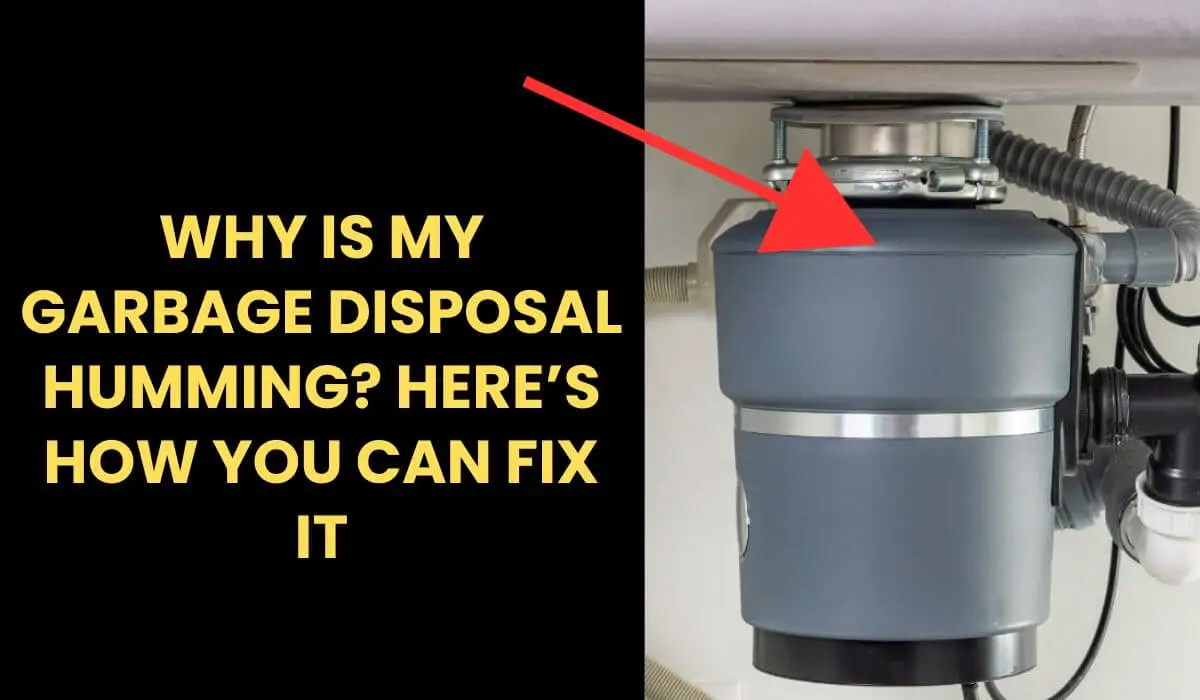
You flip the switch and instead of the usual grinding, the disposal just hums. Steady low buzz, nothing spinning, maybe a faint vibration through the countertop. That sound means one specific thing: the motor is getting electricity but something is physically preventing it from turning.
Turn it off. Right now, if it is still running. A disposal that hums but does not spin is pulling what electricians call locked rotor current. That is three to six times the normal operating amperage flowing through windings that are not moving and not being cooled by rotation. Leave it running for 30 seconds in that state and you can permanently damage the motor. Most disposals have a thermal overload switch that trips before that happens, but do not count on it. Switch it off, and then start diagnosing.
What the Humming Sound Actually Tells You
Not all disposal noises mean the same thing. The specific sound narrows down the cause before you ever look under the sink.
A steady, continuous hum the moment you flip the switch is almost always a jammed flywheel. The motor is energized and trying to spin, but something between the impellers and the grind ring is physically blocking rotation. This is the most common cause and the easiest to fix.
A brief grinding sound followed by humming suggests a partial jam. The flywheel started to turn, hit an obstruction, and stalled. Something is wedged in a position that catches only at certain points in the rotation.
A buzzing noise that pulses or stutters rather than holding steady can point to an electrical issue. A failing capacitor on older disposal models produces this pattern. So does a loose wire connection at the disposal’s terminal block.
Complete silence when you flip the switch is not a humming problem at all. That means no power is reaching the motor. Check the reset button, the GFCI outlet, and the breaker before doing anything else.
The Most Likely Cause: A Jammed Flywheel
Eight out of ten humming disposals have something stuck between the impellers and the grind ring. Bone fragments, fruit pits, broken glass, a small utensil that fell in, or packed fibrous food like celery strings or corn husks. Any of these can lock the flywheel in place.
How to clear it on an InSinkErator disposal
Power off at the switch and the breaker. Get under the sink and find the hex-shaped hole centered on the bottom of the disposal body. Insert a 1/4 inch hex key (the same wrench InSinkErator includes in the box with every unit) and work it back and forth. You are manually rotating the flywheel past the obstruction. Expect resistance at first. Keep working the wrench until it rotates freely through a complete circle. If you do not own a hex key, any 1/4 inch Allen wrench from a hardware store works. Our hex key guide covers the exact process in detail.
How to clear it on a Waste King disposal
Most Waste King models do not have a bottom hex socket. Their jam-clearing method works from above. Power off, reach into the drain opening with a wooden broom handle or thick dowel, press the end against one of the impeller paddles, and push. You are forcing the flywheel to rotate manually from inside the chamber. Never use your hand for this. Always use a tool.
After clearing the jam on either brand, look inside the chamber with a flashlight. Remove any loose debris with tongs or needle-nose pliers. Then press the red reset button on the bottom of the disposal, restore power, run cold water, and test.
The Motor Overheated
If the disposal was humming for a while before you turned it off, the thermal overload may have tripped. The motor got too hot and the built-in safety switch cut power to prevent permanent damage.
Give it 15 to 20 minutes to cool down. Do not try to rush this. The motor housing needs time to dissipate heat before the overload switch will reset. After cooling, press the reset button firmly until you feel it click. If it does not click, the motor has not cooled enough. Wait longer.
Once the reset engages, restore power and test with cold water running. If the disposal runs normally, the problem was heat, not a jam. If it hums again immediately, there is still an obstruction and you need to go back to the hex wrench step.
Check the Electrical Before Assuming the Worst
Sometimes the disposal hums weakly or buzzes without the usual motor vibration. That points away from a mechanical jam and toward a power problem.
Check the GFCI outlet under the sink. Press the reset button on the outlet face. A tripped GFCI can deliver partial power that energizes the motor coil enough to hum but not enough to drive rotation under load.
Check the circuit breaker. Open the panel and find the disposal circuit. If the breaker is in the middle position (not fully on, not fully off), flip it completely off, wait five seconds, and flip it fully on. A breaker in that halfway state can supply inconsistent voltage.
If the disposal is on a shared circuit with other appliances, the startup current draw may be exceeding what the circuit can deliver. This is especially common when a disposal and dishwasher share a 15-amp circuit that should be 20 amps. Our dedicated circuit guide covers the electrical requirements by motor size.
When the Motor Is Actually Failing
You cleared the jam. You reset the overload. You checked every electrical connection. The disposal still just hums.
At that point, the motor itself is the problem. Either the windings have degraded from heat damage (often caused by running the disposal in a locked state too many times), or the bearings have seized from age and corrosion. Both conditions produce the same symptom: power reaches the motor, the motor cannot turn, and all you hear is a hum.
Disposals older than 8 to 10 years with this symptom are almost always done. Motor repair on a garbage disposal is not economically practical because a new mid-range unit costs $80 to $200 and a motor rebuild, if anyone would even do it, costs more than that in labor alone.
Signs the motor has failed rather than jammed: the hex wrench turns freely with no resistance (nothing is blocking the flywheel), but the motor still only hums when powered on. That confirms the problem is electrical inside the motor, not mechanical inside the chamber.
If you are at the replacement stage, our disposal buying guide compares current models across every price range and motor size.
Preventing This From Happening Again
Most jams come from the same handful of mistakes.
Running the disposal without water. Cold water should flow before, during, and for 15 to 20 seconds after grinding. Without water, food paste builds up on the grinding surfaces and eventually hardens into the kind of obstruction that locks the flywheel.
Overloading the chamber. Feed scraps gradually. A cup of food waste at a time, not an entire plate scraped in at once. Overloading packs material between the impellers faster than they can grind it.
Grinding the wrong things. Bones thicker than a chicken wing, fruit pits, shellfish shells, and fibrous vegetables like artichoke leaves and celery strings cause the majority of residential disposal jams. Knowing what not to put in your disposal prevents most humming episodes before they start.
Ignoring partial jams. If the disposal sounds different than usual, slightly slower or slightly louder, something is building up. Run ice and salt through it to clear developing obstructions before they lock the flywheel completely.
The Author

Muhammad Nabeel Dar is the founder of GarbageWasteDisposal.com, where he researches and evaluates garbage disposals, kitchen sinks, dishwashers, and kitchen drain systems to help homeowners make confident buying decisions.
After analyzing 30+ garbage disposal models, multiple sink configurations, and a wide range of drain system components across brands like InSinkErator, Waste King, Moen, GE, Frigidaire, and KRAUS, he focuses on what actually matters: real-world performance, build quality, noise levels, installation ease, durability, and overall value.