InSinkErator Badger 5 Troubleshooting: Fix Every Problem
The InSinkErator Badger 5 is probably the most widely installed budget garbage disposal in the US. Half a horsepower, galvanized steel grind components, continuous feed, 26 oz chamber. It does the job in most kitchens until it doesn’t, and when it stops working the fix is almost always something you can handle yourself in under ten minutes.
This troubleshooting guide is written for the Badger 5 specifically, but the same steps apply to every model in the Badger lineup. The Badger 1, Badger 100, Badger 500, and Badger 900 all share the same basic internal design, mounting system, and reset mechanism. If your Badger disposal is not working regardless of the model number, work through the problems below.
Problem 1: Badger 5 Won’t Turn On (No Sound at All)
Silence when you flip the switch means the motor is not receiving power. The disposal itself might be fine. The problem is usually electrical.
Check the reset button first. It is the small red button on the bottom of the unit. If it has popped outward, the thermal overload tripped. Press it firmly until it clicks back in. Restore power and test.
If the reset button is already flush (not popped out), check the GFCI outlet under the sink. Press the reset button on the outlet face. A tripped GFCI kills power to anything plugged into it.
Still nothing? Check the circuit breaker at the panel. A breaker in the middle position (not fully on, not fully off) looks normal but is actually tripped. Flip it completely off, wait five seconds, flip it fully on.
Test the outlet by plugging in a phone charger or lamp. If that device gets power, the outlet works and the problem is inside the disposal. If the outlet is dead after resetting everything, the issue is wiring between the panel and the outlet, not the disposal.
A Badger 5 that receives power but produces absolutely no sound, no hum, nothing, likely has a failed motor or a broken internal switch. At $80 to $110 for a new unit, repair is not worth the labor cost. Replacement is the practical answer. Our Badger 5 review covers what you are getting if you buy the same model again, and our buying guide covers upgrades if you want something with more power.
Problem 2: Badger 5 Hums but Won’t Spin
TThe motor has power but the grind plate is stuck. This is the most common Badger 5 problem and the easiest to fix.
Turn it off immediately. A humming motor that cannot spin pulls locked rotor current at three to six times the normal amperage. That overheats the windings fast.
The Badger 5 has a 1/4 inch hex socket centered on the bottom of the unit. Insert a 1/4 inch Allen wrench and rock it back and forth. You are manually rotating the grind plate past whatever is jamming it. Work it until it turns a full circle without catching.
Look inside with a flashlight and remove any loose debris with tongs. A bone chip, a fruit pit, a piece of glass, anything hard and loose needs to come out before you run the motor.
Press the reset button. Restore power. Run cold water. Flip the switch. It should spin immediately without hesitation.
If the wrench turns freely but the disposal still only hums, the motor is failing internally. The grind plate is not jammed. The motor cannot drive it. That is a replacement situation.
Problem 3: Badger 5 Not Draining
This one was not in the original guide and it should have been. “Badger garbage disposal not draining” is one of the most common complaints, and the cause is almost never inside the disposal itself.
If the disposal grinds normally but water sits in the sink afterward, the clog is in the discharge pipe or the P-trap below the disposal. Ground food particles, grease buildup, and soap scum accumulate in that section of pipe over weeks and months until gravity drainage slows to a crawl.
Turn off the disposal. Place a bucket under the P-trap. Loosen the slip-joint nut where the discharge tube meets the P-trap and pull the tube free. Check inside it. If it is packed with sludge, clean it with a bottle brush. Remove the P-trap, clean it, reassemble everything, and test.
If the disposal runs but water backs up into the other side of a double sink, the clog is past the point where both drains merge. That is typically in the P-trap or the horizontal branch line behind the wall. Clean the P-trap first. If both sides still back up, the blockage is deeper and may need a plumber with a drain snake.
One specific Badger issue: check whether the dishwasher knockout plug was removed if a dishwasher connects to the disposal. New Badger units ship with a plastic plug blocking the dishwasher inlet. If someone connected the dishwasher hose without knocking out that plug, drainage problems follow. Look inside the chamber with a flashlight for a loose plastic disc.
Problem 4: Badger 5 Leaking
The Badger 5 is a 1/2 HP disposal with galvanized steel grind components (not stainless sWhere the water appears tells you what failed.
Leaking from the top (sink flange area). The plumber’s putty between the sink flange and the sink has dried out and cracked, or the mounting bolts have loosened. Tighten the mounting bolts first. If water still seeps, remove the disposal, scrape off the old putty, apply fresh plumber’s putty around the flange, and remount.
Leaking from the side (dishwasher connection). The hose clamp on the dishwasher inlet is loose or the rubber connection has cracked. Tighten the clamp. If the rubber has cracked, replace the short hose section between the air gap and the disposal inlet.
Leaking from the bottom near the motor housing. The internal seal between the grind chamber and the motor has failed. Water is reaching the motor cavity. This is not repairable on the Badger 5. The seal is not a separately serviceable part. A bottom leak on a Badger unit older than 4 to 5 years means replacement.
Problem 5: Weak Grinding or Food Not Processing
The Badger 5 uses galvanized steel grind components, not stainless steel. Galvanized steel is cheaper but wears faster and corrodes more aggressively, especially with acidic foods like citrus, tomato sauce, and vinegar-based scraps.
After 3 to 5 years of regular use, the galvanized grind ring’s cutting edges wear smooth and the impellers lose their effective profile. Grinding slows. Food particles come through larger than they should. The disposal sounds like it is working but the output quality declines.
Before assuming the components are worn, try the ice and salt cleaning method. One cup of ice cubes, half a cup of coarse rock salt, cold water, run the disposal until the ice is gone. Starch and grease buildup in the grind ring grooves mimics worn components. Cleaning the ring restores performance if buildup was the problem.
If grinding remains weak after cleaning and the unit is more than 3 years old, the galvanized components are genuinely worn. Upgrading to a disposal with stainless steel grinding components (any 3/4 HP or larger InSinkErator Evolution model, or a Waste King L-series) extends component life from 3 to 5 years to 8 to 12 years.
Problem 6: Excessive Noise or Vibration
A sudden loud rattling during operation is almost always a hard object bouncing around inside the chamber. Turn off the disposal, kill the breaker, and check inside with a flashlight. Coins, screws, bottle caps, and small utensils are the usual suspects. Remove with tongs.
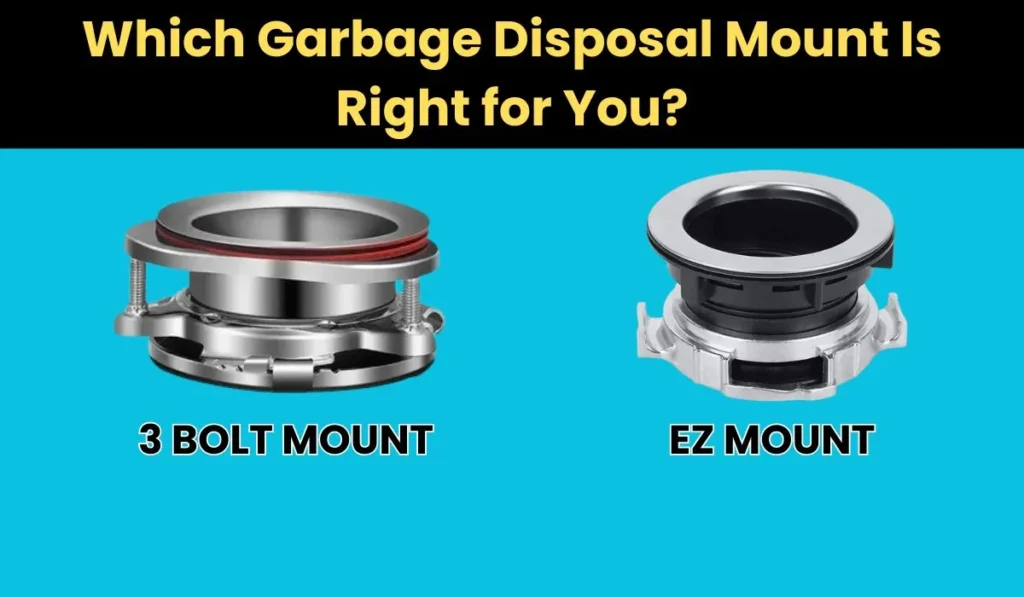
If the disposal rattles with an empty chamber, check whether the mounting hardware has loosened. Vibration over time can work the mounting ring loose, which allows the disposal body to shift slightly during operation. Tighten the mounting ring by inserting a screwdriver into the mounting lug and rotating clockwise until it seats firmly against the flange.
Persistent noise from the motor itself on a Badger 5 older than 6 to 7 years points to worn motor bearings. The bearings are not replaceable on this model. Noise from worn bearings gets progressively worse and eventually the motor seizes.
Problem 7: Bad Smell
Food buildup inside the chamber, under the splash guard, and in the grind ring grooves is the source. The Badger 5’s galvanized surfaces hold onto food residue more readily than stainless steel surfaces do because galvanized steel has a rougher microscopic texture.
The fix is the same four-step process as any disposal: scrub the splash guard, grind ice and salt, flush with baking soda and vinegar, finish with citrus peels. Do this monthly. Run cold water for 15 to 20 seconds after every use to prevent residue from building up between cleanings.
How to Reset a Badger 5 Garbage Disposal
The reset button is on the bottom of the unit. Small, red, slightly recessed. When the thermal overload trips from a jam, overheating, or power surge, this button pops outward.
Wait 15 to 20 minutes if the motor was running hot. Press the button firmly until it clicks. That click means the internal circuit reconnected. If it does not click, the motor has not cooled enough. Wait longer.
The reset does not fix the cause. It restores power after the cause is addressed. If the disposal jammed, clear the jam first, then reset. If you just reset without clearing, it will trip again within seconds.
FAQ’s
The Author

Muhammad Nabeel Dar is the founder of GarbageWasteDisposal.com, where he researches and evaluates garbage disposals, kitchen sinks, dishwashers, and kitchen drain systems to help homeowners make confident buying decisions.
After analyzing 30+ garbage disposal models, multiple sink configurations, and a wide range of drain system components across brands like InSinkErator, Waste King, Moen, GE, Frigidaire, and KRAUS, he focuses on what actually matters: real-world performance, build quality, noise levels, installation ease, durability, and overall value.