Garbage Disposal Blades Loose? What Is Normal and What Is Not
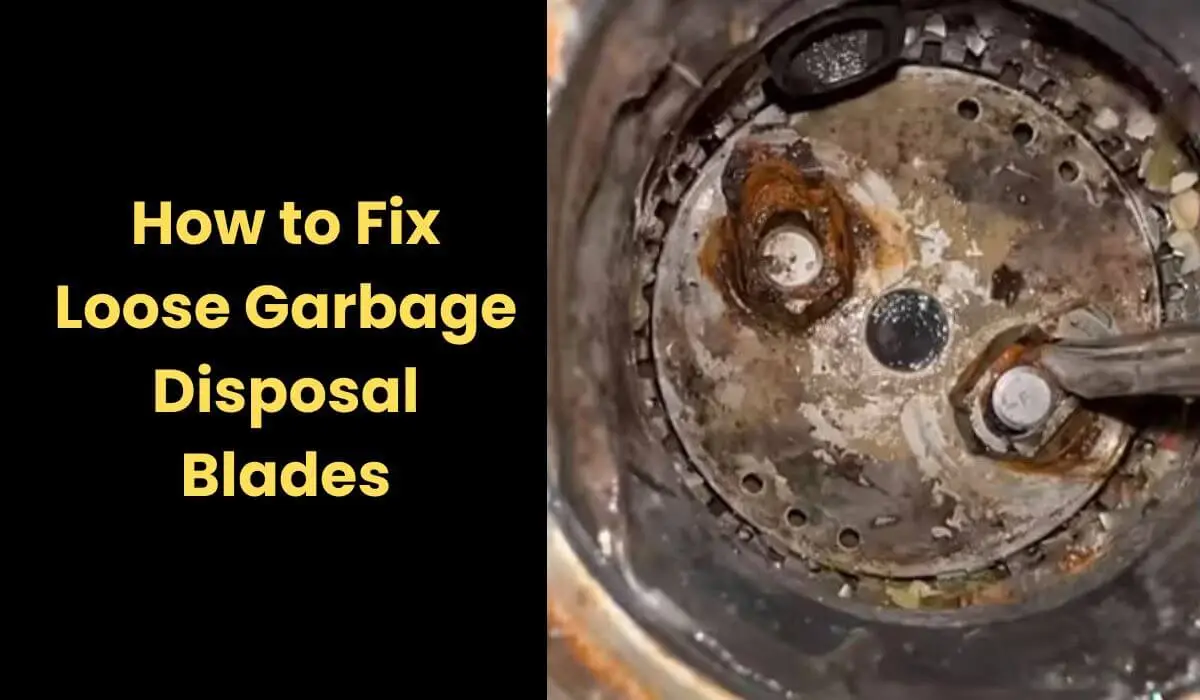
First thing to clear up: garbage disposals do not have blades. What you see when you look down into the drain opening are two small metal arms called impellers mounted on a spinning plate called the flywheel. Those impellers swing freely on their pivot pins by design. Wiggle one with a wooden spoon (never your fingers) and it should move side to side easily. That looseness is not a defect. It is how the disposal works.
When the motor spins the flywheel, centrifugal force throws the impellers outward. The impellers fling food against the grind ring, which is the stationary textured ring fixed to the inner wall of the chamber. The grind ring is the part that actually shreds food. The impellers do not cut anything. They redirect.
So if you searched “garbage disposal blades loose” because you reached in and felt the impellers wobble, there is a strong chance nothing is actually wrong. But if you are hearing rattling, metallic clanking, or noticing weaker grinding performance, something else is going on. Here is how to figure out what.
How Many Blades Does a Garbage Disposal Have
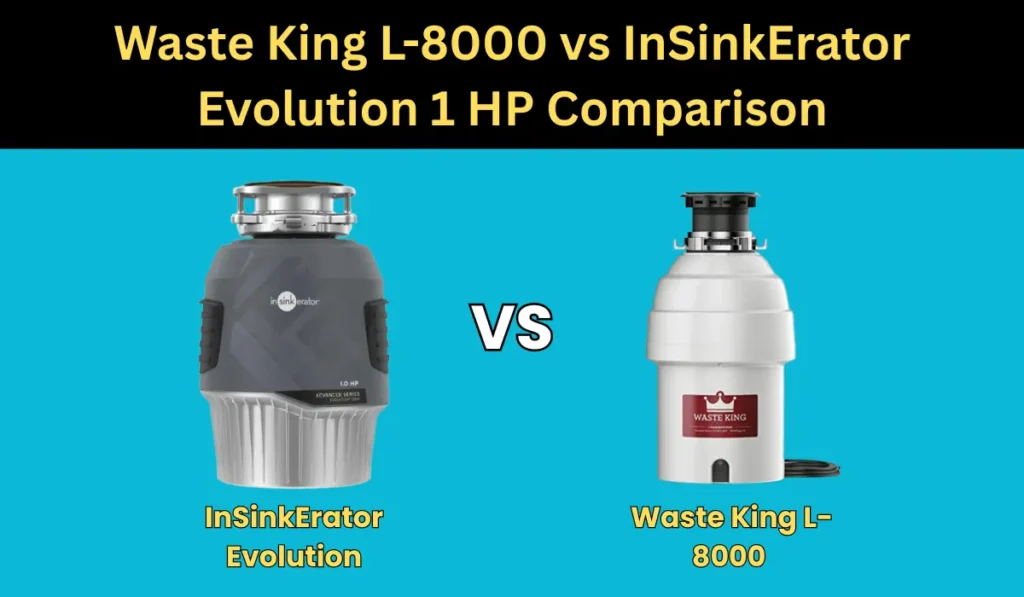
Most residential garbage disposals have two impellers. Some commercial and high-end models use three. The number does not significantly affect grinding quality because the impellers are not cutting surfaces. The grind ring does the actual work. Two impellers spinning at 1,725 RPM (InSinkErator) or 2,800 RPM (Waste King) generate plenty of centrifugal force to fling food against the ring effectively.
Normal Loose vs Something Is Wrong
Here is how to tell the difference without guessing.
Normal: The impellers swing side to side on their pivot pins with light pressure. They have horizontal play. They may rattle slightly when you tap them. This is correct behavior. Do nothing.
Not normal: An impeller has significant vertical play, meaning it lifts up and down off the flywheel surface rather than just swinging side to side. That means the pivot pin or rivet holding it to the flywheel has worn through. On most residential disposals, the impellers are riveted or press-fit onto the flywheel plate. They are not designed to be tightened by the homeowner. If one has enough vertical play to hit the chamber walls or fall flat against the plate, the disposal is approaching replacement territory.
Not normal: The entire flywheel wobbles on the motor shaft. Not the impellers. The plate itself. If you turn the flywheel using a 1/4 inch Allen wrench from the bottom and feel the whole plate shifting or tilting, the connection between the flywheel and the motor shaft has failed. That is not repairable on consumer disposals. Replace the unit.
What the Sounds Actually Mean
Most people searching for “loose garbage disposal blades” are reacting to a noise, not a physical inspection. The sound tells you more than wiggling the impellers does.
Metallic rattling or clanking during grinding is almost always a hard foreign object bouncing around inside the chamber. A bone fragment, a piece of glass, a small utensil, a screw that fell off something. Turn the disposal off immediately, power it down at the breaker, and use a flashlight and tongs to remove the object. This is not a loose impeller. It is debris.
Grinding metal on metal sound suggests an impeller is contacting the chamber wall or the grind ring at an angle it should not. This happens when an impeller has been bent from impact with a hard object or when the pivot has worn enough to let the arm drop into a position where it scrapes during rotation. If straightening the impeller with pliers (power OFF, use the breaker not just the switch) does not resolve the scraping, the impeller is damaged beyond simple adjustment.
Weak grinding performance with no unusual sounds is rarely an impeller problem. It is almost always a clogged or worn grind ring. Starch from pasta, rice, and potatoes accumulates in the grind ring’s cutting edges over time and reduces their effectiveness. The ice and salt cleaning method directly addresses this. One cup of ice cubes, half a cup of coarse rock salt, cold water, run the disposal until the ice is fully crushed. The ice shatters against the grind ring and the salt abrades the starch buildup off the cutting edges. This is what people mean when they say “sharpening” garbage disposal blades. You are not sharpening anything. You are cleaning the grind ring.
How to Fix an Impeller That Is Stuck or Positioned Wrong
Sometimes an impeller gets knocked into an odd angle by a hard impact and stays there instead of swinging freely. Food or debris packed under the impeller arm can also hold it in a position where it does not swing properly.
Power off at the breaker, not just the wall switch. Look inside with a flashlight. Use tongs to push each impeller side to side. If one is stuck, check underneath it for packed debris. A small piece of bone or a fruit pit wedged under the arm is the most common cause.
If the impeller moves freely after removing the debris, rotate the flywheel manually with the Allen wrench from the bottom to verify smooth operation. Press the reset button, restore power, run cold water, and test. If the disposal sounds normal and grinds effectively, the fix worked.
If the impeller moves freely but hangs at an odd angle and scrapes during operation, it has been bent. Use needle-nose pliers to gently reposition it (power OFF). If it will not hold its corrected position, the pivot is worn and the disposal needs replacing.
Can You Sharpen Garbage Disposal Blades?
No. And you do not need to.
The impellers are blunt metal arms. They were never sharp. Their job is to fling, not to cut. The grind ring has textured cutting edges that do the actual shredding, and those edges do not get sharpened either.
When people talk about “sharpening” a garbage disposal, what they actually mean is cleaning the grind ring with ice to restore grinding performance. The ice method works not because it sharpens metal but because it removes the buildup of starch, grease, and food paste that fills the grind ring’s cutting grooves over time. Clean grooves grip and shred food effectively. Clogged grooves let food slide past.
Run ice and salt through the disposal monthly. That maintains the grind ring’s performance without any sharpening.
Can You Replace Garbage Disposal Impellers
On most residential models, no. The impellers on InSinkErator, Waste King, and Moen disposals are riveted or press-fit onto the flywheel plate during manufacturing. They are not sold as separate replacement parts by any major residential brand. Attempting to drill out rivets and reattach new impellers risks damaging the flywheel balance and creating a disposal that vibrates violently during operation.
Some plumbing forums describe homeowners who have attempted impeller replacement with mixed results. The general consensus among repair professionals: if the impeller is damaged or worn enough to cause problems, replacing the entire disposal is more cost-effective and safer than attempting an impeller-level repair on a $100 to $300 appliance. A new mid-range disposal costs less than a plumber’s hourly rate for a repair that may not hold.
For help choosing a replacement if you have reached that point, our garbage disposal buying guide compares current models across every price tier.
FAQ’s
The Author

Muhammad Nabeel Dar is the founder of GarbageWasteDisposal.com, where he researches and evaluates garbage disposals, kitchen sinks, dishwashers, and kitchen drain systems to help homeowners make confident buying decisions.
After analyzing 30+ garbage disposal models, multiple sink configurations, and a wide range of drain system components across brands like InSinkErator, Waste King, Moen, GE, Frigidaire, and KRAUS, he focuses on what actually matters: real-world performance, build quality, noise levels, installation ease, durability, and overall value.