Sink Only Drains When Garbage Disposal Is On?
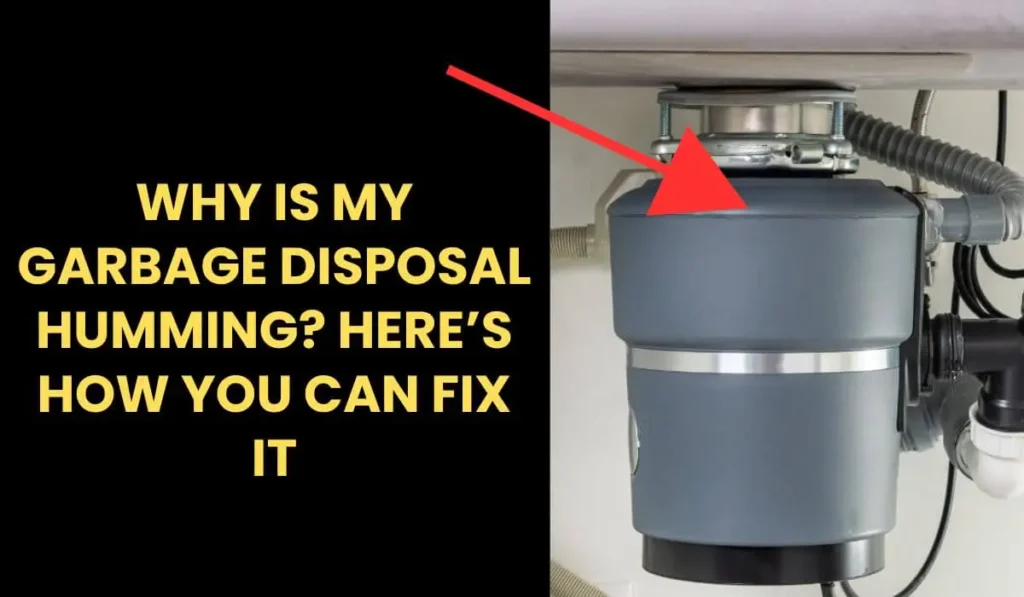
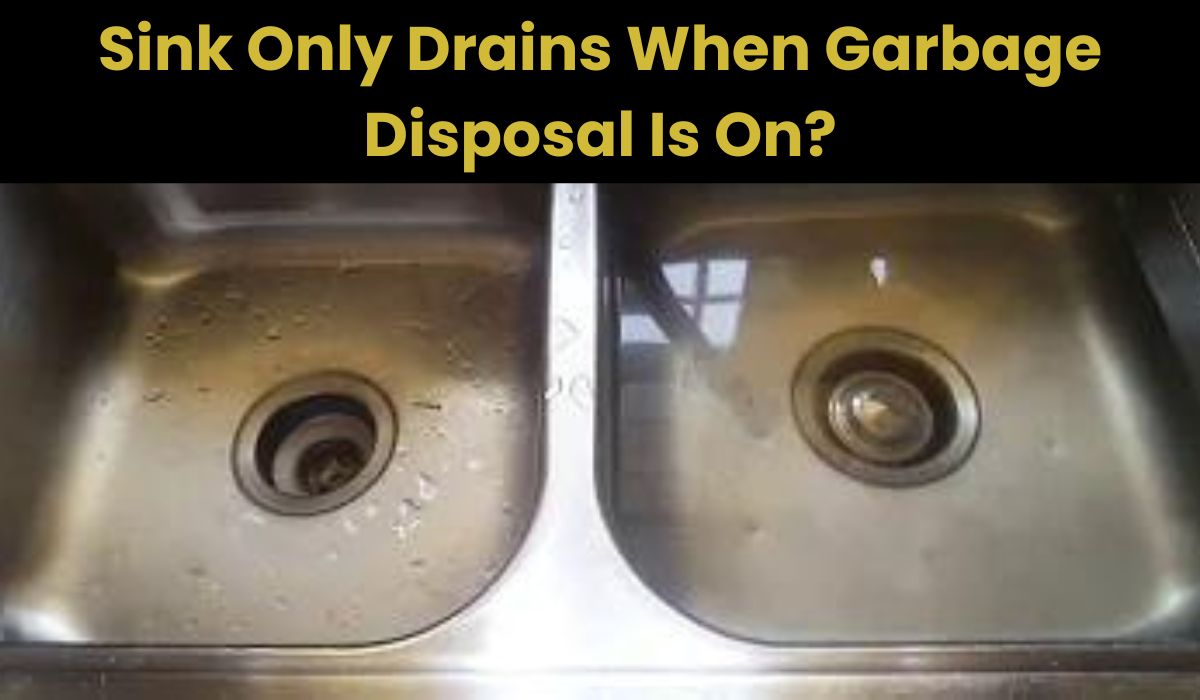
The disposal turns on, water drains. The disposal turns off, water sits. If your kitchen sink only drains when the garbage disposal is running, the disposal itself is not clogged. The motor and impellers are working fine. The problem is somewhere between the disposal’s discharge pipe and the main drain line.
What is happening: when the disposal runs, the spinning impellers create enough force to push water through a partial blockage that gravity alone cannot clear. The moment the motor stops, that driving force disappears, and the water just sits there because the obstruction is still restricting the pipe.
This is a different problem from a disposal that will not grind or a disposal that hums but does not spin. The motor works. The drain does not.
What Causes This Specific Problem
Before you start the process of unclogging your kitchen sink, you need to determine if yThe blockage is almost always in one of three places.
The discharge pipe between the disposal and the P-trap. This short section of pipe collects a paste of grease, food residue, and soap scum over time. The buildup narrows the pipe diameter until gravity flow alone cannot push water through. The disposal’s motor force overcomes the restriction, but passive draining does not.
The P-trap itself. The curved pipe section under the sink is designed to hold water as a sewer gas seal. It is also the most common point where debris accumulates. Grease and food particles settle at the bottom of the curve and gradually reduce flow capacity.
The horizontal drain line behind the wall. If neither the discharge pipe nor the P-trap is the problem, the clog is further down in the horizontal branch line that connects your sink to the main drain stack. This is the hardest to reach and the one most likely to need professional clearing.
If you have a double sink and both sides are backed up, the blockage is probably past the point where the two drains merge, which is typically at or beyond the P-trap. A clog affecting only the disposal side points to the discharge pipe specifically.
How to Fix It Step by Step
Work from closest to the disposal outward. The first fix resolves most cases.
Step 1: Clear the discharge pipe
Turn off the disposal at the switch and the breaker. Place a bucket under the P-trap connection. Loosen the slip-joint nut where the disposal’s discharge tube connects to the P-trap. Pull the discharge tube free and check inside it. If it is caked with grease or food paste, clean it out with a bottle brush or run water through it in a separate sink. Reassemble, run water, and test without the disposal running. If water drains by gravity, the problem was this pipe.
Step 2: Clean the P-trap
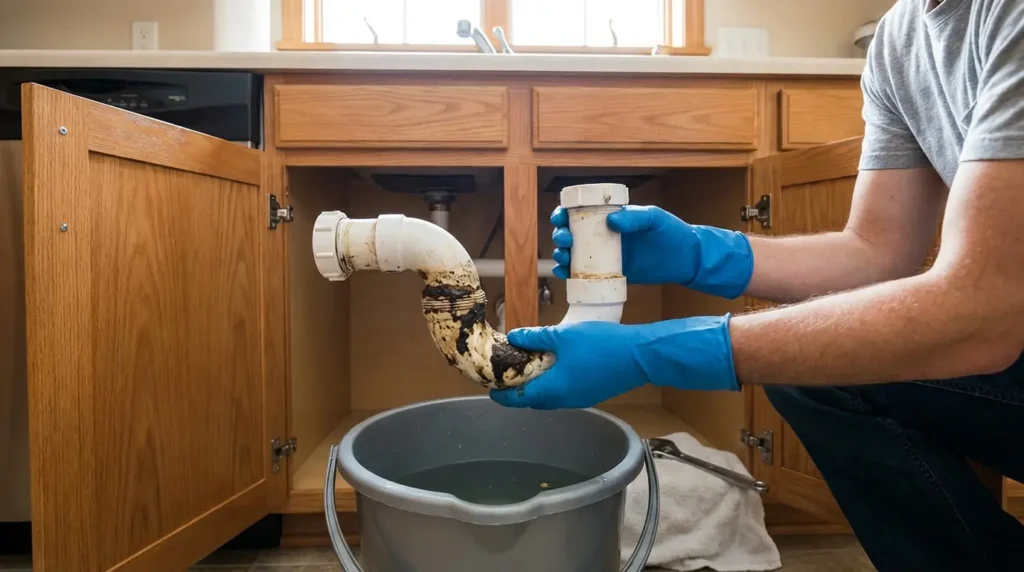
If the discharge pipe was clear, the P-trap is next. With the bucket still in place, loosen the slip nuts on both ends of the P-trap and remove it. Inspect the inside. Rinse and scrub it thoroughly. Packed grease in the bottom curve of the trap is the most common finding. Reassemble, test again.
Step 3: Check for the knockout plug
This one catches people who recently connected a dishwasher to the disposal. New disposals ship with a plastic knockout plug blocking the dishwasher inlet port. If you connected a dishwasher drain hose without removing that plug, it can partially block the disposal’s discharge flow. Look inside the disposal chamber with a flashlight for a loose plastic disc. If you see one, remove it with pliers. If the dishwasher was recently connected and drainage problems started around the same time, this is likely the cause.
Step 4: Try a Sink plunger
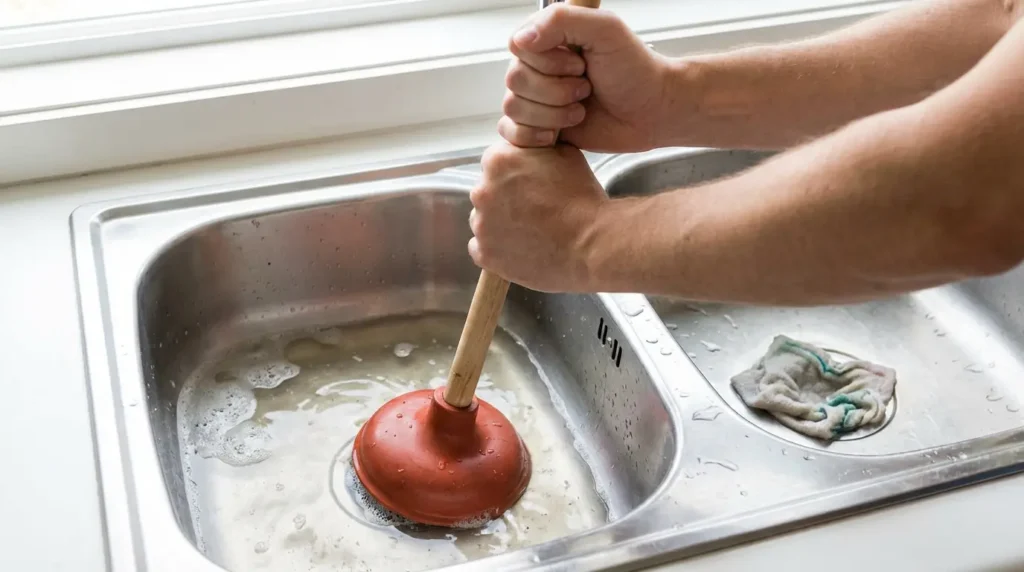
If the clog is past the P-trap in the horizontal branch line, a sink plunger can sometimes dislodge it. Fill the sink basin with a few inches of water. If you have a double sink, seal the other drain with a wet cloth or stopper so the pressure does not escape through the opposite side. Place the plunger firmly over the disposal drain opening and plunge vigorously for 15 to 20 seconds. Check whether the water drains under gravity afterward.
Step 5: Use baking soda and vinegar

Pour half a cup of baking soda into the drain, followed by one cup of white vinegar. Let the mixture fizz for 15 to 30 minutes. Flush with hot water. This works best for light to moderate organic buildup in the drain line past the P-trap. It will not clear a heavy grease blockage or a solid obstruction.
Step 6: Call a plumber for deeper blockages
If none of the above clears the problem, the clog is deep in the horizontal drain line or at the connection to the main stack. A plumber with a drain snake or hydro-jetting equipment can reach what you cannot. This is not a failure of your troubleshooting. Some blockages are simply out of DIY reach.
Why This Problem Keeps Coming Back
If your sink repeatedly clogs in the same spot, the cause is almost always a habit, not a defect.
Running hot water during grinding liquefies grease that resolidifies deeper in the pipe. Cold water during grinding keeps fats solid so the disposal can process them properly.
Shutting the water off the moment grinding stops leaves food particles sitting in the discharge pipe. Run cold water for 15 to 20 seconds after every use to flush everything past the P-trap.
Putting the wrong things into the disposal accelerates buildup. Coffee grounds, eggshell membrane, and fibrous vegetables like celery create a compacting sludge that narrows pipes faster than normal food waste. Knowing what to keep out of the disposal prevents most recurring clogs.
Keeping your sink drain and P-trap cleaned periodically prevents buildup from reaching the point where gravity drainage fails.
FAQ’s
The Author

Muhammad Nabeel Dar is the founder of GarbageWasteDisposal.com, where he researches and evaluates garbage disposals, kitchen sinks, dishwashers, and kitchen drain systems to help homeowners make confident buying decisions.
After analyzing 30+ garbage disposal models, multiple sink configurations, and a wide range of drain system components across brands like InSinkErator, Waste King, Moen, GE, Frigidaire, and KRAUS, he focuses on what actually matters: real-world performance, build quality, noise levels, installation ease, durability, and overall value.