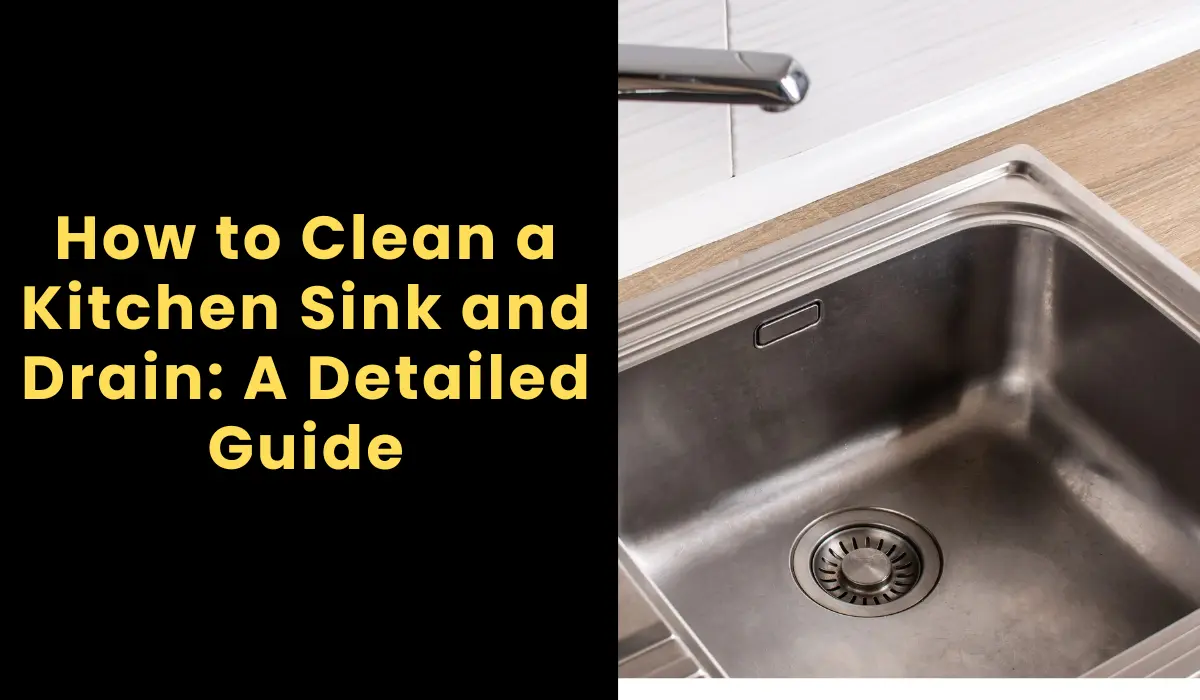
How to Clean a Kitchen Sink and Drain: A Detailed Guide
Your kitchen sink handles raw meat, dirty dishes, and food scraps every day. Studies show kitchen sinks harbor more bacteria than most bathroom surfaces. Weekly deep cleaning and daily rinsing keep it sanitary, odor-free, and looking good.
This detailed guide shows you exactly how to clean a kitchen sink and drain, no matter what material it’s made from.
Why Cleaning Your Kitchen Sink Matters
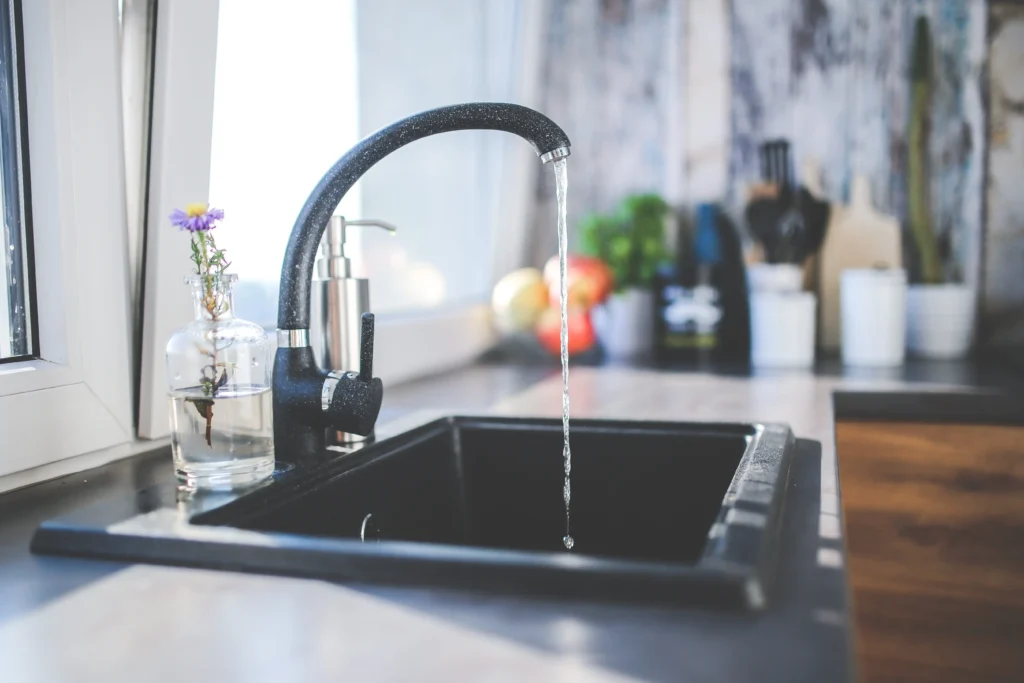
Your kitchen sink harbors more bacteria than you might think. Studies show that kitchen sinks can contain more germs than toilet seats. Food particles accumulate in the drain and around the faucet, creating a breeding ground for harmful bacteria like E. coli and salmonella.
Regular cleaning prevents these health risks. It also stops dirt and grime from building up into stubborn stains. A clean sink makes your entire kitchen look better and feel more inviting.
Odors are another major concern. Decomposing food particles in your drain create foul smells that spread throughout your kitchen. These odors can make cooking and eating less enjoyable, even affecting your appetite.
What You Need to Clean Your Kitchen Sink
- Baking soda
- White vinegar (do not use on porcelain or cast iron)
- Dish soap
- Non-abrasive sponge
- Microfiber cloth
- Old toothbrush (for faucet crevices)
- Rubber gloves
How to Clean a Kitchen Sink: Step-by-Step Guide
This method works for most sink types, especially stainless steel and white ceramic sinks. Follow these steps for a thorough weekly cleaning.
STEP 1: ADD CLEANERS & START SCRUBBING
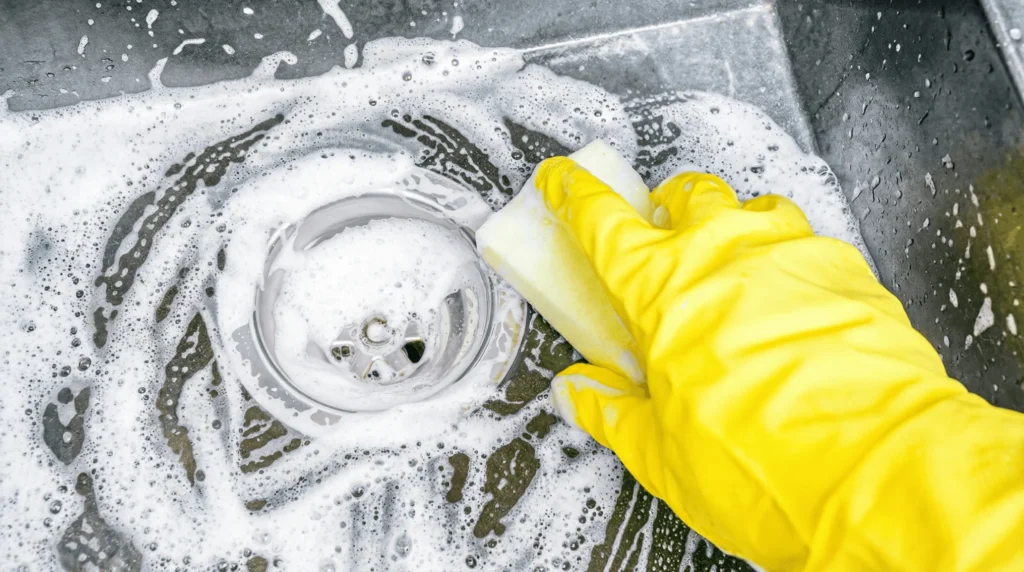
Sprinkle baking soda generously over the sides and bottom of your sink. Add hot water and dish soap to your sponge. Starting with the sides, scrub the sink and work your way down toward the drain.
If your sink is stainless steel, wipe in the direction of the grain to prevent streaks and scratches. For extra shine, consider using affresh® stainless steel brightener to restore your stainless steel to a brilliant finish. Don’t forget to scrub the faucet and handles with your soapy sponge, using an old toothbrush for hard-to-reach areas.
STEP 2: RINSE
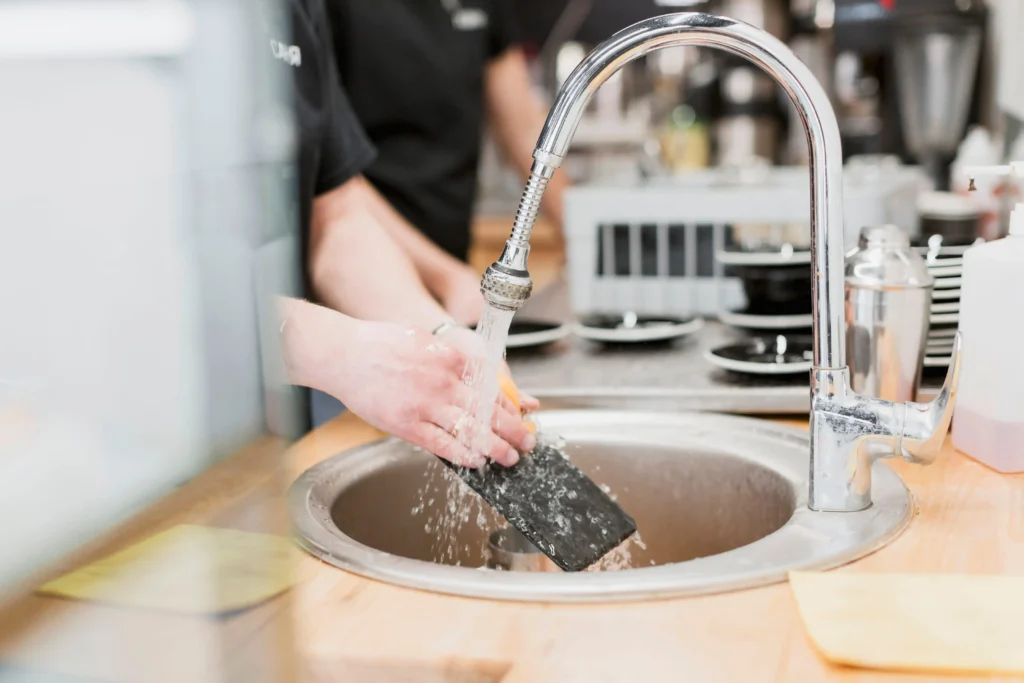
Thoroughly rinse your sink with hot water. Make sure to wash away all leftover baking soda and dish soap. Run the water for at least 30 seconds to flush debris down the drain.
Check all areas of the sink to ensure no cleaning product remains. Any residue left behind will create water spots or attract more dirt.
STEP 3: DRY
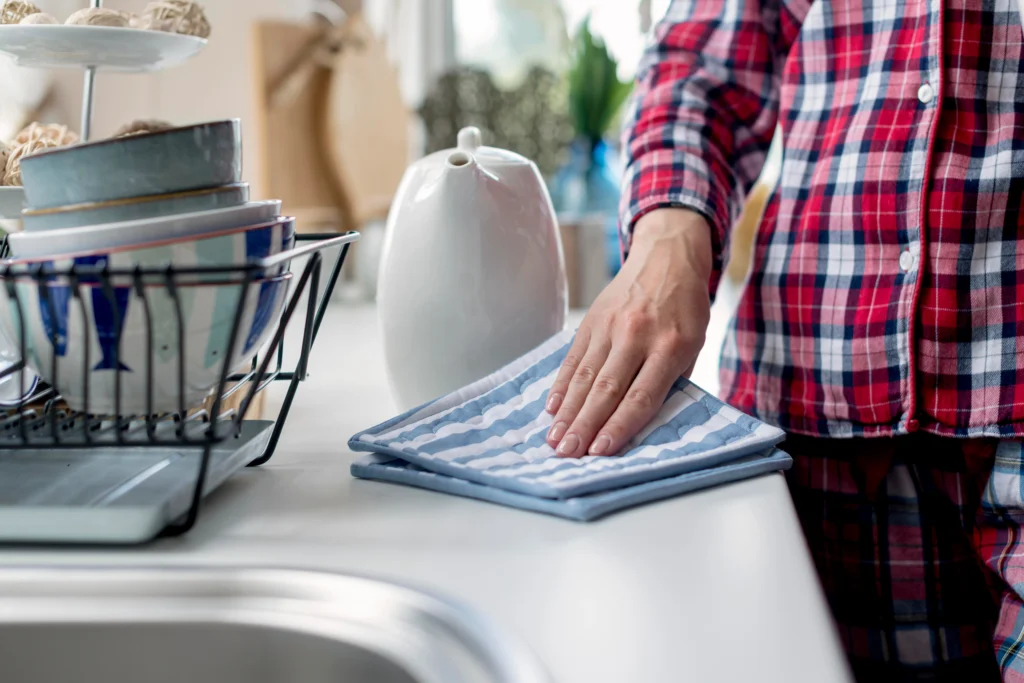
Dry your sink immediately with a microfiber cloth to reduce the chance of leaving behind water spots. For stainless steel sinks, dry in the direction of the grain for a streak-free, professional finish.
Make sure to dry the faucet, handles, and sink rim as well. This final step keeps your sink looking sparkling clean and prevents mineral deposits from forming.
How to Clean Your Kitchen Sink Drain
A clean sink means nothing if your drain smells bad. Regular drain cleaning prevents clogs and eliminates odors.
Baking Soda + Vinegar Method
- Pour 1 cup baking soda directly into the drain
- Pour 1 cup white vinegar immediately after
- Cover the drain with a stopper or wet cloth
- Wait 15 minutes
- Flush with boiling water for 30 seconds
Do this monthly to prevent buildup and eliminate drain odors.
If You Have a Garbage Disposal
Your disposal needs its own cleaning routine. Grinding ice cubes, baking soda + vinegar, and citrus peels keep it fresh. For the full guide, read how to clean a garbage disposal.
Daily Maintenance (1 Minute)
After each heavy use:
- Rinse the sink with hot water
- Wipe down with a sponge and dish soap
- Dry with a cloth
This prevents food particles from sitting and decomposing. A quick daily wipe eliminates 90% of odor and bacteria issues.
Conclusion
Weekly deep cleaning (baking soda + scrub + rinse + dry) and daily rinse-and-wipe maintenance keep your kitchen sink sanitary and odor-free. Clean the drain monthly with baking soda and vinegar. Avoid harsh chemicals on all sink materials. For disposal-specific cleaning, see our disposal cleaning guide.
FAQ’s
The Author

Muhammad Nabeel Dar is the founder of GarbageWasteDisposal.com, where he researches and evaluates garbage disposals, kitchen sinks, dishwashers, and kitchen drain systems to help homeowners make confident buying decisions.
After analyzing 30+ garbage disposal models, multiple sink configurations, and a wide range of drain system components across brands like InSinkErator, Waste King, Moen, GE, Frigidaire, and KRAUS, he focuses on what actually matters: real-world performance, build quality, noise levels, installation ease, durability, and overall value.