How to Clean a Kitchen Sink and Drain: A Detailed Guide
Your kitchen sink sees more action than almost any other surface in your home. From washing vegetables to rinsing dirty dishes, it’s constantly exposed to food particles, grease, and bacteria. A dirty sink doesn’t just look bad—it can spread germs throughout your kitchen and create unpleasant odors that affect your entire home.
Keeping your kitchen sink clean doesn’t require expensive products or hours of scrubbing. With the right techniques and a simple weekly routine, you can maintain a sparkling clean sink that looks great and stays hygienic.
This detailed guide shows you exactly how to clean a kitchen sink and drain, no matter what material it’s made from. You’ll learn professional cleaning methods, discover the best products to use, and get expert tips for preventing future buildup.
Why Cleaning Your Kitchen Sink Matters
Your kitchen sink harbors more bacteria than you might think. Studies show that kitchen sinks can contain more germs than toilet seats. Food particles accumulate in the drain and around the faucet, creating a breeding ground for harmful bacteria like E. coli and salmonella.
Regular cleaning prevents these health risks. It also stops dirt and grime from building up into stubborn stains. A clean sink makes your entire kitchen look better and feel more inviting.
Odors are another major concern. Decomposing food particles in your drain create foul smells that spread throughout your kitchen. These odors can make cooking and eating less enjoyable, even affecting your appetite.
How Often Should You Clean Your Kitchen Sink?
The frequency of cleaning depends on how much you use your sink. Most households should deep clean their kitchen sink at least once a week. This weekly cleaning removes buildup before it becomes a problem.
Daily maintenance is also important. Give your sink a quick rinse and wipe-down after heavy use or meal preparation. This takes just a minute but prevents food particles from sitting and decomposing.
And if you cook frequently with meat, dairy, or fish, you’ll need more frequent cleaning. These foods leave behind proteins and fats that attract bacteria quickly. Consider cleaning your sink 2-3 times per week if you prepare these foods regularly.
What You Need to Clean Your Kitchen Sink
You don’t need expensive specialty cleaners for most sink cleaning tasks. Common household products work effectively and cost less. Here’s what you should have on hand.
Cleaning Supplies
- Baking soda: This mild alkali cuts through grease and eliminates odors without scratching. It’s safe for all sink materials.
- Dish soap: Designed to cut food grease, dish soap is perfect for daily sink cleaning.
- White vinegar: The acidity dissolves mineral deposits and grime (avoid on porcelain, ceramic, and cast iron).
- Lemon: Natural acid for removing stains and freshening (avoid on acid-sensitive materials).
- affresh® stainless steel brightener: For restoring shine to stainless steel sinks (most commenly used kitchen sinks) (available on Amazon)
Cleaning Tools
- Rubber gloves: Protect your hands during cleaning.
- Microfiber cloths: These don’t scratch and dry without leaving water spots.
- Non-abrasive sponge: For scrubbing without damaging sink surfaces.
- Old toothbrush: Perfect for cleaning around faucets and hard-to-reach areas.
- Soft-bristle brush: For gentle scrubbing of textured sink surfaces.
How to Clean a Kitchen Sink: Step-by-Step Guide
This method works for most sink types, especially stainless steel and white ceramic sinks. Follow these steps for a thorough weekly cleaning.
STEP 1: ADD CLEANERS & START SCRUBBING
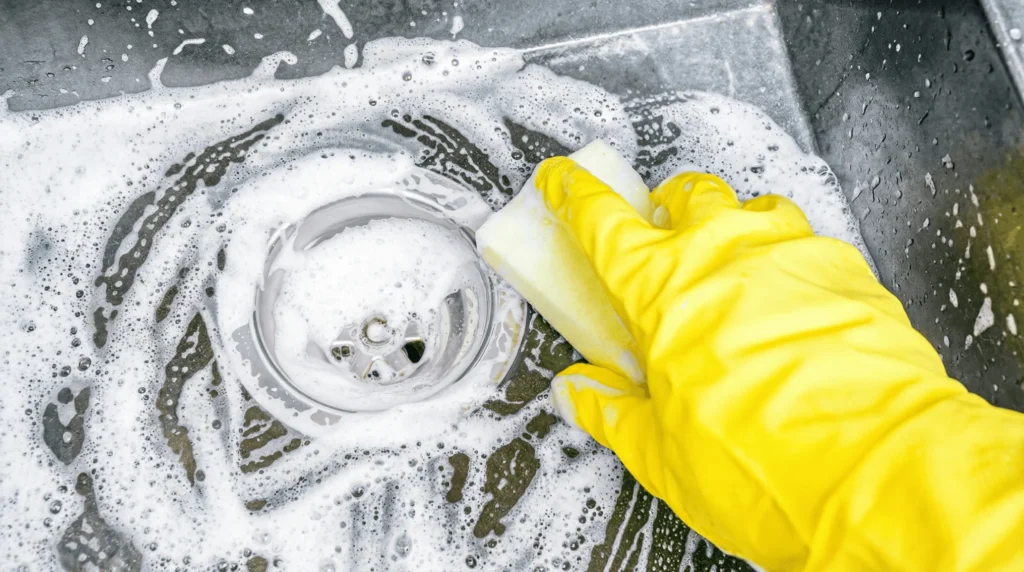
Sprinkle baking soda generously over the sides and bottom of your sink. Add hot water and dish soap to your sponge. Starting with the sides, scrub the sink and work your way down toward the drain.
If your sink is stainless steel, wipe in the direction of the grain to prevent streaks and scratches. For extra shine, consider using affresh® stainless steel brightener to restore your stainless steel to a brilliant finish. Don’t forget to scrub the faucet and handles with your soapy sponge, using an old toothbrush for hard-to-reach areas.
STEP 2: RINSE

Thoroughly rinse your sink with hot water. Make sure to wash away all leftover baking soda and dish soap. Run the water for at least 30 seconds to flush debris down the drain.
Check all areas of the sink to ensure no cleaning product remains. Any residue left behind will create water spots or attract more dirt.
STEP 3: DRY
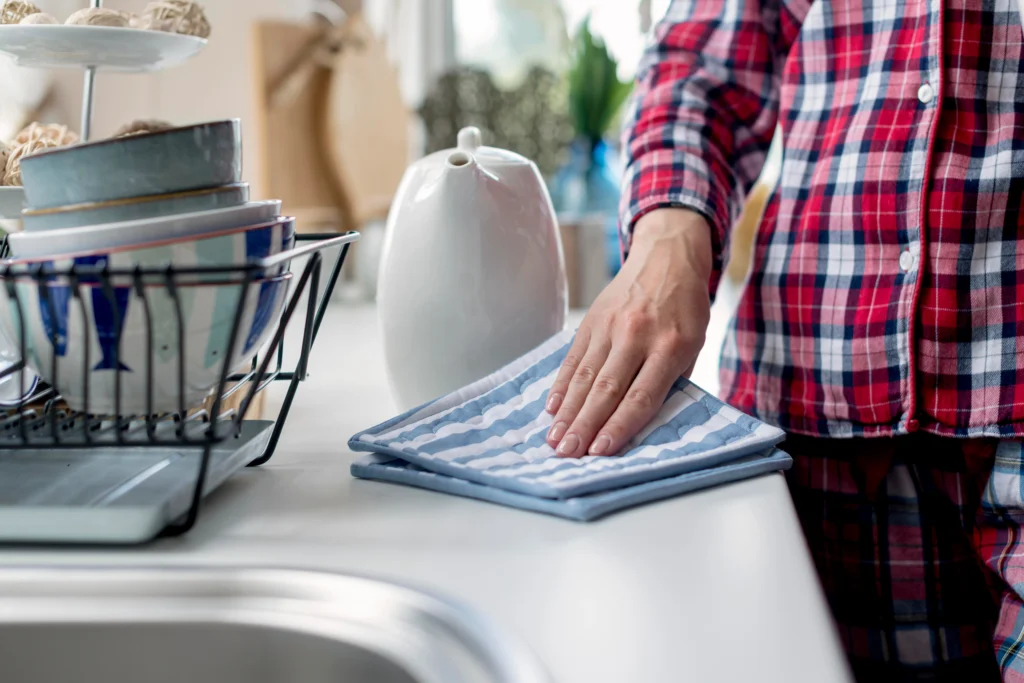
Dry your sink immediately with a microfiber cloth to reduce the chance of leaving behind water spots. For stainless steel sinks, dry in the direction of the grain for a streak-free, professional finish.
Make sure to dry the faucet, handles, and sink rim as well. This final step keeps your sink looking sparkling clean and prevents mineral deposits from forming.
How to Clean Your Kitchen Sink Drain
A clean sink means nothing if your drain smells bad. Regular drain cleaning prevents clogs and eliminates odors.
The Baking Soda and Vinegar Method
This natural method clears minor buildup and freshens your drain. Pour one cup of baking soda directly down the drain. Follow immediately with one cup of white vinegar.
You’ll see and hear fizzing as the chemical reaction occurs. This bubbling action helps break up debris clinging to pipe walls. Quickly cover the drain with a stopper or wet cloth.
Let the mixture work for 15 minutes. Don’t peek—keep it covered so the reaction happens inside the pipes. After 15 minutes, remove the cover and flush with very hot or boiling water.
Run hot water for at least 30 seconds to wash away loosened debris. Repeat monthly to maintain clean, fresh-smelling drains.
Cleaning Your Garbage Disposal
If your sink has a garbage disposal, it needs regular cleaning too. Food particles get trapped under the impellers and decompose, creating terrible odors.
The easiest way to clean your disposal is with affresh® disposal cleaner tablets. Turn on a low flow of hot water. Drop one tablet into the disposal.
Turn on the disposal and let it run for 15-30 seconds. The tablet creates a foaming action that scrubs away odor-causing residue. Turn off the disposal and rinse away any remaining foam.
What to Avoid When Cleaning Your Sink
Certain products and methods can damage your sink. Avoid these common mistakes.
Never Use Bleach on Certain Materials
Bleach can discolor composite sinks and damage protective coatings. It’s also unnecessary for regular cleaning. Dish soap and baking soda work just as well without the risks.
If you must disinfect, use a diluted bleach solution and rinse immediately. Never let bleach sit on sink surfaces.
Avoid Abrasive Scrubbers
Steel wool, abrasive pads, and harsh scouring powders scratch sink surfaces. These scratches harbor bacteria and make sinks harder to clean over time.
Stick with non-abrasive sponges and soft cloths. Baking soda provides enough gentle abrasion for most cleaning needs.
Don’t Use Acidic Cleaners on Porcelain or Cast Iron
Vinegar and other acidic cleaners damage the glazed finish on porcelain and cast iron sinks. This damage is permanent and makes the sink more prone to staining.
Use baking soda and mild dish soap instead. These clean effectively without risking damage.
Never Put Your Hands in the Disposal
This seems obvious, but it bears repeating. Never put your hands inside a garbage disposal, even when it’s turned off. Always disconnect power before inspecting or clearing the disposal.
Use tongs, pliers, or other tools to remove objects. Your safety is more important than any clog.
Conclusion
A clean kitchen sink is essential for maintaining a hygienic and welcoming kitchen. With weekly deep cleaning using baking soda and dish soap, daily rinse-and-wipe maintenance, and monthly drain care, you can keep your sink sparkling and odor-free. The process takes just minutes but makes a tremendous difference in your kitchen’s cleanliness and overall appeal.
Remember to always wipe stainless steel sinks in the direction of the grain, avoid harsh chemicals that can damage sink surfaces, and use affresh® stainless steel brightener for that extra shine.
The Author

Muhammad Nabeel Dar is the founder of GarbageWasteDisposal.com and an SEO researcher focused on creating informational resources about garbage disposals and kitchen appliances. His work involves researching appliance performance, analyzing user questions, and structuring helpful guides that simplify complex kitchen appliance topics. Through this website, he shares researched insights to help homeowners better understand appliance maintenance, product comparisons, and everyday kitchen solutions.