What Is a Septic Tank and How Does It Work? (Full Guide)
A septic tank is an underground container that treats household wastewater for homes not connected to a municipal sewer system. Roughly one in five US homes relies on a septic system. Understanding how yours works helps you maintain it properly and avoid expensive repairs.
How Does A Septic Tank Work?
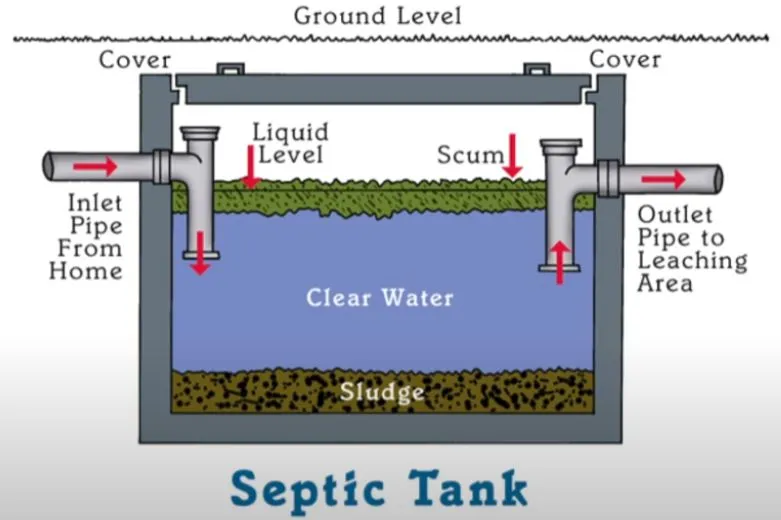
The process is straightforward:
- Wastewater enters the tank through the inlet pipe. Everything from toilets, sinks, showers, and laundry flows into the tank.
- Solids sink to the bottom and form a layer called sludge. Bacteria in the tank begin breaking down this organic material.
- Oils and grease float to the top and form a layer called scum.
- The liquid middle layer (effluent) — relatively clear water between the sludge and scum — exits through the outlet pipe.
- Effluent flows to the drain field (also called a leach field), a network of perforated pipes buried in gravel trenches.
- Soil filters and treats the water as it percolates downward, removing bacteria, viruses, and nutrients before it reaches the groundwater.
The entire system is passive. Gravity moves wastewater through the tank and into the drain field. No pumps or electricity required for standard systems.
Components of a Septic System
Inlet Pipe
Carries all household wastewater from the main plumbing line into the tank. A baffle at the inlet directs flow downward to prevent incoming water from disturbing the scum layer.
Septic Tank
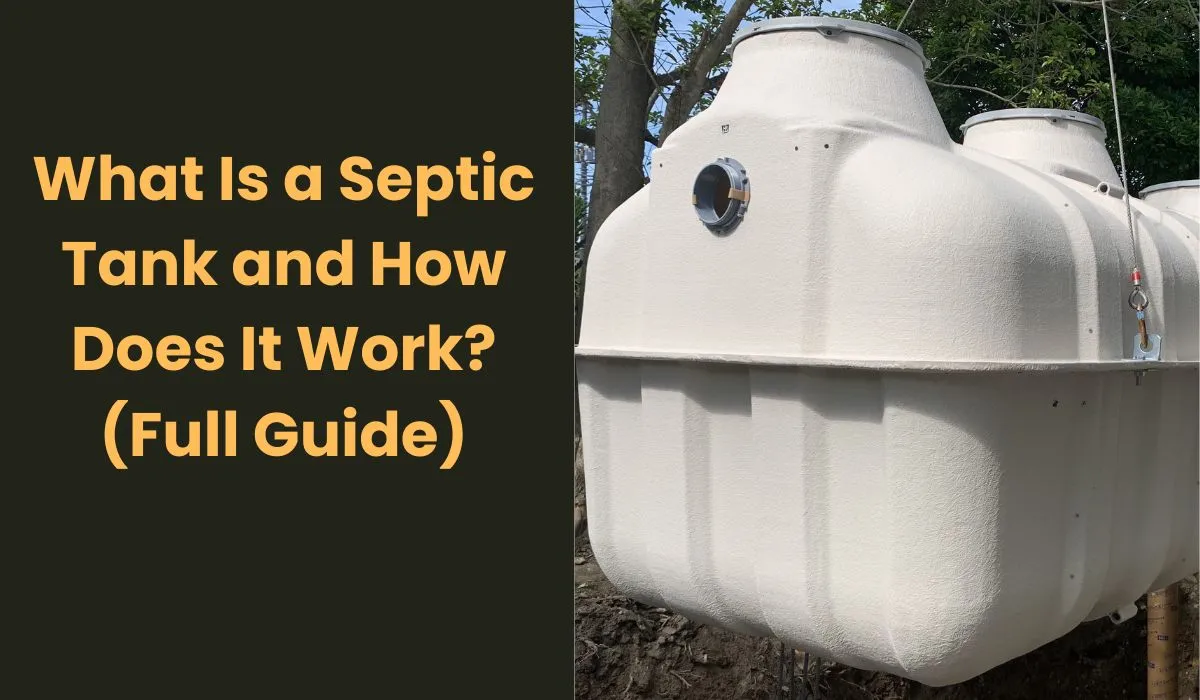
The watertight underground container where solids settle and bacterial treatment occurs. Tanks are typically 750–1,500 gallons for residential use. See this septic tank size calculator to determine the right capacity for your home.
Effluent Filter
A cylindrical filter at the outlet that catches small solids before they enter the drain field. This protects the drain field from clogging and extends its lifespan. Filters need cleaning during routine pump-outs.
Vent Pipe
Allows gases produced by bacterial decomposition (methane, hydrogen sulfide) to escape safely. The vent typically connects to the home’s plumbing vent stack and exits through the roof.
Access Ports and Risers
Openings in the tank lid that allow inspection and pumping. Risers extend these ports to ground level so the tank can be serviced without excavation.
Outlet Pipe
Carries treated effluent from the tank to the drain field. A baffle at the outlet prevents scum from exiting with the liquid.
Drain Field
A series of perforated pipes laid in gravel-filled trenches. Effluent seeps through the perforations and filters slowly through soil, which removes remaining contaminants. The drain field is the largest and most expensive component to replace.
Types of Septic Tanks
1. Concrete Septic Tanks
Pros
Cons
Concrete is the most common residential tank material in the US.
2. Polyethene/Plastic Septic Tanks
Pros
Cons
3. Fiberglass Septic Tanks
Pros
Cons
Septic System vs. Municipal Sewer
| Feature | Septic System | Municipal Sewer |
|---|---|---|
| Location | On your property | City-operated, off-site |
| Cost structure | Upfront installation + periodic pumping | Monthly utility bill |
| Maintenance | Homeowner’s responsibility | City handles it |
| Independence | Fully self-contained | Dependent on city infrastructure |
| Environmental control | You control what enters the system | Mixed with all neighborhood waste |
| Typical lifespan | 20–40 years (tank); drain field varies | Indefinite (city maintains) |
Maintenance Tips
Pump Regularly
Have the tank pumped every 3–5 years. Homes with garbage disposals should pump every 2–3 years due to increased solids. See our garbage disposal with septic tank guide for details.
Watch What Goes Down the Drain
The bacteria in your tank are essential to the treatment process. Avoid sending anything that kills them or adds unnecessary solids:
- No bleach, antibacterial cleaners, or chemical drain openers
- No grease, cooking oil, or fat
- No wipes, feminine products, or paper towels (even “flushable” wipes don’t break down)
- No paint, solvents, or pesticides
Protect the Drain Field
- Don’t park vehicles or place heavy objects on the drain field
- Don’t plant trees nearby — roots can infiltrate and damage pipes
- Divert rainwater and downspouts away from the drain field area
Conserve Water
Excessive water use overwhelms the tank and pushes solids into the drain field before they’re fully treated. Fix running toilets, spread laundry loads across the week, and use efficient fixtures.
Conclusion
A septic system treats your household wastewater through a simple process of settling, bacterial decomposition, and soil filtration. The system requires minimal intervention — just regular pumping, mindful usage, and protecting the drain field. Stay on top of maintenance, and your septic system will serve your home reliably for decades.
FAQ’s
The Author

Muhammad Nabeel Dar is the founder of GarbageWasteDisposal.com, where he researches and evaluates garbage disposals, kitchen sinks, dishwashers, and kitchen drain systems to help homeowners make confident buying decisions.
After analyzing 30+ garbage disposal models, multiple sink configurations, and a wide range of drain system components across brands like InSinkErator, Waste King, Moen, GE, Frigidaire, and KRAUS, he focuses on what actually matters: real-world performance, build quality, noise levels, installation ease, durability, and overall value.