how to get rocks out of garbage disposal
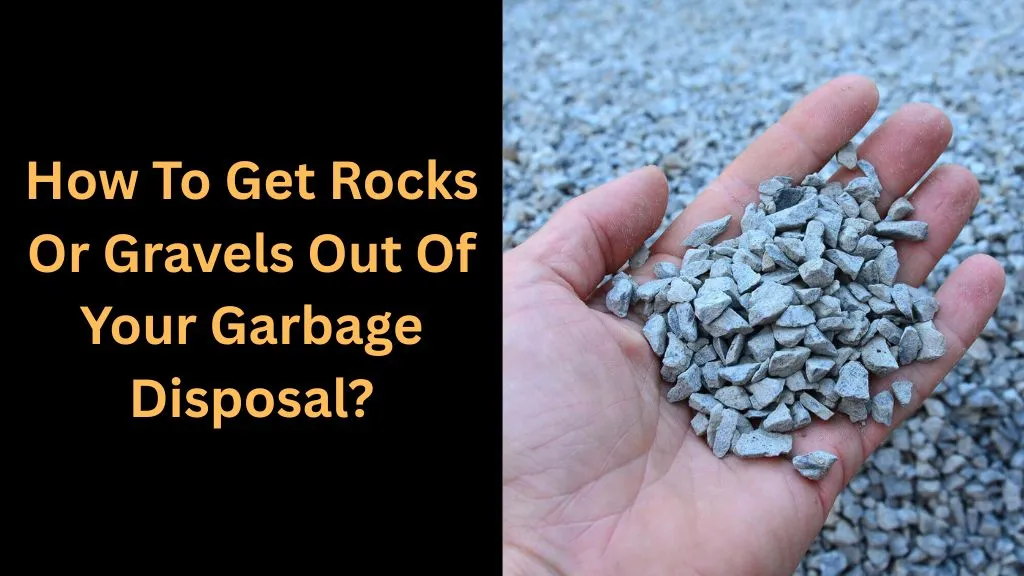
If you’re trying to figure out how to get rocks or fish gravels out of a garbage disposal, you’re likely hearing a loud grinding or rattling noise every time you turn it on. Small stones, aquarium pebbles, and gravel can easily slip into the unit and cause serious damage if left inside — from jammed impellers to a burned-out motor.
The good news is you can remove them safely without taking the entire disposal apart, if you act quickly and follow the right steps.
How to Remove Rocks or fish gravels out of a Garbage Disposal
What You Need
- Flashlight
- Tongs or needle-nose pliers
- 1/4″ Allen wrench
- Bucket (optional, for catching debris)
1. Cut off power
The first and most important step before touching anything is turning off the power. Never, ever try to fix or reach into a garbage disposal when it’s still connected to electricity.
2. Gather your tools
Before you start, make sure you have the right tools within reach. You don’t need anything complex — just a few basic items to safely remove rocks or gravel from the disposal.
- Flashlight: Helps you clearly see inside the disposal chamber and locate the rocks or debris
- Tongs or needle-nose pliers: Used to safely grab and remove rocks without putting your hand inside
- 1/4″ Allen wrench: Fits into the bottom reset slot to manually rotate and free a jammed impeller
- Bucket (optional): Placed underneath to catch any debris or water during the process
Having these tools ready before you begin makes the removal process faster, safer, and much more controlled.
3. Retrieve the rocks or gravels
Use a flashlight to look inside the disposal and locate the rocks or gravel causing the noise. Once you spot them, use tongs or needle-nose pliers to carefully pull them out. Never put your hand inside the disposal.
If the rock is wedged under an impeller or stuck between the grind plate and grind ring, you’ll need to loosen it first. Insert a 1/4″ Allen wrench into the hex slot at the bottom of the disposal and rotate it back and forth. This manually turns the grind plate and helps dislodge the stuck object.
Once the rock or gravel is loose, remove it with your tongs or pliers. Repeat the process until all visible debris is cleared.
4. Press the Reset Button and Test
After clearing the rocks or fish gravel, press the reset button at the bottom of the disposal. This button (usually red) resets the motor after a jam or overload.
Next, restore power to the unit. Turn on cold water, then switch on the disposal and let it run for a few seconds.
Listen carefully. If the disposal runs smoothly with no rattling or grinding noise, the problem is resolved. If you still hear unusual sounds, turn it off immediately and recheck for any remaining stuck objects.
Check out this video showing how to remove rocks or gravels from garbage disposal:
What If You Cannot See or Reach the Object?
If you cannot see or easily reach the rock or gravel inside the disposal, try rotating the grind plate from below using a 1/4″ Allen wrench while someone shines a flashlight into the chamber. This movement often shifts the plate enough to expose hidden objects so they can be removed with tongs.
You can also gently push against an impeller from above using a wooden tool to manually rotate the plate, but this should be done carefully to avoid damage. If the object remains unreachable or appears tightly wedged deep in the grinding mechanism, stop and call a plumber. Forcing it out can crack the housing or damage internal components, turning a simple fix into a full replacement.
What Happens If You Run the Disposal With Rocks Inside
Running a garbage disposal with rocks or gravel inside can cause serious damage in a very short time. The motor may stall against a hard object, leading to overheating and eventual burnout. Continuous impact from rocks can also crack the disposal housing or damage the grind ring, permanently reducing its performance.
In some cases, smaller gravel pieces may pass through and settle in the P-trap or drain pipe, causing clogs later on. If you hear any unusual rattling or grinding noise, turn the disposal off immediately — trying to “grind through” rocks will only make the problem worse.
How Rocks Typically Get Into a Disposal
Rocks and gravel usually end up in a garbage disposal through everyday activities without you realizing it. Common sources include aquarium gravel being rinsed in the kitchen sink, soil or small pebbles washed off fruits and vegetables, or tiny ceramic and glass chips from broken dishes.
In some cases, children may accidentally drop small objects into the drain, or debris can be present in bags of dried beans or rice. To prevent this, always use a sink strainer or stopper when the disposal is not in use, as it blocks most hard objects from entering the chamber.
Conclusion
Turn off the power, look inside with a flashlight, pull the rock out with tongs, and test. That is the entire process. Do not run the disposal with rocks inside — it causes motor, housing, and grind ring damage. A sink strainer prevents the problem entirely.
FAQ’s
The Author

Muhammad Nabeel Dar is the founder of GarbageWasteDisposal.com, where he researches and evaluates garbage disposals, kitchen sinks, dishwashers, and kitchen drain systems to help homeowners make confident buying decisions.
After analyzing 30+ garbage disposal models, multiple sink configurations, and a wide range of drain system components across brands like InSinkErator, Waste King, Moen, GE, Frigidaire, and KRAUS, he focuses on what actually matters: real-world performance, build quality, noise levels, installation ease, durability, and overall value.