What Is GFCI & How Does It Work?
Every kitchen sink in the US sits at the intersection of two things that kill people when they meet: electricity and water. The device standing between that combination and a fatal outcome is a small outlet with two buttons that most homeowners never think about until something goes wrong.
A GFCI, or Ground Fault Circuit Interrupter, is the electrical safety device required by the National Electrical Code in every kitchen, bathroom, garage, and outdoor area in a modern home. If you have ever installed or replaced a garbage disposal, you have dealt with GFCI requirements directly, whether you realized it or not. Understanding what it does and why it is required is not optional homeowner knowledge. It is the kind of information that prevents serious electrical injury.
What a Ground Fault Actually Is
A ground fault occurs when electrical current escapes its intended path and flows Before understanding how a GFCI works, you need to understand what it is protecting against.
Electricity flows in a loop. Current leaves the panel through the hot wire, powers whatever appliance or device it is feeding, and returns through the neutral wire. That loop is the only path current is supposed to travel. A ground fault is what happens when current escapes that loop and finds an unintended return path instead. Most often, that unintended path is a human body.
Ground faults happen for specific reasons. A garbage disposal motor seal deteriorates over years and water reaches the wiring. A power cord under the sink rubs against a sharp cabinet edge until the insulation cracks. An appliance with a manufacturing defect sends current into its outer casing. Any of these situations can energize a metal surface or create a path to ground through a person touching a sink, faucet, or countertop.
The Consumer Product Safety Commission (CPSC) has documented that GFCIs have prevented thousands of electrocution deaths in US homes since their widespread adoption following the 1971 National Electrical Code mandate. Before GFCI requirements existed, kitchen and bathroom electrocutions were common enough to be considered a routine household hazard.
How a GFCI Detects a Fault and Cuts Power
The operating principle is straightforward once you understand the current loop described above.
A GFCI monitors the current flowing out through the hot wire and the current returning through the neutral wire simultaneously. Under normal conditions, these two values are equal. Current out equals current in. The moment those two values differ by as little as 4 to 6 milliamperes, the GFCI registers a fault and trips, cutting power to the circuit in approximately 1/40th of a second.
That response speed matters enormously. At 10 milliamperes, a person cannot release their grip on an energized object. At 100 milliamperes, cardiac arrest becomes a real risk within seconds. The GFCI trips at 4 to 6 milliamperes and does so in a fraction of a second, which keeps a dangerous contact from becoming a lethal one.
One important clarification: a GFCI protects against ground faults, not against all types of electrical shock. If a person simultaneously contacts both the hot and neutral conductors directly, no ground fault occurs because current is completing its loop through the person rather than escaping to ground. That scenario is rare in residential settings, but it is the correct limitation to understand. The CPSC notes that ground faults account for the overwhelming majority of residential electrocution incidents, which is precisely why GFCI protection addresses the real risk so effectively.
The Three Types of GFCI Devices
GFCI Outlet (Receptacle)
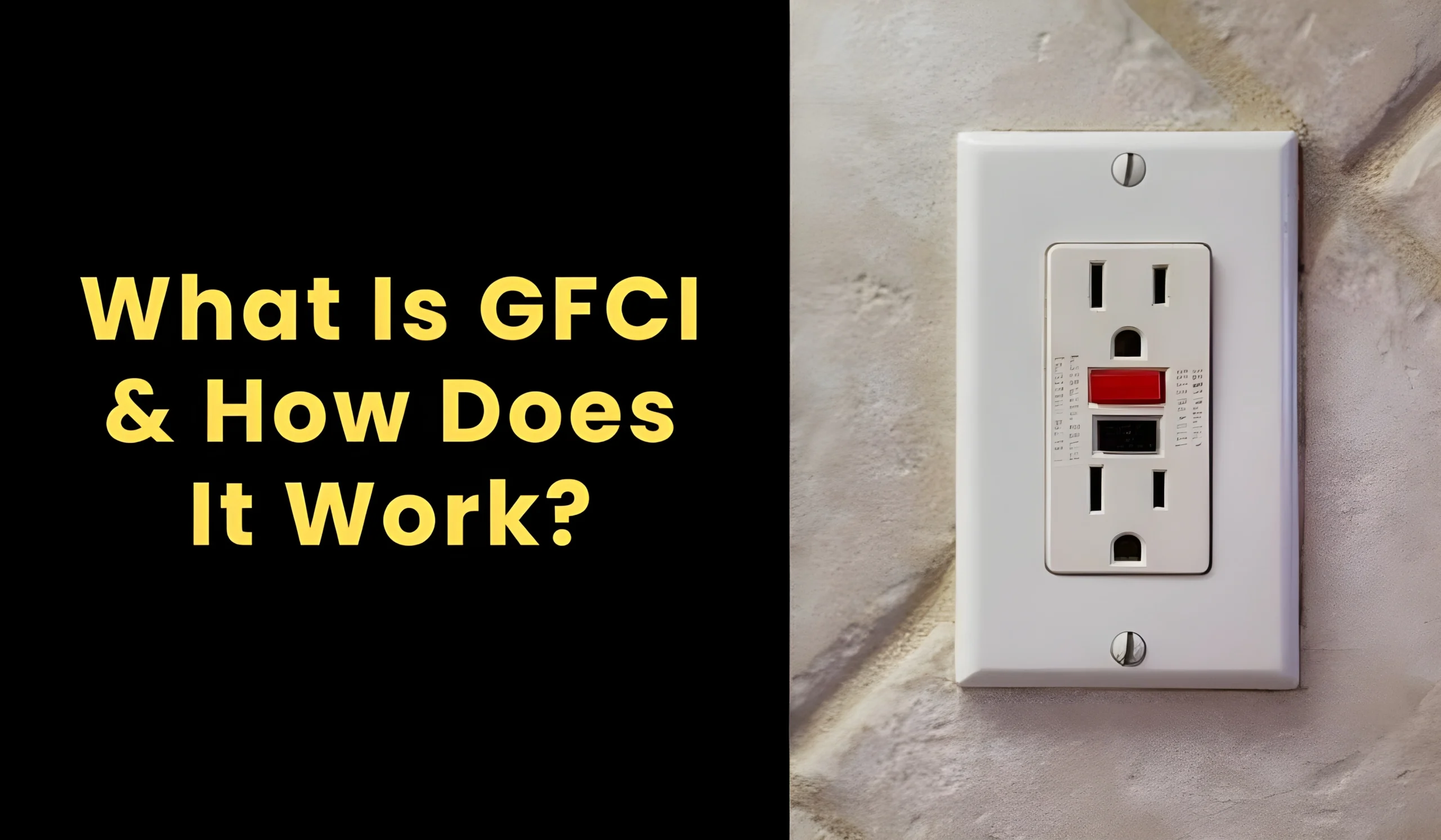
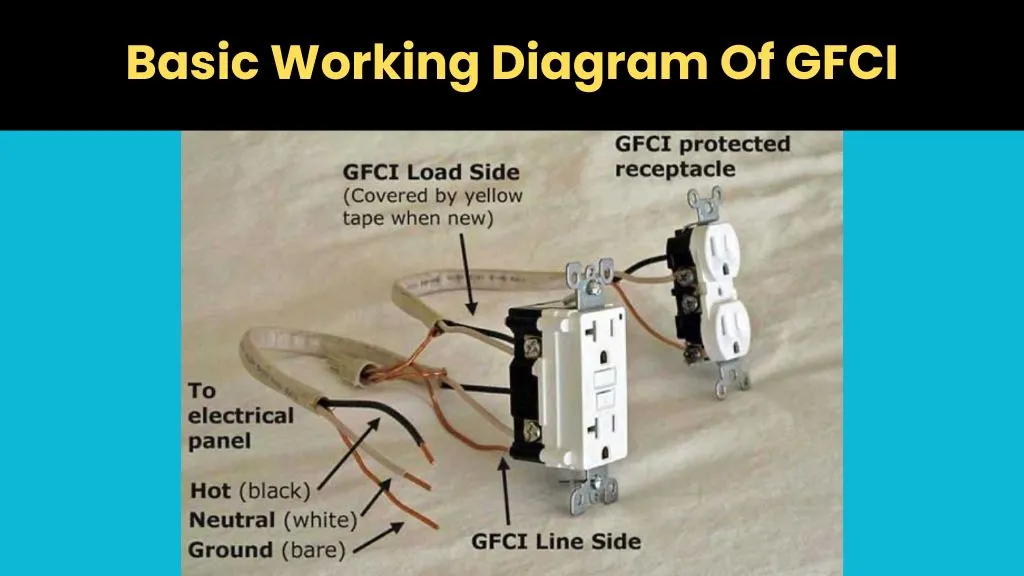
This is the most common type and the one homeowners encounter most often. It is the outlet with TEST and RESET buttons built into the face. A single GFCI outlet can protect both itself and any additional standard outlets connected downstream on the same circuit, provided the downstream outlets are wired to the LOAD terminals rather than the LINE terminals on the GFCI device. For under-sink garbage disposal installations, a GFCI outlet is typically the simplest and most cost-effective solution.
GFCI Circuit Breaker
This type installs in the electrical panel and provides GFCI protection to every outlet and device on the entire circuit. It is particularly useful for hardwired disposals or for protecting an entire kitchen circuit from a single location. A GFCI breaker costs more than a receptacle, but it covers the full circuit without requiring individual outlet replacements. For new kitchen construction or a complete electrical update, GFCI breakers are the cleaner solution.
Portable GFCI
A portable GFCI plugs into any standard outlet and provides protection for devices plugged into it. These are used primarily for temporary applications: power tools on a construction site, outdoor equipment on a circuit without permanent GFCI protection, or testing purposes. They are not a permanent residential solution.
Where the National Electrical Code Requires GFCI Protection
WThe NEC is updated on a three-year cycle. The 2023 NEC edition, adopted in most US jurisdictions, requires GFCI protection in the following locations:
Kitchens: all receptacles serving countertop surfaces and areas within the kitchen, including the outlet supplying a garbage disposal installed under the sink. This requirement has expanded with each NEC edition and now covers essentially the entire kitchen in a modern installation.
Bathrooms: all receptacles.
Garages and unfinished basements: all receptacles, with limited exceptions for dedicated appliance circuits in some code editions.
Outdoor areas: all receptacles.
Laundry and utility rooms: receptacles within 6 feet of a sink.
Boathouses and pool areas: all receptacles and lighting circuits in proximity to water.
If your home was built before the 1970s and has never had electrical updates, it almost certainly lacks GFCI protection in these areas. Adding it is not merely a code compliance issue. The CPSC estimates that installing GFCI protection in all homes built before 1974 could prevent approximately 70% of the approximately 400 residential electrocutions that occur annually in the US.
How to Test a GFCI Outlet: What to Do and What Failure Looks Like
Testing a GFCI outlet takes under 60 seconds. The CPSC recommends monthly testing for outlets in high-use wet areas.
Press the TEST button on the face of the outlet. You should hear a click and the outlet should lose power immediately. Any device plugged into the outlet will shut off. If the outlet has downstream standard outlets connected to its LOAD terminals, those should lose power as well.
Press the RESET button. Power should be restored to the outlet and to any downstream outlets.
If pressing TEST produces no click and no power interruption, the GFCI has failed. This happens more often than homeowners realize. GFCIs contain mechanical components that wear out, and units older than 10 to 15 years fail at meaningful rates. A GFCI that does not trip when tested is not providing protection, regardless of how normal it looks from the outside.
If pressing RESET does not restore power, the unit may have tripped due to an actual fault condition rather than a test. Check whether an appliance on the circuit has a wiring problem before resetting repeatedly. A disposal that keeps tripping a GFCI outlet is telling you something is wrong electrically, not that the GFCI is malfunctioning.
Replace any GFCI outlet that fails the TEST procedure. The device costs between $15 and $40 at any hardware store and installation takes about 20 minutes.de.
GFCI vs Circuit Breaker: They Are Not the Same Protection
This is the most common misconception homeowners have about electrical safety.
A standard circuit breaker protects your home’s wiring from overcurrent. If too much current flows through a circuit because of a short circuit or overloaded wiring, the breaker trips before the wire overheats and starts a fire. Circuit breakers are designed to protect property.
A GFCI protects people from shock. It operates at current levels 50 to 100 times lower than what trips a circuit breaker. A ground fault carrying 5 milliamperes will never trip a 15-amp or 20-amp circuit breaker. It will trip a GFCI in 1/40th of a second.
Your home needs both. They do different jobs and one does not substitute for the other. A GFCI on a circuit with a 20-amp breaker provides shock protection at low fault currents while the breaker still handles overcurrent protection at higher levels. Removing either removes a different layer of protection.
GFCI and Garbage Disposals: The Specific Connection
This matters directly for anyone reading this site. Garbage disposals are installed under kitchen sinks, in wet environments, with electrical connections in tight spaces that are difficult to inspect regularly. The motor, wiring connections, and power cord all exist in conditions where water exposure over time is not hypothetical. It is the normal operating environment.
A disposal motor seal failure, a condensation buildup around wiring, a slow drain leak reaching the electrical box under the sink: any of these creates exactly the kind of fault condition a GFCI exists to catch. Without GFCI protection, a leaking disposal can energize the sink, the faucet, and any metal plumbing connected to it without tripping the circuit breaker, because the fault current is too low to trigger overcurrent protection.
This is not a theoretical scenario. The CPSC has documented electrocution incidents involving kitchen appliances with failed seals in homes without GFCI protection. The NEC’s requirement for GFCI protection at under-sink disposal outlets exists because of documented incidents, not hypothetical risk.
For anyone installing a new disposal or troubleshooting one that keeps tripping the GFCI, our dedicated circuit guide and do garbage disposals need GFCI article cover the electrical requirements in full detail.
FAQ’s
The Author

Muhammad Nabeel Dar is the founder of GarbageWasteDisposal.com, where he researches and evaluates garbage disposals, kitchen sinks, dishwashers, and kitchen drain systems to help homeowners make confident buying decisions.
After analyzing 30+ garbage disposal models, multiple sink configurations, and a wide range of drain system components across brands like InSinkErator, Waste King, Moen, GE, Frigidaire, and KRAUS, he focuses on what actually matters: real-world performance, build quality, noise levels, installation ease, durability, and overall value.