
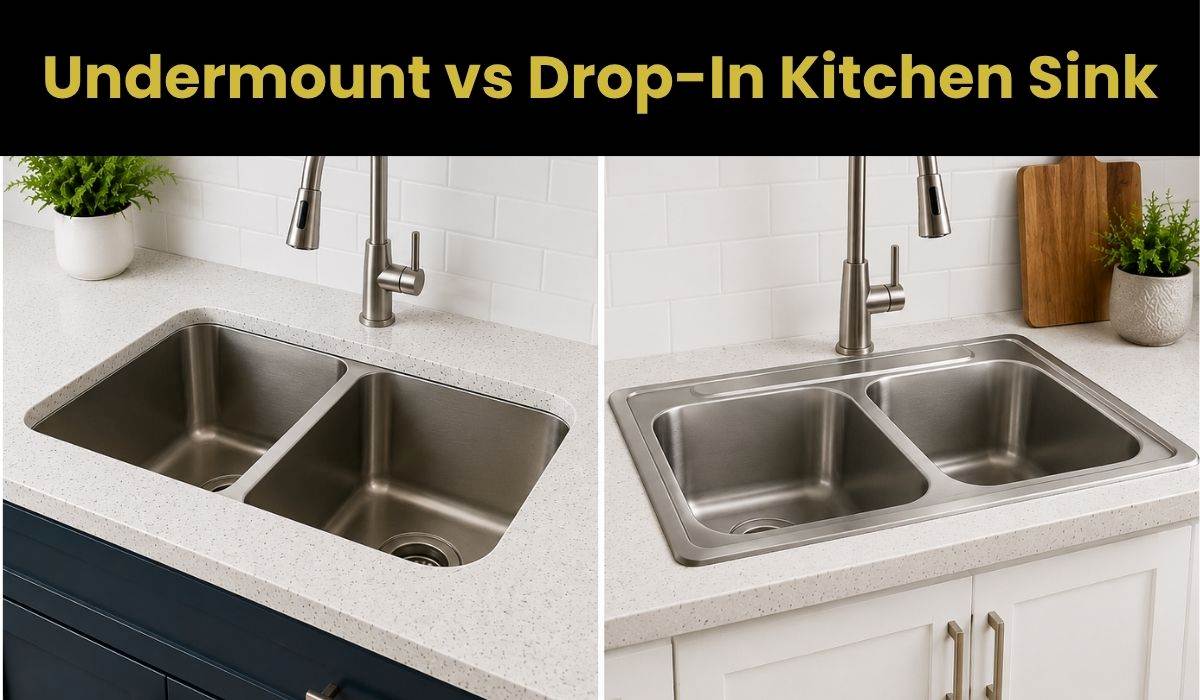
Undermount vs Drop-In Kitchen Sink: Which Is Right for You?
The undermount vs drop-in kitchen sink decision comes down to one thing more than anything else: what countertop material you have. Get that right and everything else, including your budget, installation method, and cleaning routine, falls into place.
This guide walks you through both sink types from scratch. You’ll get clear definitions, a side-by-side comparison on materials, aesthetics, countertop compatibility, cleaning, installation, and cost. Then 3 top examples of each type, so you can see exactly what you’re choosing between before you buy.
Quick comparison: undermount vs drop-in kitchen sink
| Category | Undermount | Drop-In |
|---|---|---|
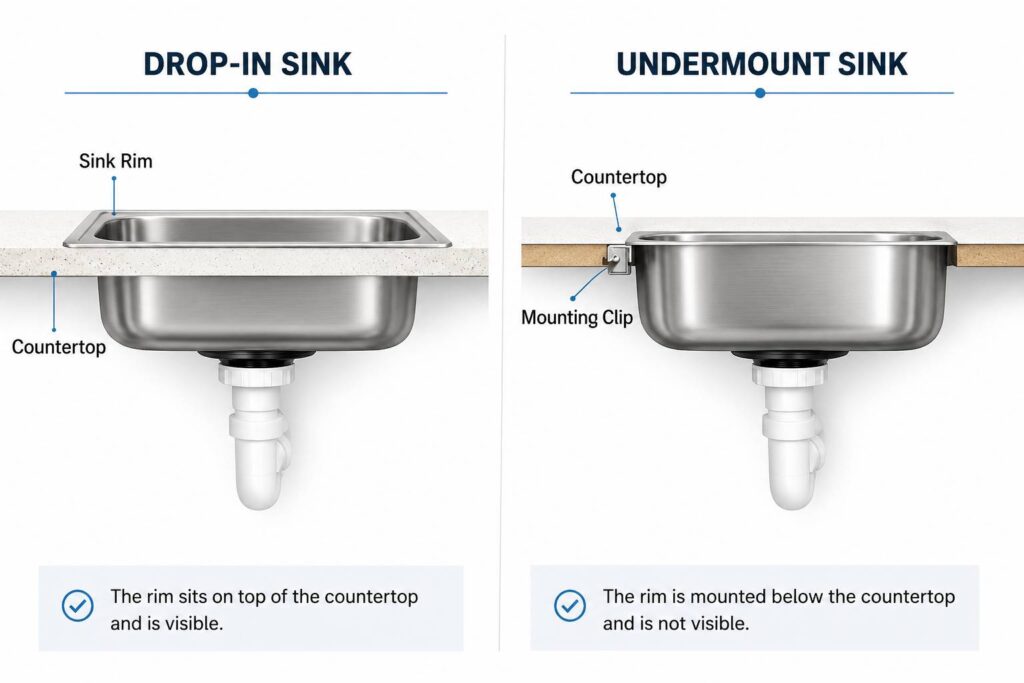
| How it installs | Clips to underside of counter; no visible rim | Drops into cutout from above; rim rests on counter |
| Countertop materials | Granite, quartz, solid surface, concrete | All materials including laminate and tile |
| Installation labor | $200–500 (professional recommended) | $50–150 (or DIY for free) |
| DIY-friendly | 2-person job; achievable with help | Yes, 1 to 2 hours solo |
| Cleaning ease | Sweep debris directly into bowl; no rim seam | Rim traps grime and moisture at seam |
| Counter space lost to rim | None | 1–1.5 inches per side |
| Resale value impact | Positive with solid-surface countertops | Neutral |
| Replacement ease | Silicone bond must be cut first | Lift out and drop in replacement |
| Silicone maintenance | Inspect annually; replace every 5–7 years | Inspect annually; re-caulk every 3–5 years |
| Sink price range | $150–$1,500+ | $75–$800+ |
What is an undermount kitchen sink?
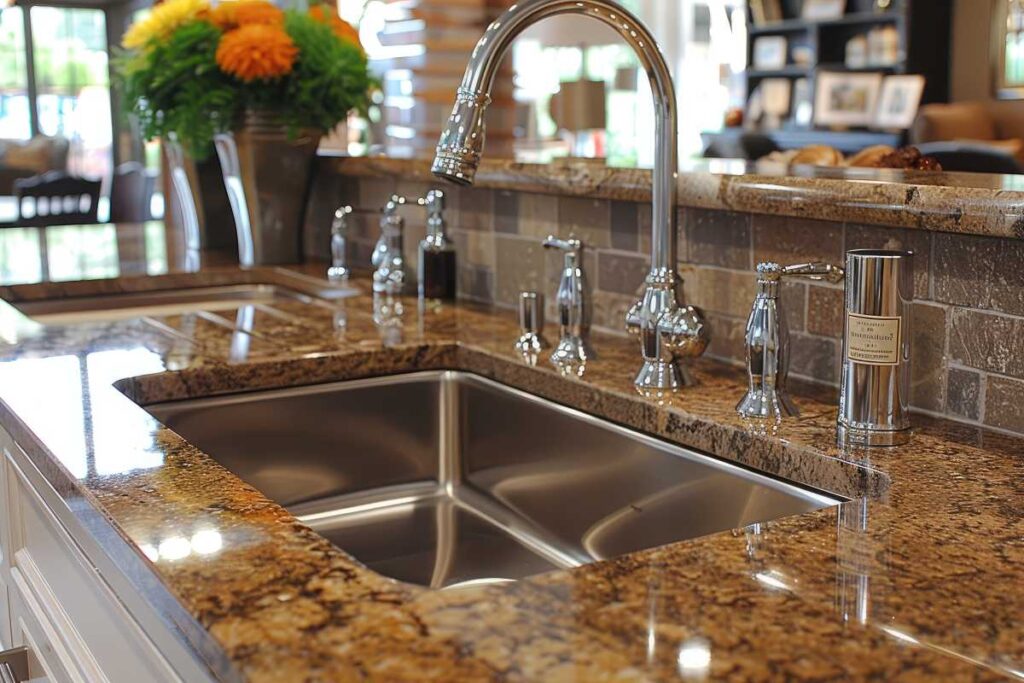
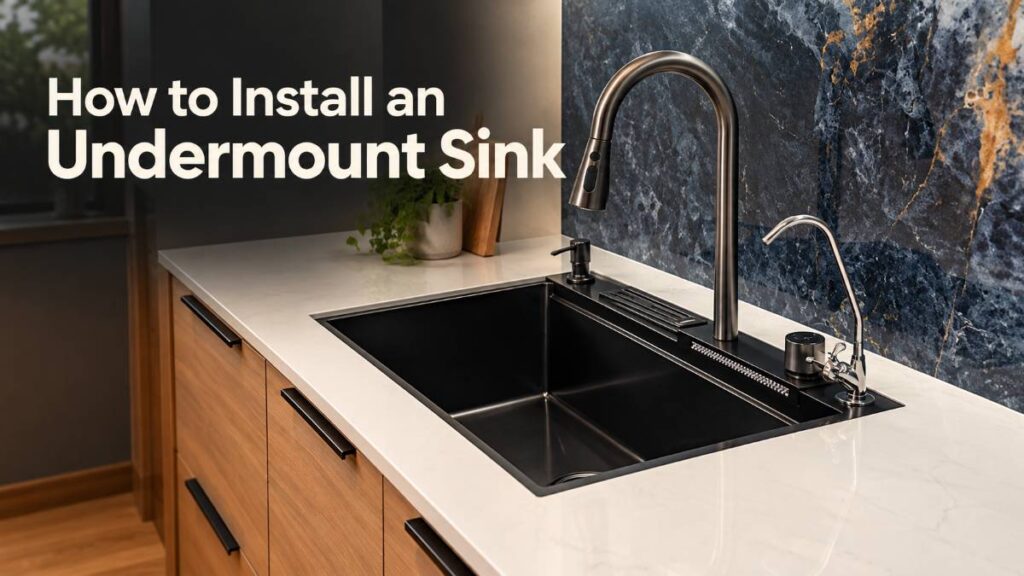
An undermount sink mounts below the countertop surface. The countertop is cut to An undermount sink mounts below the countertop surface. The countertop is cut to match the sink’s exact opening dimensions, and the sink attaches to the underside with stainless steel mounting clips. A continuous bead of 100% silicone seals the joint between the sink rim and the underside of the counter. From above, no rim is visible. The countertop material runs cleanly to the edge of the bowl, and the polished cut edge of the stone or quartz sits exposed inside the basin.
The biggest daily benefit shows up at the counter every time you clean up. Food scraps, crumbs, and water wipe straight off the countertop into the bowl in one motion. No raised rim stops the sweep. No seam traps moisture between the sink and the counter surface. That single difference, repeated over years of daily use, is why homeowners who switch to undermount rarely go back.
Installation requires a solid, waterproof countertop material. Granite, quartz, solid surface (Corian and similar), and concrete all work. The countertop fabricator cuts and polishes the opening to the exact dimensions of your sink, using the cutout template that ships with the sink. That polished edge is what you see inside the bowl. Laminate can’t support this installation because the particleboard core behind the laminate face isn’t water-resistant at a raw cut edge.
Undermount is the standard in modern kitchen remodels with solid-surface countertops. Buyers recognize it immediately as a marker of a quality kitchen build.
Top undermount kitchen sink examples
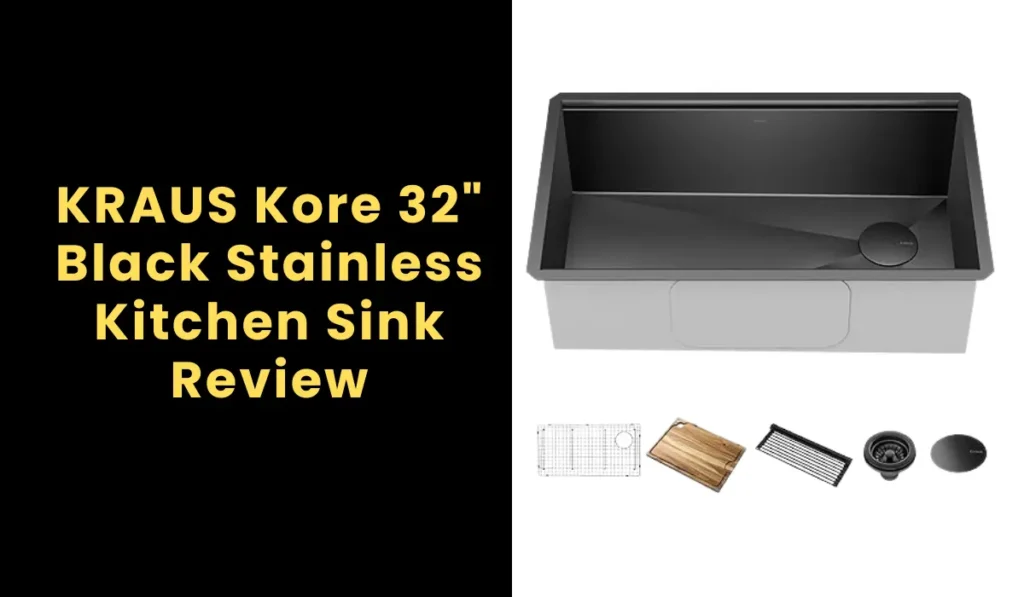
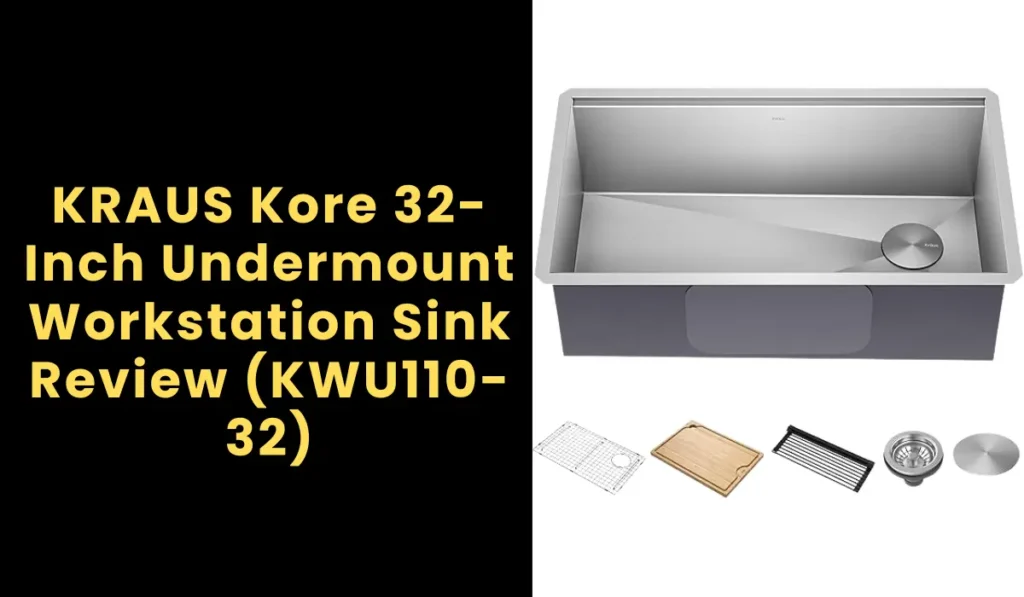
1. KRAUS Kore KWU110-32: Best overall undermount
16-gauge T-304 stainless steel, 32 inches wide, 10-inch bowl depth. Ships with a full workstation ledge and 4 accessories: bamboo cutting board, roll-up drying rack, stainless bottom grid, and drain assembly with CapPro cover. Rear-offset drain for maximum undercabinet clearance. Priced at $499.95.
The rear-offset drain places the drain connection at the back of the cabinet, leaving 6 to 8 more inches of space for a garbage disposal and P-trap. For buyers pairing a new sink with a new disposal, this matters. See our best undermount kitchen sinks guide for the full ranked list.
2. Ruvati RVH8300: Best zero-radius undermount
16-gauge stainless, zero-radius corners (sharp 90-degree angles instead of rounded corners), 30-inch width, approximately $479. Zero-radius corners look modern and make corner cleaning easier with a square sponge. A good pick if the KRAUS 32-inch width is too wide for your cabinet.
3. BLANCO Precis 33″: Best undermount granite composite
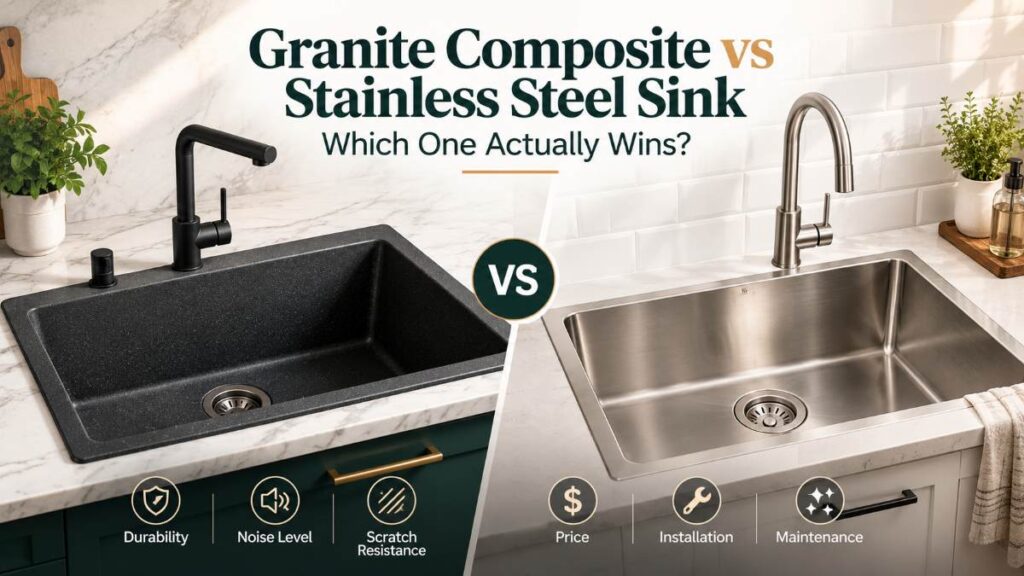
Granite composite material (approximately 80% granite, 20% resin binder), 33-inch undermount, available in 5 colors including anthracite (dark gray), white, and biscuit. Scratch-resistant, heat-resistant to 536°F, and quieter than stainless because the composite material absorbs vibration. For kitchens where stainless doesn’t match the design.
What is a drop-in kitchen sink?
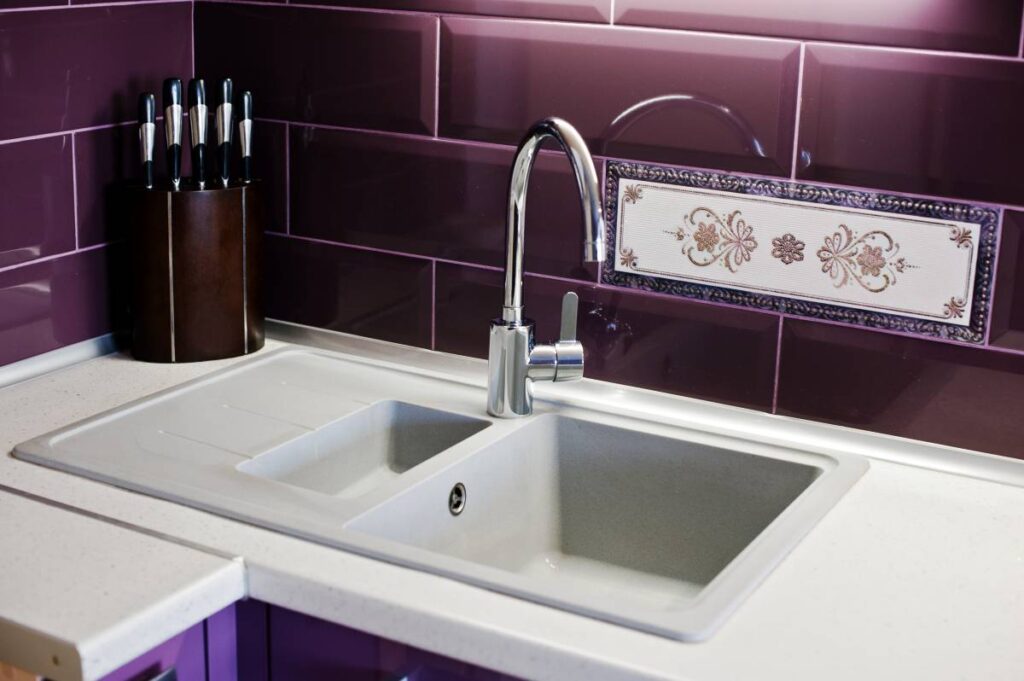
A drop-in sink, also called a top-mount or self-rimming sink, drops into a countertop A drop-in sink, also called a top-mount or self-rimming sink, drops into a countertop cutout from above. The sink’s rim overlaps the countertop edge on all four sides and rests flat on the surface. Mounting clips from below the cabinet, or a continuous silicone bead at the rim, hold the sink in place. The rim sits proud of the countertop surface and is visible from above.
Installation is the strongest advantage. You lower the sink into the cutout from above, tighten the mounting clips from inside the cabinet, run a silicone bead along the rim-to-counter joint, and reconnect the drain and supply lines. A homeowner with a wrench and basic plumbing knowledge can complete the swap in 1 to 2 hours. No helper needed. No 24-hour cure wait before running water.
Drop-in works with every countertop material: laminate, tile, granite, quartz, solid surface, concrete, and butcher block. The rim covers the raw cutout edge entirely, so neither the edge finish nor the countertop material underneath affects the installation. For laminate kitchens, drop-in is the only correct choice. Undermount is not an option on laminate.
The tradeoff is the rim seam. The gap between the rim and the countertop collects food particles, moisture, and grease. The back edge of the rim, where it meets the wall, is the hardest spot to keep clean. That seam needs re-caulking every 3 to 5 years to stay sealed and mold-free. It’s a manageable maintenance task, but it’s something undermount installation eliminates entirely.
Top drop-in kitchen sink examples
1. Elkay Gourmet ELGH3322: Best classic drop-in
One of the most widely installed drop-in sinks in the USA. 18-gauge stainless steel, double-bowl configuration, self-rimming top-mount installation. Available at Home Depot and Lowe’s nationwide. This is the go-to choice for laminate kitchen upgrades where stainless drop-in is the correct and expected option.
2. KRAUS Standart PRO Top-Mount: Best premium drop-in
16-gauge stainless in a drop-in format. That’s uncommon and worth noting. Most drop-in sinks use 18-gauge. The Standart PRO gives buyers who prefer or require top-mount installation the thicker steel and tighter build quality that typically only comes with undermount models. Available in 30-inch and 33-inch widths.
3. Kohler Stages 33″ Drop-In: Best workstation drop-in
Kohler’s Stages series brings the workstation ledge concept to a drop-in format. The integrated ledge supports an included colander and dish rack above the bowl. For buyers who want the workstation functionality without undermount installation or new countertops, the Stages series is the practical answer.
Undermount vs drop-in sink: Key Features
1. Material
Drop-in sink materials
Drop-in sinks come in a wider range of materials than undermount because the rim covers the countertop cutout edge, so the countertop material doesn’t need to be solid or polished.
- Stainless steel: The most common drop-in material. 18-gauge is standard for most drop-in models. 16-gauge is available in premium lines and is worth the upgrade.
- Porcelain over cast iron: The classic white or off-white kitchen sink. Very durable but heavy. Chips are permanent and expose the iron underneath.
- Composite acrylic: Lightweight, available in many colors, and budget-friendly. Less durable over time than stainless or cast iron.
- Composite granite: Less common in drop-in but available. Scratch-resistant and available in black, gray, and white.
Undermount sink materials
Undermount sinks use materials that can be polished to a clean edge because that edge is visible inside the bowl.
- 16-gauge or 18-gauge stainless steel: The most popular undermount material. 16-gauge (1.5mm thick) is the better option. 18-gauge (1.2mm) is thinner and dents more easily.
- Fireclay: Fired ceramic at 1,800 to 2,900°F. Non-porous and chip-resistant. Common in farmhouse-style undermount sinks. Heavy, typically 70 to 100+ lbs.
- Granite composite: Crushed granite and resin. Scratch-resistant, heat-resistant, available in multiple colors. A good choice when the kitchen aesthetic needs color beyond silver or white.
- Cast iron with enamel coating: The heaviest option, often 100 to 130 lbs. Extremely durable but requires cabinet reinforcement. Less common in new installs today.
2. Aesthetics
Drop-in sink aesthetics
The visible rim gives a drop-in sink a traditional, defined look at the countertop edge. Some buyers prefer this. It suits classic, colonial, and traditional kitchen styles where visible hardware is part of the design.
In listing photos, the rim is immediately visible. In a modern kitchen with quartz or granite countertops, a drop-in rim can look dated next to the otherwise clean surfaces.
Undermount sink aesthetics
The defining visual of an undermount sink is the clean, unbroken countertop line. The counter flows directly to the bowl edge with no raised lip interrupting the surface. In photos and in person, this reads as a premium modern kitchen.
Undermount suits contemporary, transitional, and Scandinavian kitchen styles. White quartz with a stainless undermount is the most widely installed combination in USA kitchen remodels right now.
3. countertop compatibility
Undermount sink countertop compatibility
Undermount installation works on: granite, quartz, solid surface (Corian and similar), concrete, and some sealed hardwood slabs with proper edge sealing.
It does not work on laminate. The countertop cutout exposes the particleboard core behind the laminate face to water. Particleboard absorbs moisture. Within 2 to 3 years, the substrate swells and pushes the laminate face up from below. The entire countertop needs replacing. This isn’t a rare edge case; it’s what happens every time an undermount is installed in laminate.
It also doesn’t work on standard tile countertops. Grout lines and unfinished tile edges at the cutout create water entry points that silicone can’t reliably seal over years of daily use.
Drop-in sink countertop compatibility
Drop-in sinks work on every countertop material: laminate, granite, quartz, solid surface, tile, concrete, and butcher block. The rim covers the entire cutout edge, so the material and edge finish underneath don’t matter.
If your countertop is laminate, drop-in is your only option.
4. cleaning
Cleaning a drop-in sink
The drop-in rim creates a seam between the sink and countertop that collects food scraps, water, and grease. The back edge of the rim, where it meets the wall or backsplash, is the hardest area to clean. In kitchens with high moisture and limited ventilation, mold takes hold in that gap within a few months of skipped cleaning.
Re-caulking the rim keeps the seam sealed and mold-free. This is a 20-minute job with a $6 tube of kitchen-grade silicone. Do it every 3 to 5 years, or sooner if the bead starts lifting or darkening at the edges.
Cleaning an undermount sink
The cleaning advantage of an undermount sink is real and it adds up daily. Food scraps, crumbs, and water wipe straight off the countertop and into the bowl in one motion. There’s no raised lip to stop the sweep.
The silicone seal runs along the underside of the countertop, not on the surface. There’s no seam on the counter to trap grime. The caulk line sits inside the cabinet, away from cooking splatter.
Don’t overlook this maintenance task: inspect that underseal annually and replace it every 5 to 7 years. If the seal separates and water enters the cabinet, the cabinet floor rots.
5. installation
Undermount sink installation
Undermount installation is a 2-person job. One person supports the sink from inside the cabinet while the other tightens mounting clips from above. Then a silicone bead seals the top edge between the sink rim and the underside of the countertop. The seal cures for 24 hours before the sink goes into use.
Professional labor runs $200 to $500. DIY is possible with a helper and patience.
Here’s what most guides won’t tell you: choose your undermount sink before your countertop is fabricated. Every undermount sink ships with a cutout template. Give that template to the countertop fabricator. They cut and polish the exact opening to your sink’s spec during fabrication at no extra charge. If the countertop is already installed when you decide to add an undermount, recutting and polishing the opening costs $500 to $1,200 extra.
Drop-in sink installation
Drop-in installation is a solo, DIY-friendly job. Lower the sink into the cutout from above, tighten mounting clips underneath, and run a silicone bead around the rim edge. Reconnect the drain and supply lines.
A homeowner with basic tools can swap a drop-in sink in 1 to 2 hours. Professional labor for drain and supply line connections runs $50 to $150. You don’t need a plumber to set the sink itself.
6. cost
Undermount sink cost
| Item | Cost Range |
|---|---|
| Sink (16-gauge stainless) | $150–$1,500+ |
| Installation labor | $200–$500 |
| Countertop recutting (if counter already installed) | $500–$1,200 |
| Total (sink + install, existing counter) | $350–$2,000 |
The biggest variable isn’t the sink price. It’s whether you’re getting new countertops at the same time. If you are, the undermount opening gets cut during fabrication at no extra cost. If you’re retrofitting an undermount into an already-installed counter, budget for the recutting fee.
Drop-in sink cost
| Item | Cost Range |
|---|---|
| Sink (standard stainless) | $75–$800+ |
| Installation labor | $50–$150 (or DIY: $0) |
| Total (sink + install) | $75–$950 |
Drop-in is the lower-cost option across every scenario. Lower sink price, lower labor, and no countertop fabrication coordination required.
Which sink is right for you?
Your countertop material makes this call. Everything else follows from it.
Get an undermount sink if:
- You have granite, quartz, or solid-surface countertops
- You’re getting new countertops as part of a kitchen remodel (pick the sink first, give the template to the fabricator)
- Cleaning ease matters to you on a daily basis
- You’re planning to sell the home in the next 5 to 10 years
Get a drop-in sink if:
- You have laminate or tile countertops
- You want to install it yourself
- You’re doing a budget kitchen update without replacing the countertop
- You need a fast swap without coordinating countertop work
For pairing either sink type with a garbage disposal, see our garbage disposal installation guide for how drain position affects the rough-in. Which sink is right for you?
Your countertop material makes this call. Everything else follows from it.
Get an undermount sink if:
- You have granite, quartz, or solid-surface countertops
- You’re getting new countertops as part of a kitchen remodel (pick the sink first, give the template to the fabricator)
- Cleaning ease matters to you on a daily basis
- You’re planning to sell the home in the next 5 to 10 years
Get a drop-in sink if:
- You have laminate or tile countertops
- You want to install it yourself
- You’re doing a budget kitchen update without replacing the countertop
- You need a fast swap without coordinating countertop work
For pairing either sink type with a garbage disposal, see our garbage disposal installation guide for how drain position affects the rough-in. For the best disposals at every price point, see our top-rated garbage disposals guide.
FAQ’s
The Author

Muhammad Nabeel Dar is the founder of GarbageWasteDisposal.com, where he researches and evaluates garbage disposals, kitchen sinks, dishwashers, and kitchen drain systems to help homeowners make confident buying decisions.
After analyzing 30+ garbage disposal models, multiple sink configurations, and a wide range of drain system components across brands like InSinkErator, Waste King, Moen, GE, Frigidaire, and KRAUS, he focuses on what actually matters: real-world performance, build quality, noise levels, installation ease, durability, and overall value.


One Comment
Comments are closed.