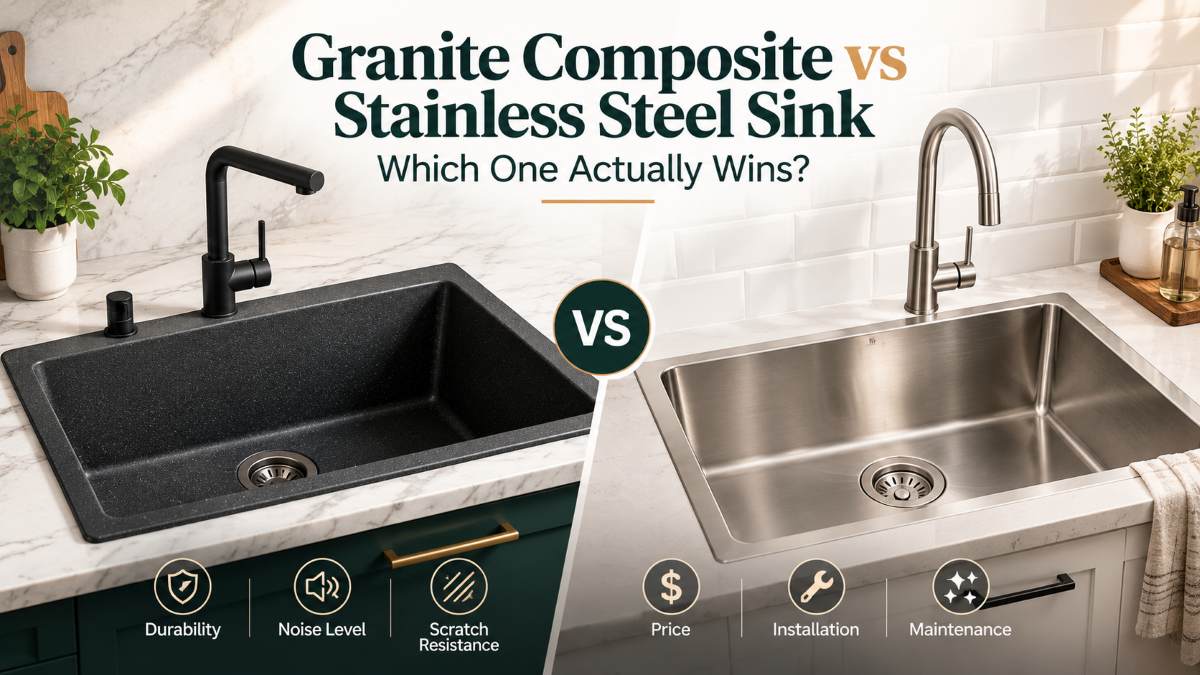
Granite Composite vs Stainless Steel Sink: Which One Actually Wins
I read through a pile of spec sheets and installation guides trying to settle the granite composite vs stainless steel sink question for good. I didn’t find a clean winner. Most guides pick one material early and spend the rest of the article defending that pick.
That’s not how this decision actually works. Composite is quieter and resists scratches. Stainless is lighter, cheaper, and easier to install.
Below, I’ll walk through what each sink material is actually made of, the real differences that matter day to day, and which one fits your kitchen better.
What Are Granite Composite Sinks
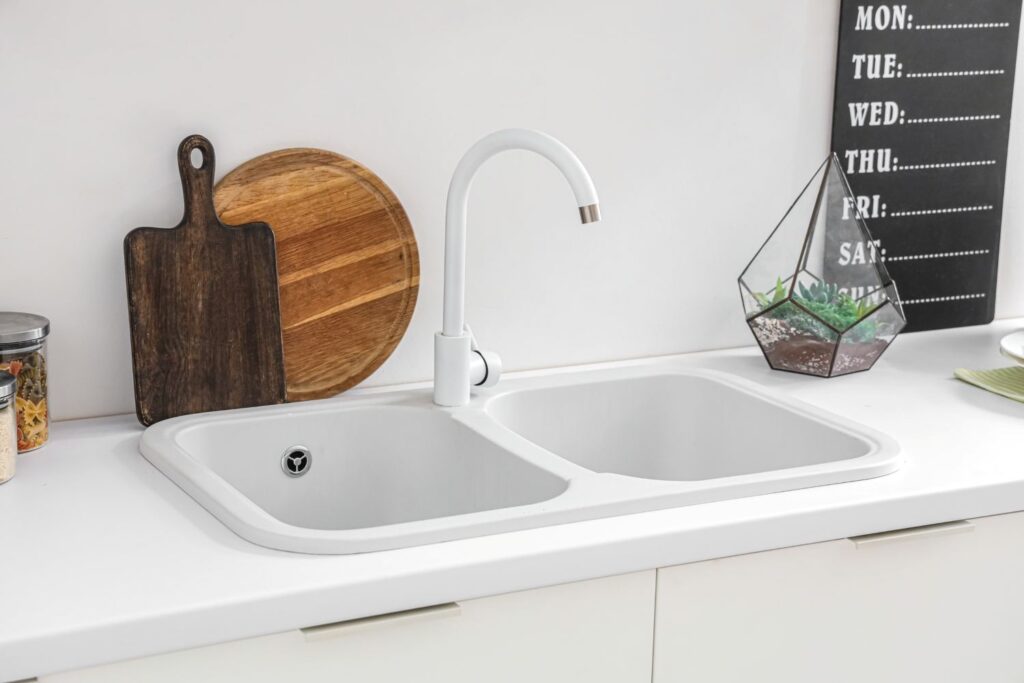
Granite composite sinks are made from crushed stone mixed with resin. The mix gets molded into shape instead of stamped from a sheet of metal like stainless.
You’ll mostly see these in matte, colored basins. They don’t look like the usual stainless sink.
What Granite Composite Sinks Are Actually Made Of
Most composite sinks use about 80 percent crushed granite or quartz. The rest is acrylic or polyester resin. Manufacturers mold the mix under heat and pressure into one solid basin.
That ratio holds pretty steady across brands like Blanco, Houzer, and Franke. I’d trust it on most composite listings you come across.
The resin does more than just hold the stone together. Natural granite has tiny pores that trap bacteria and stains over time. Molding seals those pores shut, which is why composite sinks get marketed as food safe.
Houzer lists its composite line as UV stable and CSA certified. Worth checking if your sink sits near a sunny window, since cheaper imports can fade in a few years.
Color runs all the way through the material too. Scratch a black composite sink and you still see black underneath.
Granite Composite Sinks Pros and Cons
Pros
Cons
What Are Stainless Steel Sinks
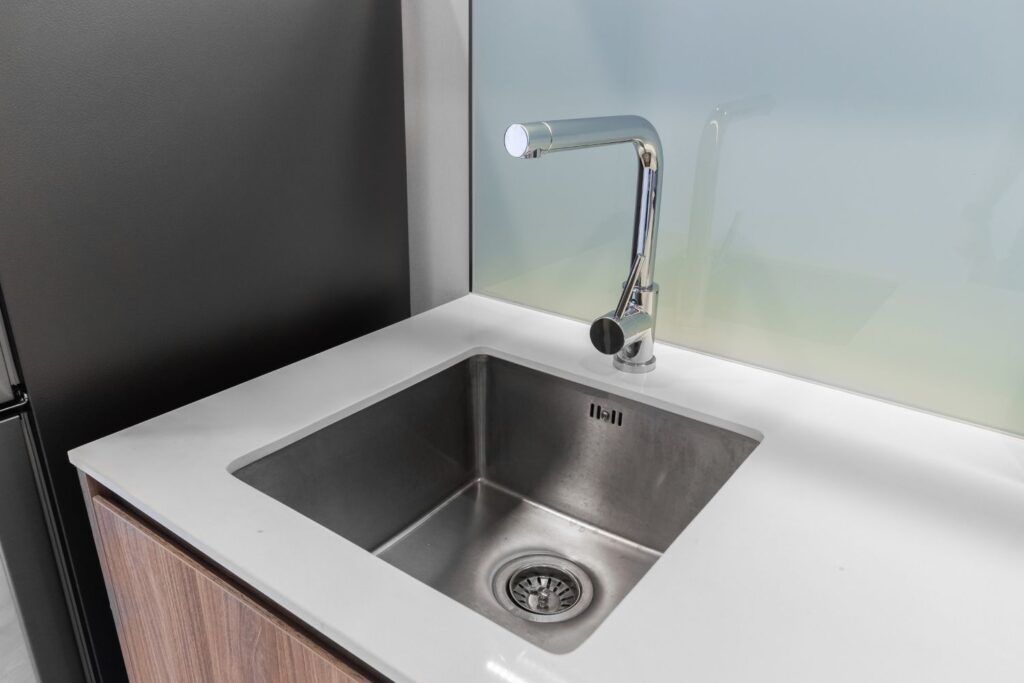
Stainless steel is the sink most American kitchens already have. It’s a single sheet of metal pressed into shape, not molded like composite.
It’s the sink you picture when someone just says “kitchen sink.”
What Stainless Steel Sinks Are Actually Made Of
Stainless sinks get stamped from one sheet of chromium-nickel steel. The grade is usually 18/8 or 18/10. More nickel means better rust resistance and a slightly warmer shine.
Most buyers skip checking the grade. That’s a mistake, given the sink sits in water and food acid every single day.
Gauge is the spec people actually ask about. Lower numbers mean thicker steel. 16-gauge runs about 1.5mm, 18-gauge about 1.2mm.
Our best undermount kitchen sinks guide breaks gauge down model by model, so I won’t repeat it here.
Gauge gets more credit than it deserves on its own, though. A padded 18-gauge sink can run quieter than a bare 16-gauge one.
Stainless Steel Sinks Pros and Cons
Pros
Cons
Granite Composite vs Stainless Steel: The Core Differences
Quick summary first, then the detail behind each row.
| Spec | Granite Composite | Stainless Steel |
|---|---|---|
| Material | ~80% crushed granite or quartz, ~20% resin | 18/8 or 18/10 chromium-nickel alloy |
| Price | Costs more | Costs less |
| Scratch Resistance | High | Moderate |
| Impact Resistance | Can chip or crack from a hard hit | Won’t crack, but can dent |
| Durability | Holds up well long term, main risk is a hard impact | Holds up well long term, rare risk of pitting corrosion |
| Noise | Naturally quiet | Louder unless padded |
| Heat Tolerance | Up to roughly 500 to 536°F | Very high, handles thermal shock well |
| Weight | Heavier, roughly 30 to 40+ lbs for a 32-inch sink | Lighter, roughly 25 to 30 lbs for the same size |
| Cabinet Needs | Often needs reinforcement | Standard cabinet usually fine |
| Maintenance | Needs gentler cleaners | Tolerates almost anything |
| Color Options | Multiple | Mostly silver tones |
| Configuration | Mostly single or standard double bowl | Wider range available |
| Availability | Thinner in-store selection | Widely stocked everywhere |
Material
These two materials get built in completely different ways. Composite is crushed stone and resin, pressed into one basin. Stainless is a single metal sheet, stamped into shape with nothing added.
That difference explains a lot of what comes next. Composite’s resin binder makes it quiet and non-porous, since there are no seams for water to sit in. Stainless’s single-sheet build keeps it light and cheap, but it’s also why the sink can ring like a drum when something hits it.
Grade and gauge matter on top of that for stainless. Composite doesn’t have a gauge, resin quality and curing do the same job instead.
Price
Composite costs more than stainless almost every time you compare two sinks of a similar size and finish. That holds at the budget end and the high end both.
Part of that gap comes down to how each one gets made. Molding stone and resin under heat and pressure costs more than stamping a sheet of steel. The rest comes down to positioning, composite sells as the premium look, and brands price it that way.
Budget stainless is easy to find at nearly any home improvement store. Composite rarely shows up at that same entry-level price point, even from lesser-known brands.
Scratch Resistance
Run a knife across a composite basin and you likely won’t see a mark. Do the same on stainless and you will. Those thin scratches build into a web of fine lines after a few years.
This is composite’s clearest win. There’s no real argument against it.
If you’re sticking with stainless anyway, get a bottom grate. It lifts pots and pans off the basin floor so they slide across metal instead of scratching the finish.
Impact Resistance
Stainless won’t crack. Drop anything into it and the worst outcome is a dent.
Composite is harder, which is exactly why it resists scratches. But that same hardness works against it under a sharp hit. A cast-iron skillet dropped from shoulder height can chip the surface, and in rare cases, crack it.
I’d call this one a draw. Composite protects its own surface better. Stainless protects your dishes better, since it flexes a little instead of meeting a dropped plate with a hard edge.
If your kitchen runs heavy on cast iron and Dutch ovens, that’s worth thinking about.
Durability
Scratch resistance and impact resistance only tell half the story. The real question is how each material holds up over ten or twenty years of daily use, not just one bad drop.
Stainless doesn’t crack, chip, or corrode easily under normal conditions. The one real long-term risk is pitting corrosion, small rust-like pits that can show up after many years in hard water or wherever chlorides build up, say, near a water softener’s drain line. It’s rare, and a quality 18/8 or 18/10 grade resists it well, but it’s the failure mode stainless actually has.
Composite doesn’t corrode at all, since it isn’t metal to begin with. Its weak point is the same one that shows up everywhere else in this comparison, a hard, concentrated impact. Outside of that, the resin binder is built to resist UV fading and repeated heat cycling for the life of the sink.
Neither one wears out on a normal kitchen’s schedule. Pick based on which failure mode worries you less, a rare pitting spot on stainless, or a rare chip on composite.
Noise
Drop a fork in an unpadded stainless sink and the whole kitchen hears it. Thin gauge means more resonance. Manufacturers fight this with pads, coatings, or extra layers underneath.
A well-treated 18-gauge sink can run quieter than a bare 16-gauge one. A rubberized spray on the underside helps too, and it costs under twenty dollars.
Composite skips this problem entirely. The dense material soaks up vibration before it can ring. Drop that same fork and you get a dull thud, not a ring.
That difference shows up every day, not just in a showroom.
Heat Tolerance
Composite handles direct heat up to around 500 to 536°F, per Blanco and Houzer’s own specs. That covers a hot pan straight off the stove.
Stainless handles heat even better in practice. It won’t warp or crack from thermal shock, the moment a hot pan meets a cold, wet sink. Most people never test either material’s real limit on a normal day.
If you set cast iron straight from a hot oven into the sink, stainless carries less risk.
There’s a second heat question most people never think about: how long warm water actually stays warm. Thin stainless cools fast, so hot water for handwashing dishes goes lukewarm within minutes. Composite holds that warmth longer, the same density that blocks noise also holds heat.
Weight
Composite sinks run noticeably heavier than stainless, even at the exact same footprint. A few real listings make the gap concrete.
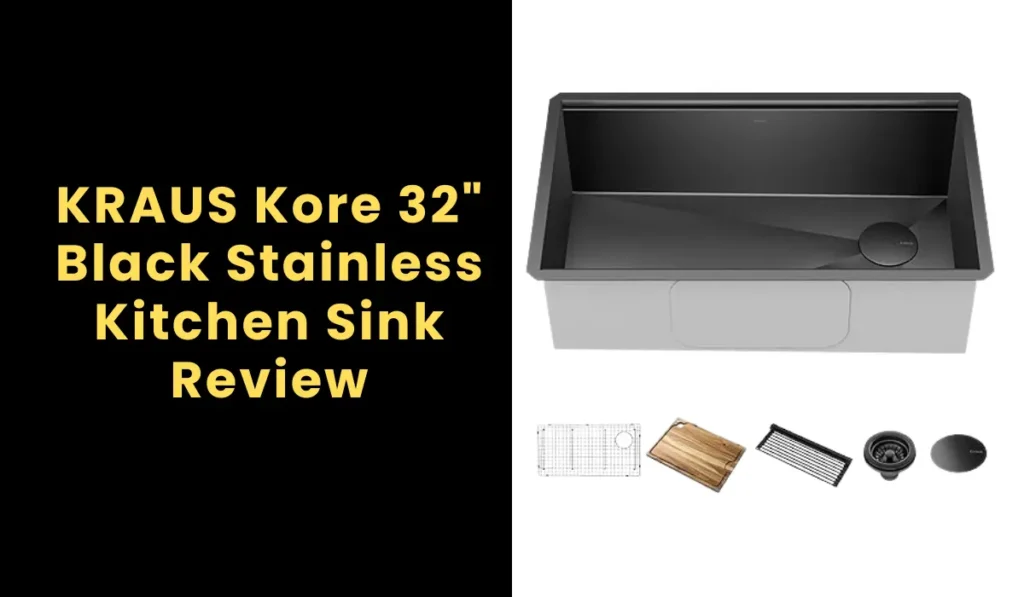
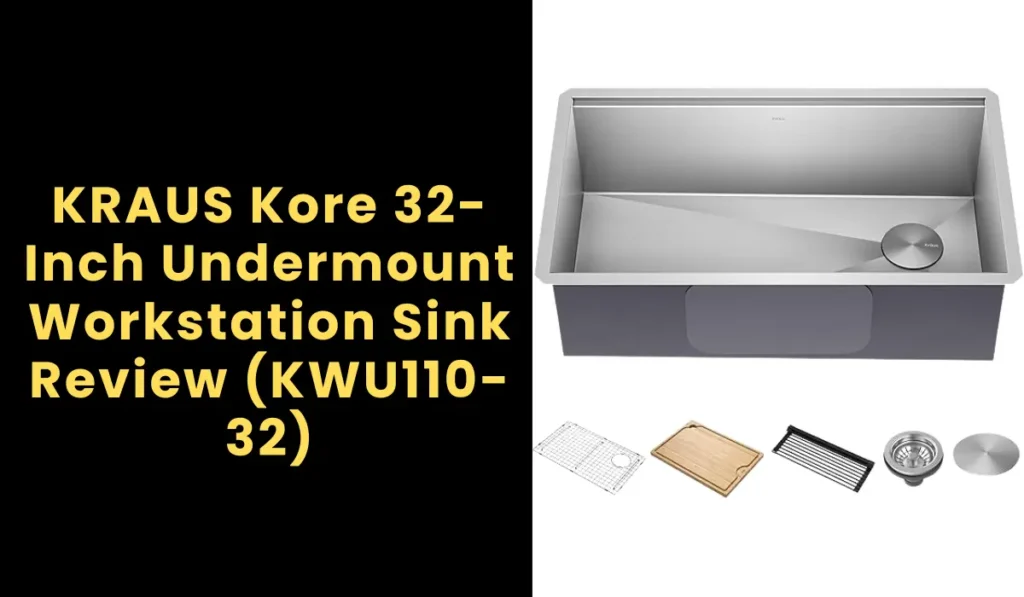
A 32-inch Kraus Kore workstation sink, 16-gauge stainless steel, weighs 26.5 pounds. A similarly sized Elkay Crosstown single-bowl stainless sink comes in at 29 pounds.
Composite sinks in that same 32-inch range run heavier across brands, a Blanco Precis composite sink in that size weighs 33.5 pounds, and a Ruvati epiGranite composite sink with the same footprint weighs 40 pounds empty.
That’s roughly 10 to 15 pounds more for composite, before you add water, dishes, or a disposal hanging off the drain. None of that extra weight shows up until installation day, which is exactly when it becomes someone else’s problem to solve.
Below I have given a chart having Granite and Stainless steel sinks based on the weight difference:
| Sink Model | Weight (lbs) |
|---|---|
| KRAUS KWU110-32 Kore Workstation Sink (Stainless Steel) | 26.5 lbs |
| Elkay Crosstown Single Bowl Undermount Sink Kit (Stainless Steel) | 29.0 lbs |
| BLANCO Precis 443121 (Granite Composite) | 33.5 lbs |
| Ruvati epiGranite RVG2033ES (Granite Composite) | 40.0 lbs |
Cabinet Needs
This is the spec most buyers skip, and the one that causes the most regret.
Stainless sinks run 10 to 25 pounds. Composite runs 30 to 60 pounds for the same size, more for big double-bowl models.
A standard cabinet handles a light stainless sink without any thought. A 50 or 60-pound composite sink, especially one full of water, puts real weight on the cabinet frame.
Our farmhouse sink guide covers this exact math, sinks past 60 pounds need extra support before install.
Check your cabinet first. Don’t find out after delivery day.
Maintenance
Stainless forgives almost any cleaning mistake. Soap and water handle daily grime. Vinegar, baking soda, or a product like Bar Keepers Friend handle tougher spots.
A bottom grid helps too, it drains standing water and keeps pans off the surface. Skip the rubber sink mat though, it traps food underneath instead of letting it drain.
The one habit that actually matters is drying the basin after use, since standing water leaves mineral spots that build up over weeks.
Composite wants a gentler hand. Stick to pH-neutral soap and skip bleach or anything abrasive, Magic Erasers included. Those can dull the finish even though the surface resists scratches.
What you get in return is more forgiveness between cleanings. Water spots hide better on that matte surface than they do on polished steel.
Color Options
Stainless comes in one color family: silver. The finish can be brushed, satin, or polished, but the color stays the same.
Composite gives you real choice. Black, white, gray, slate, even brown shows up across Blanco’s and Franke’s lines. The color runs through the material instead of sitting on top as a coat.
If your kitchen design needs a specific tone, matte black against white quartz counters, say, composite is the only one that gets you there.
Configuration
Stainless being more popular means more bowl layouts get built around it. You’ll find triple-basin sinks, workstation ledges, and odd shapes that composite doesn’t offer.
Composite mostly sticks to single-bowl or a standard double. That covers most kitchens fine, but stainless wins if you want something unusual, a small prep bar sink next to the main basin, for example.
Availability
Stainless is everywhere. Home Depot, Lowe’s, Costco, and every online retailer carry enough models that finding your size takes one search.
Composite sits at the same stores with a thinner in-store selection. You’ll usually do better shopping online through Amazon, Wayfair, or going straight to Blanco or Franke.
Call ahead or check stock online before driving out for a specific composite color or size. A store that carries ten stainless models might only stock two or three composite ones.
Which One Pairs Better With a Garbage Disposal
None of the comparison guides I read covered this. That surprised me, since plenty of kitchens install a sink and a disposal in the same project.
Mounting isn’t the issue. Both materials use the same 3.5-inch drain and the same 3-bolt mount that InSinkErator, Waste King, and most other brands build around. A disposal that fits one fits the other.
Our garbage disposal installation guide walks through the mounting steps, and none of it changes based on the sink material.
Vibration is where they actually split. A disposal under thin stainless sends its hum straight through the basin. Under composite, that same disposal runs noticeably quieter.
I haven’t seen another site make this connection, but it follows directly from the same noise-dampening property every source already agrees composite has.
One thing worth checking: composite’s extra weight means confirming your cabinet can handle a heavier sink plus a disposal hanging off the drain. Rarely a dealbreaker. Just worth confirming early.
Which Kitchen Sink Should You Choose
Cook with cast iron often? Run the disposal constantly? Want the quietest kitchen you can get? Go with composite sink.
Working with a standard cabinet, a rental, or a flip where speed and budget matter more than acoustics? Go with stainless sink.
Somewhere in between, which is where most buyers land, a mid-gauge stainless sink with a real sound pad splits the difference well.
Mid-renovation and thinking about resale instead of your own habits? Stainless still edges out here. It’s what most buyers expect to see in a kitchen. Composite’s color options help with a design-forward sale, but they won’t move the needle for someone comparing listings on price alone.
Conclusion
After going through every spec on both sides of the granite composite vs stainless steel sink decision, I don’t think either one is the wrong pick. Composite earns its higher price with a quiet kitchen and a surface that shrugs off scratches. Stainless earns its popularity the old way, lower cost, lighter weight, and cleaning routines that forgive almost anything.
Weigh your cabinet against your tolerance for noise. Buy whichever one matches how your kitchen actually gets used, not how it looks in a photo.
FAQ’s
The Author

Muhammad Nabeel Dar is the founder of GarbageWasteDisposal.com, where he researches and evaluates garbage disposals, kitchen sinks, dishwashers, and kitchen drain systems to help homeowners make confident buying decisions.
After analyzing 30+ garbage disposal models, multiple sink configurations, and a wide range of drain system components across brands like InSinkErator, Waste King, Moen, GE, Frigidaire, and KRAUS, he focuses on what actually matters: real-world performance, build quality, noise levels, installation ease, durability, and overall value.