
Dishwasher Smells Like Sewage? Here’s the Real Cause
A dishwasher smells like sewage usually traces back to one of a few things: trapped food and grease, a drainage problem, or a drain hose that was connected wrong during install. Cleaning the dishwasher is a reasonable first step, but it doesn’t solve every case.
This guide walks through the likely causes in order. For each one, it covers what to check and how to tell when the problem is bigger than a cleaning cycle can fix.
Why Does a Dishwasher Smell Like Sewage?
A food smell and a sewage smell are not the same problem. Grease and leftover food produce an ordinary kitchen odor, musty or sour, the kind a good cleaning usually clears up. A rotten-egg or outhouse smell is different. It often points to a drainage or plumbing issue somewhere in the system, though the smell alone can’t tell you exactly which one.
Most drains, including the one your dishwasher ties into, rely on a small water seal called a trap to keep sewer gas out of the house. When that seal fails, or was never there to begin with, gas can travel back up into the dishwasher. The seal can fail in different places: inside the dishwasher itself, or in how the drain hose was routed during install. Sometimes it’s somewhere else in the house entirely, with the dishwasher just being the room where you happen to notice it.
6 Real Causes of a Dishwasher Smelling Like Sewage
1. Food and Grease Trapped in the Filter or Sump
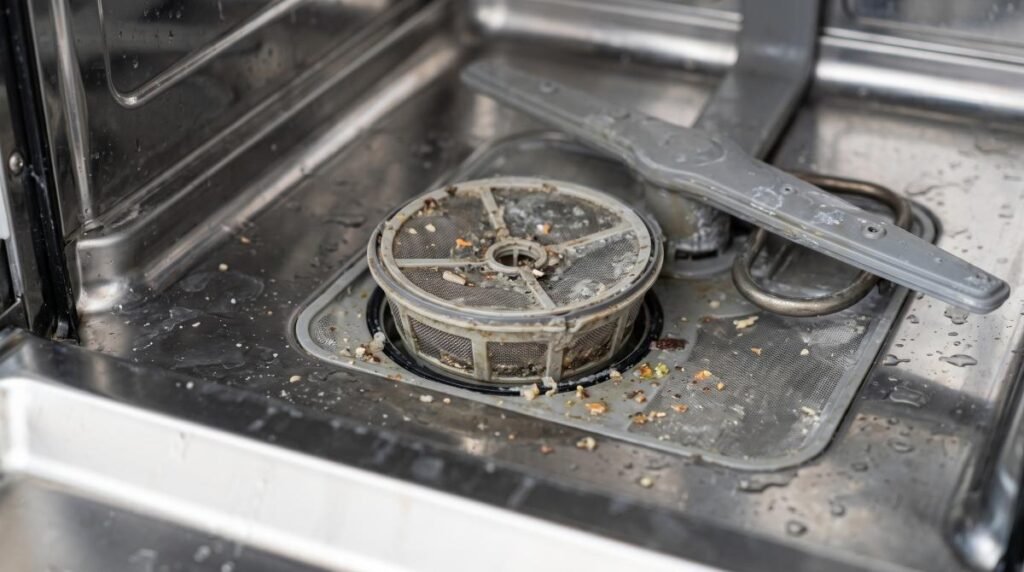
The filter at the bottom of the tub catches what the spray arms knock loose, and skipping it catches up with you fast. Grease, soap scum, and food particles pack into the mesh and into the sump beneath it, the small basin where leftover water collects before it drains. Left alone for a few weeks, that buildup breaks down the same way food does in any trap. It smells like it, too.
It’s also the easiest cause to rule out. Pulling the lower rack and looking takes about two minutes.
2. Standing Water Left in the Tub After a Cycle
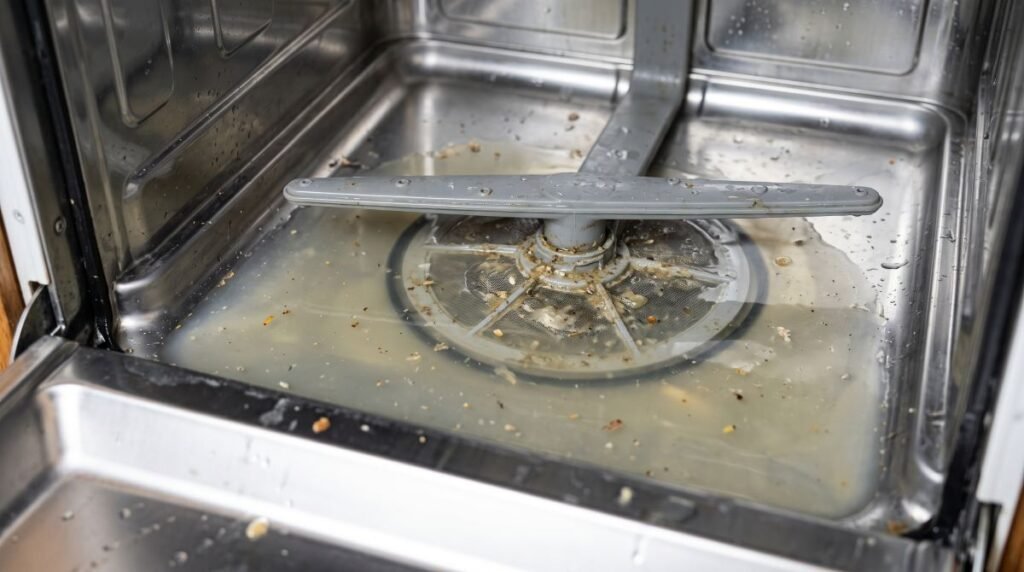
Open the dishwasher and find an inch of water sitting in the bottom. That water has been sitting there since the last cycle finished. Standing water smells on its own, especially once bacteria start working on whatever food particles are floating in it.
Standing water is a symptom, not a root cause. Something is restricting drainage: the filter, the pump, the hose, or a blockage further down the line. Treat it as a reason to keep checking, not something to sponge out and forget.
3. A Failed Air Gap or High Loop Letting Water Back In
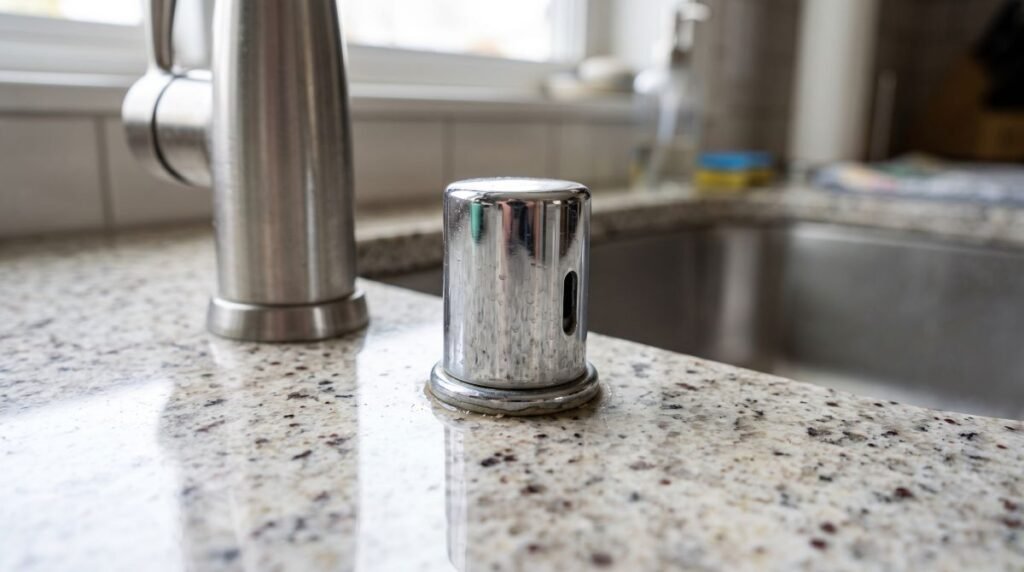
Dishwashers need a way to stop wastewater from siphoning backward once it leaves the machine. Depending on local plumbing code, that’s either an air gap or a high loop. An air gap is a small cylinder on the countertop that breaks the connection, so dirty water can’t flow back in. A high loop is simpler: the drain hose just rises well above the dishwasher before it drops down to the drain connection.
When either one fails, dirty water from the sink side can flow back into the dishwasher between cycles. It doesn’t always leave standing water behind. Sometimes the smell is the only evidence you get.
4. A Drain Hose That Skips the Trap Entirely
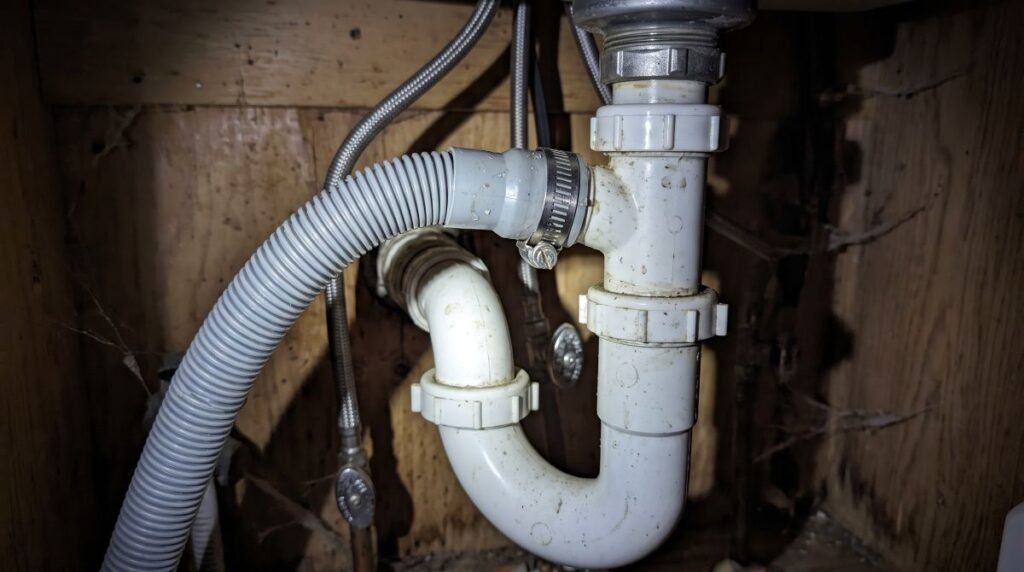
This cause doesn’t show up in most manufacturer guides, but it does happen. In most plumbing setups, a drain line is supposed to connect past a P-trap. That’s the curved section of pipe that holds a permanent plug of water and blocks sewer gas from rising back up. If a dishwasher’s drain hose was tied into the plumbing after that trap instead of before it, nothing stops gas from venting straight up the hose into the machine. Exact requirements vary by local plumbing code, so this is one to confirm with a plumber rather than assume.
A home improvement forum thread about a brand-new dishwasher with a persistent sewer smell traced the problem to exactly this. The homeowner had a correct high loop, clean filters, and a spotless dishwasher. The smell kept coming back anyway, because the hose’s actual connection point gave the trap nothing to do. That’s a plumbing mistake, not a dishwasher problem, and it usually dates back to whoever installed the unit.
5. A Blocked or Unremoved Connection at the Garbage Disposal
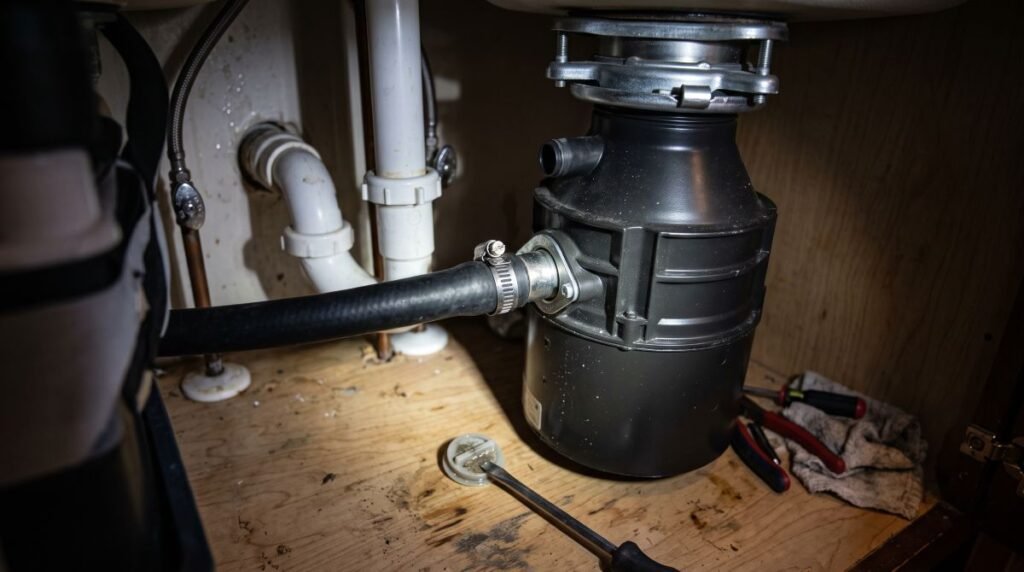
Most American kitchens route the dishwasher’s drain hose through the garbage disposal instead of straight to the drain line. That shared connection cuts both ways. A clog inside the disposal or its discharge pipe can push pressure right back up into the dishwasher. A new disposal’s dishwasher inlet also ships sealed with a plastic plug, called the knockout plug, that blocks the connection until you knock it loose.
If the smell showed up right after a new disposal went in, check the dishwasher inlet plug before anything else. It’s the single most commonly skipped step in that installation. If the disposal has been running fine for a while and the smell is new, a clog is the likelier culprit. Confirm the sink itself is draining normally too.
6. Food Residue Caked on the Door Gasket
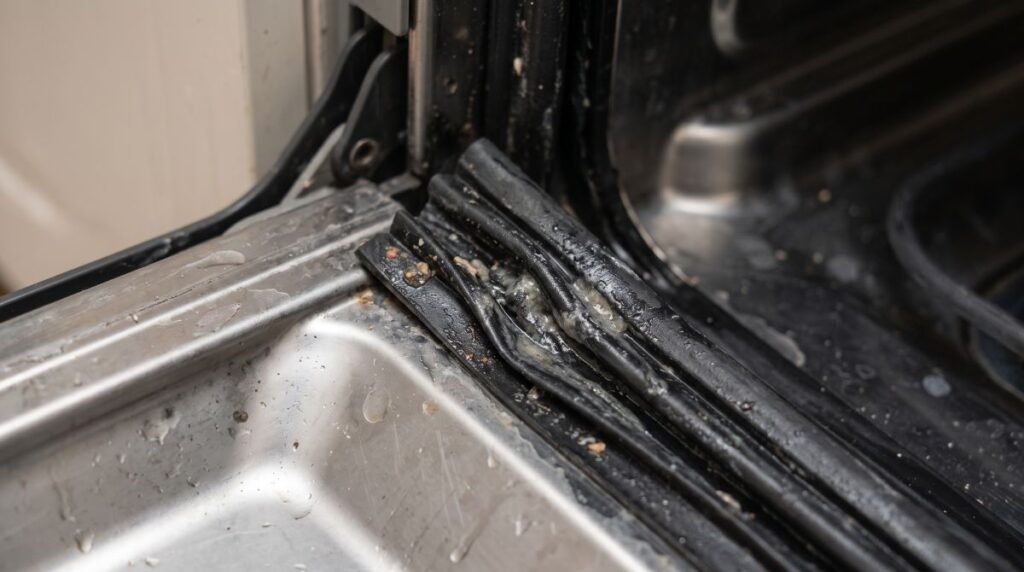
This one gets missed because it has nothing to do with the drain. The rubber gasket around the dishwasher door traps food splatter along its folds, right where you can’t see it without opening the door and looking closely. Bacteria feeding on that residue produce the same sulfur smell as a clogged trap. It’s an easy fix once you know to check it.
One owner on that same forum thread solved a persistent “sewage” smell this exact way, after ruling out the plumbing entirely. Check it early. It costs nothing but a damp rag.
How to Get Rid of the Sewage Smell in Your Dishwasher
Work through these in order. Start with the simple checks, and move on to the drainage and plumbing checks if the smell doesn’t clear.
Step 1: Clean the Filter and Wipe Out the Sump
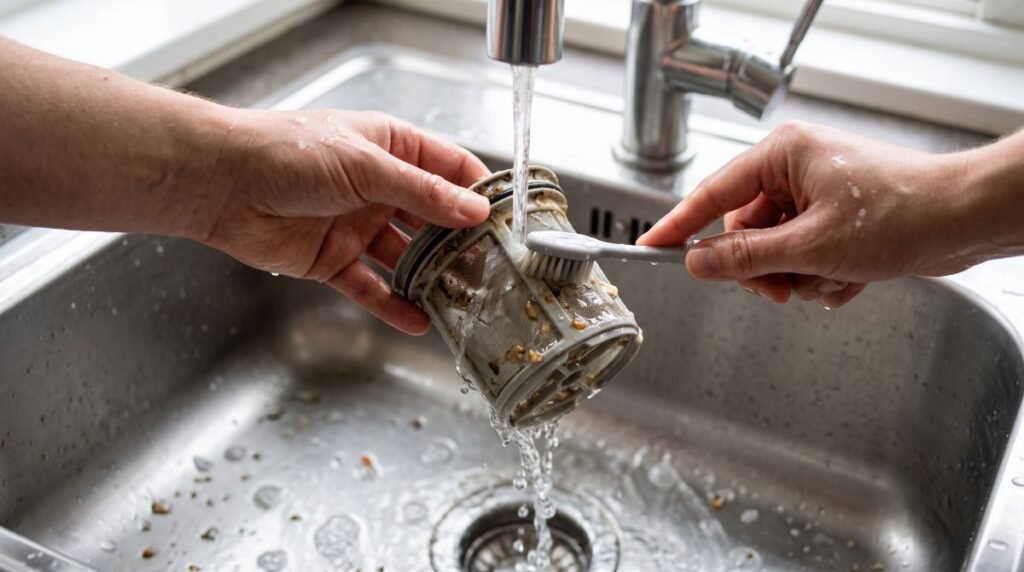
Pull the lower rack. Twist or lift the filter free according to your model, then rinse it under hot water with a soft brush, following your owner’s manual for the removal steps. Wipe out the sump beneath it by hand too, if you can reach it safely. That area collects just as much residue as the filter, and almost nobody cleans it.
Step 2: Run a Vinegar Cycle for a Deep Clean
Set a cup of white vinegar in a dishwasher-safe container on the top rack and run a full hot cycle with no dishes and no detergent. Vinegar cuts through grease and buildup the filter cleaning misses, but it’s acidic, and manufacturer guidance warns that using it too often can wear on components over time. Treat it as an occasional deep clean rather than a routine habit. Check your owner’s manual for what it actually recommends for regular upkeep. A manufacturer-approved dishwasher cleaner is often the safer everyday option.
Step 3: Check the Air Gap and High Loop Height
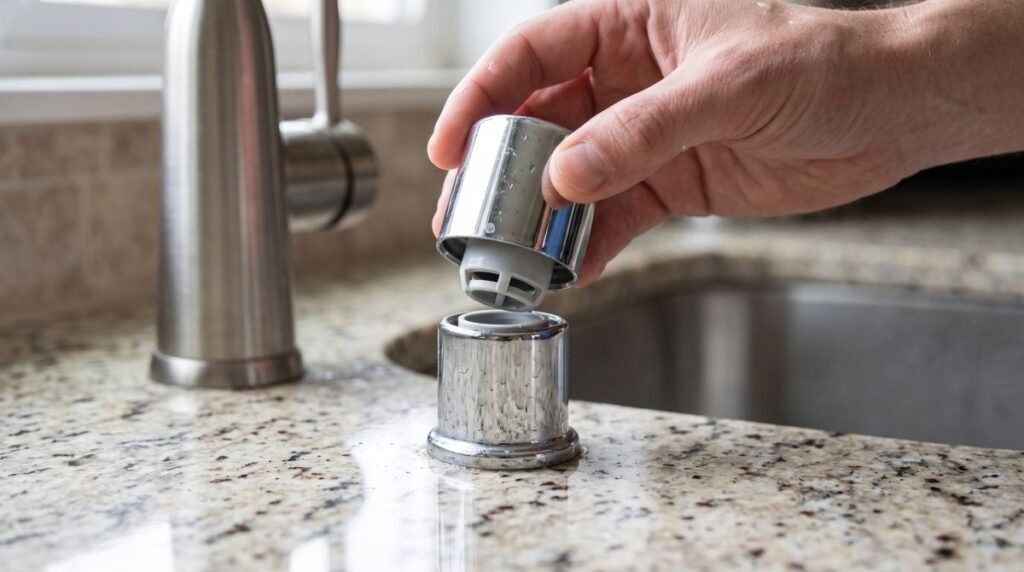
If your installation uses a countertop air gap, pull the cap and clear anything visible inside it. Using a high loop instead? Confirm the hose is still secured near the top of the cabinet and hasn’t sagged. Your dishwasher’s installation manual gives the exact height for your model, so check it rather than guessing. If fixing it means doing more than a visual check, that’s a job for a plumber.
Step 4: Trace the Hose Past the Trap and the Disposal Connection
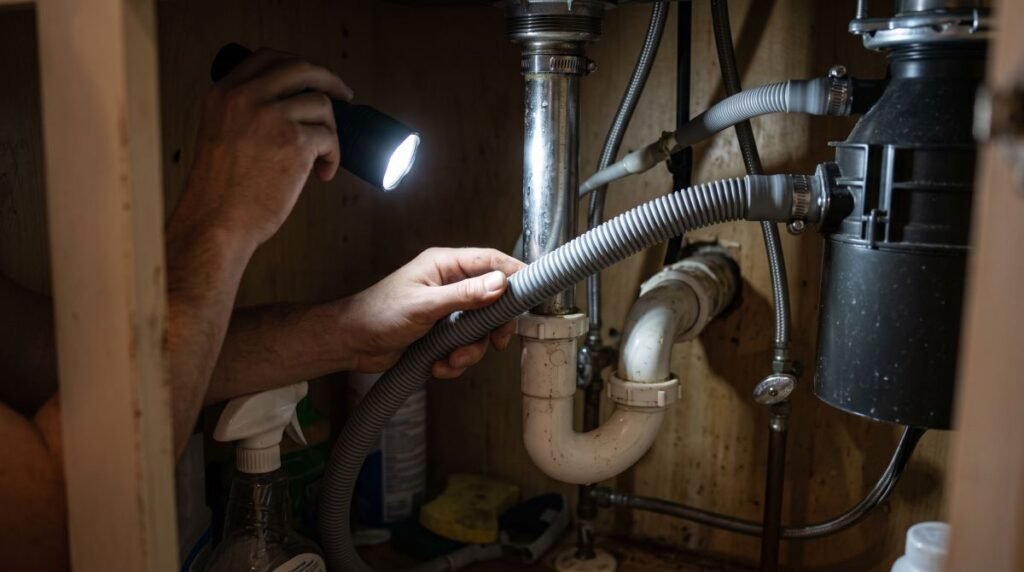
Open the cabinet under the sink. Follow the drain hose by eye from the dishwasher to wherever it connects, a garbage disposal or the sink’s own drain line. You’re looking for where that connection sits relative to the trap. If the hose terminates below or after the trap instead of feeding into it properly, that’s a plumbing fix, not a cleaning one, and worth bringing in a plumber to correct. While you’re under there, confirm the disposal side is clear and that a new unit’s inlet plug actually got knocked loose during install.
Step 5: Clean the Door Gasket and Lower Seal
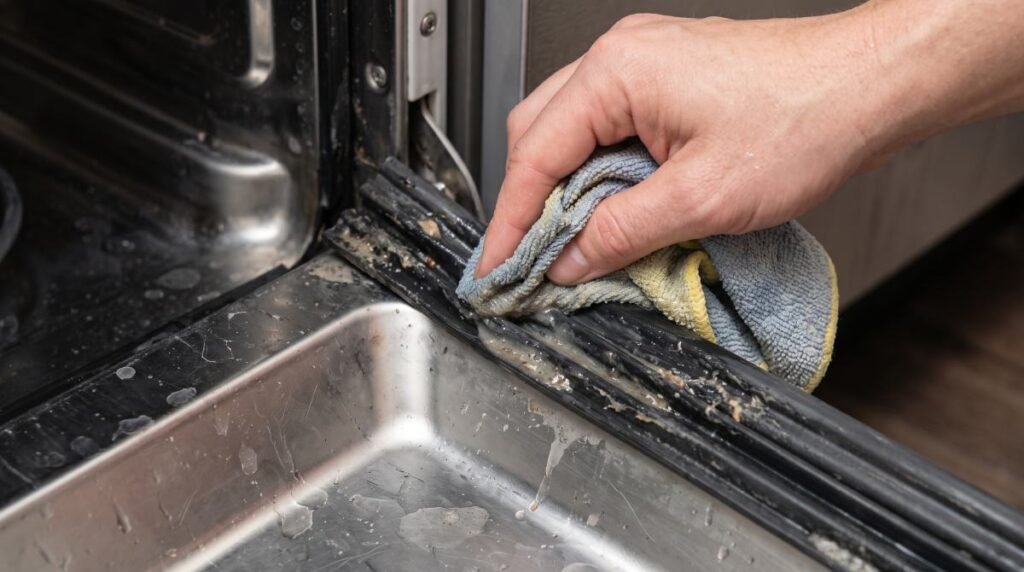
Run a damp cloth along the full length of the rubber gasket, paying attention to the folds near the bottom of the door where splatter collects. A toothbrush handles any residue that has dried on.
When to Call a Plumber Instead of Cleaning Dishwasher Yourself
Cleaning fixes the cases where food and residue are the actual source. It does nothing for a plumbing mistake. Running more cycles on top of one just wastes water and your patience.
Call a plumber if the smell returns within a day or two of a thorough cleaning. Same if you hear gurgling at the sink while the dishwasher drains, if water backs up anywhere else in the kitchen during a cycle, or if tracing the hose shows it connecting past the trap instead of into it. All of that points to the plumbing itself, not something a vinegar cycle can reach.
Call an appliance technician instead if the smell comes with a burning odor, a tripped breaker, or visible damage to the hose or pump. That’s electrical or mechanical, not drainage.
How to Keep a Dishwasher From Smelling Like Sewage Again
A few habits keep the smell from coming back once you’ve cleared it.
- Scrape large food scraps into the trash before loading, rather than relying on the filter to catch everything.
- Clean the filter on whatever schedule your manual recommends, not just once the smell gets bad enough to notice.
- Run an occasional vinegar deep clean if your manual allows it. Otherwise, follow the cleaning schedule and products it recommends, since overusing vinegar can wear on components over time.
- Wipe the door gasket when you wipe down the rest of the kitchen. It’s easy to forget precisely because it’s out of sight.
- If your kitchen has a disposal, keep that clean too. A buildup-heavy disposal chamber can push odor back up through the shared hose even when the dishwasher itself is spotless.
Final Thoughts
Start with the filter and the easy, accessible spots. That clears most ordinary cases.
If the smell survives a real cleaning, the problem is probably in the drain path rather than the dishwasher itself, and that’s worth tracing rather than cleaning again. Call in a plumber or appliance technician once the signs point that way, rather than running more cycles and hoping. Most of the time, a sewage smell has a specific, fixable cause once you know where to look.
FAQ’s
The Author

Muhammad Nabeel Dar is the founder of GarbageWasteDisposal.com, where he researches and evaluates garbage disposals, kitchen sinks, dishwashers, and kitchen drain systems to help homeowners make confident buying decisions.
After analyzing 30+ garbage disposal models, multiple sink configurations, and a wide range of drain system components across brands like InSinkErator, Waste King, Moen, GE, Frigidaire, and KRAUS, he focuses on what actually matters: real-world performance, build quality, noise levels, installation ease, durability, and overall value.