Batch Feed vs Continuous Feed Garbage Disposal
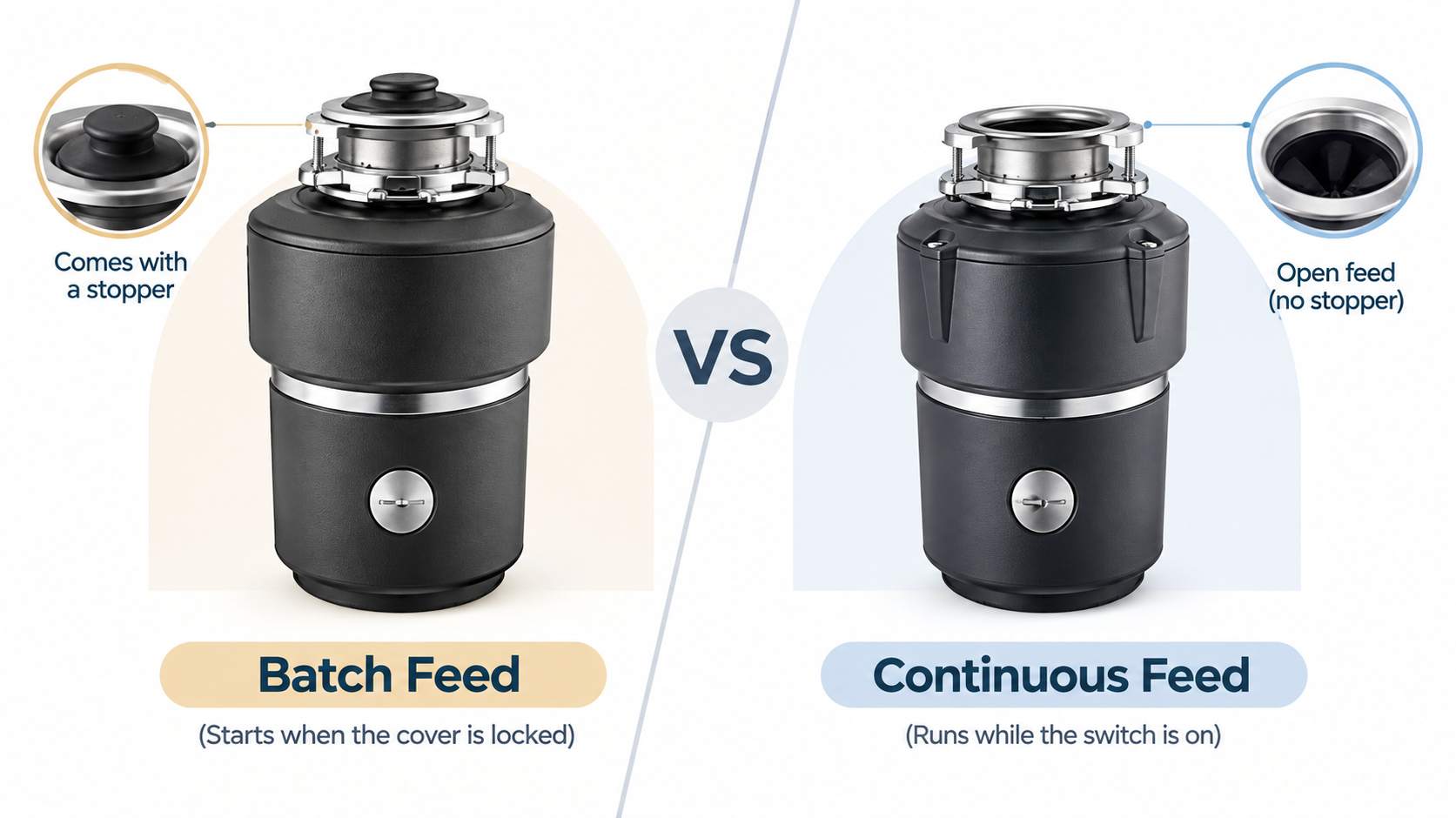
A continuous feed garbage disposal turns on with a wall switch and runs while you feed it scraps. A batch feed garbage disposal only runs once you load waste in and lock a stopper over the drain. That is the entire mechanical difference behind the batch feed vs continuous feed garbage disposal question, and almost everything else people argue about, noise, grinding power, cost, follows from that one design choice rather than from anything inherent to either type.
Quick answer: if small children or safety is your main concern, batch feed’s covered-only operation is worth the slower workflow. If speed, familiarity, and easy replacement matter more, continuous feed is the right call for most households, and it is what most American kitchens already have.
Here is what actually changes between the two, without the sales pitch.
What Is a Continuous Feed Garbage Disposal?
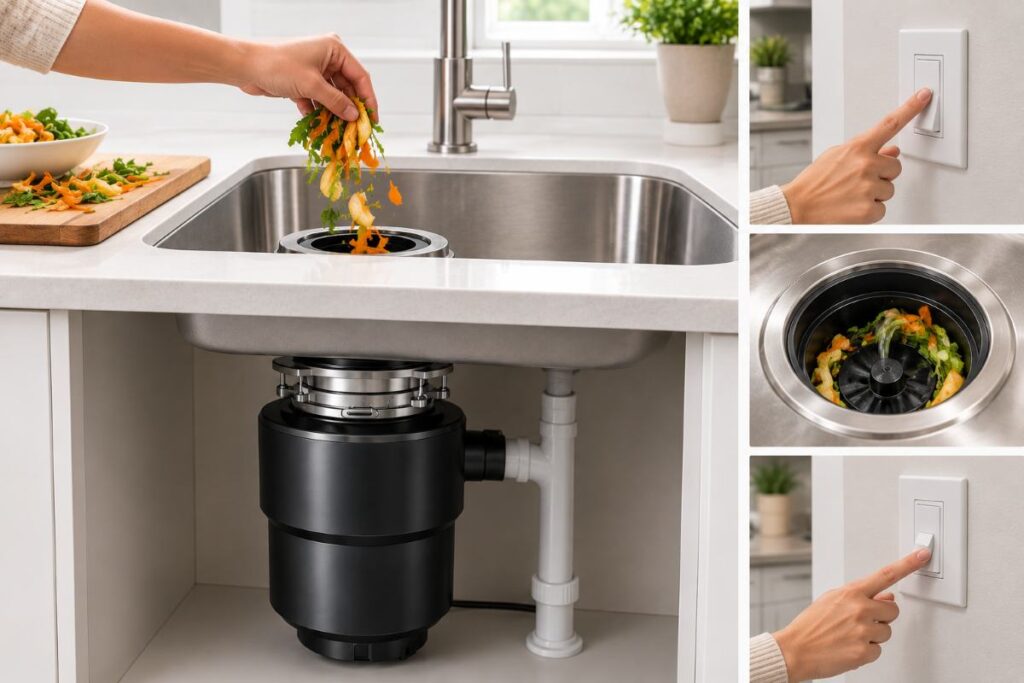
A continuous feed disposal runs as soon as you flip the wall switch, and it keeps running while you feed it scraps, one handful at a time, for as long as the switch stays on. Flip it off, it stops. That is the entire mechanism.
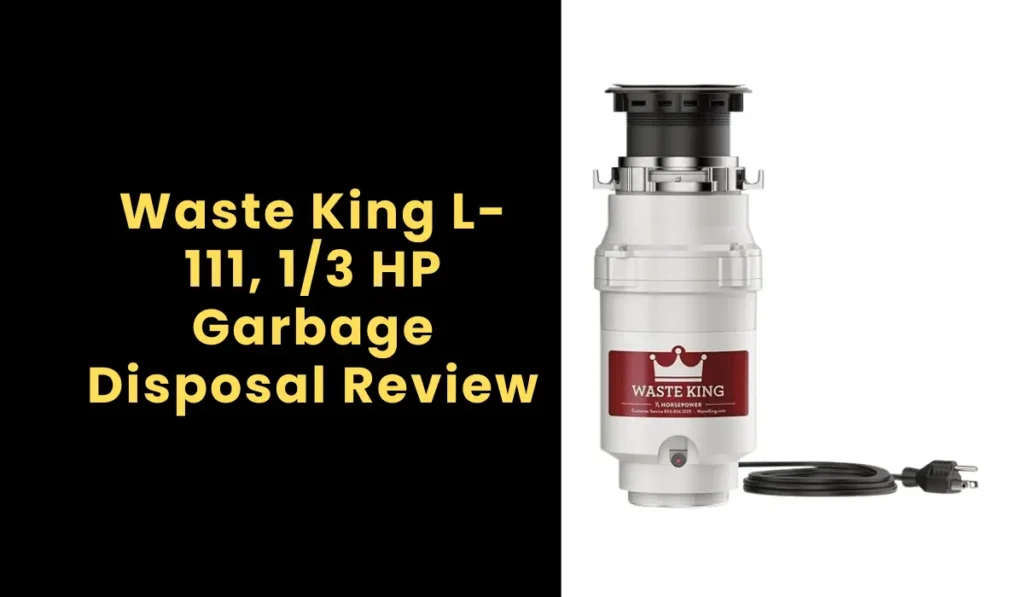
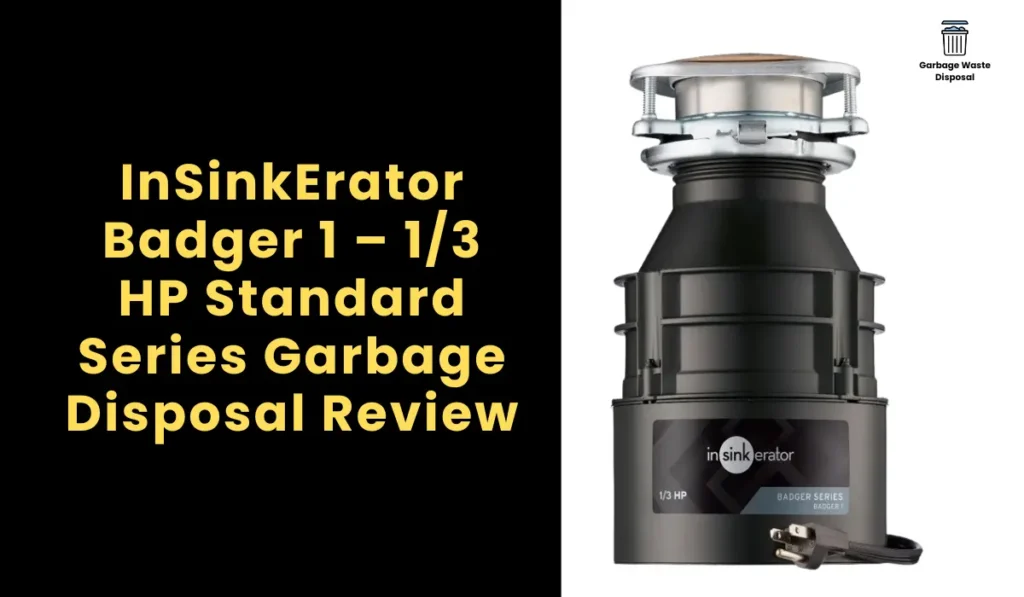
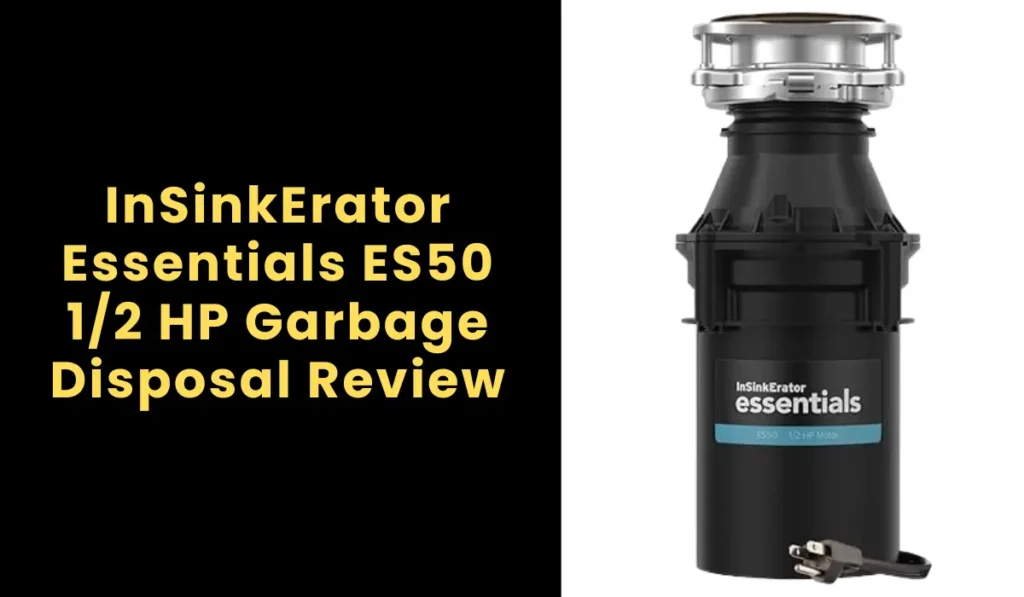
It is also the mechanism behind most of the disposals sold in the United States, and most of what we have reviewed in depth on this site falls into this category, from budget 1/3 HP units up through 1 HP flagships like the InSinkErator Evolution 1HP. Continuous feed is the default because it is cheaper to manufacture, faster to use during a big cleanup, and familiar to anyone who has ever rented an apartment with a disposal already installed under the sink.
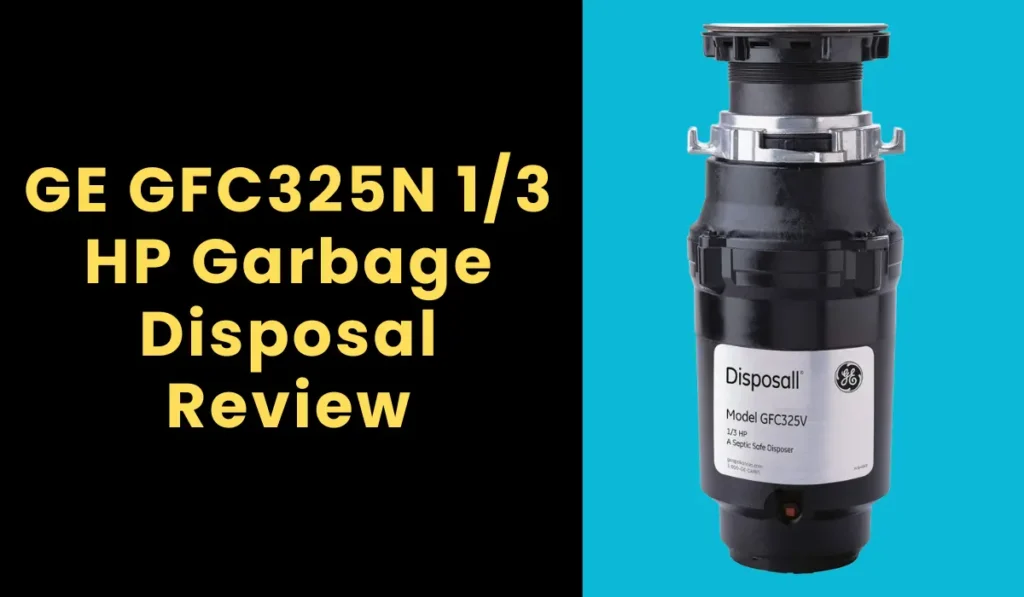
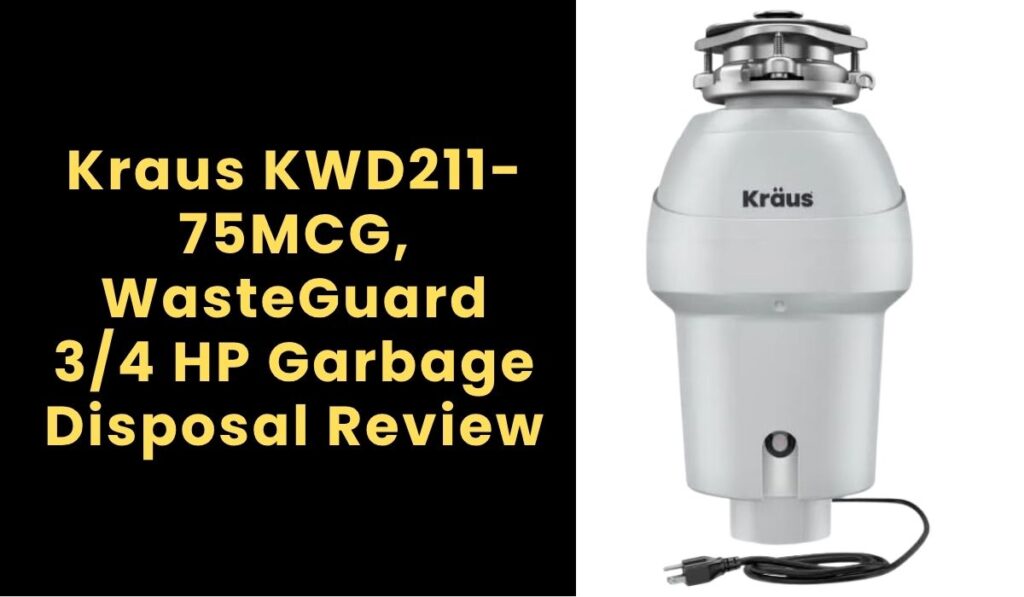
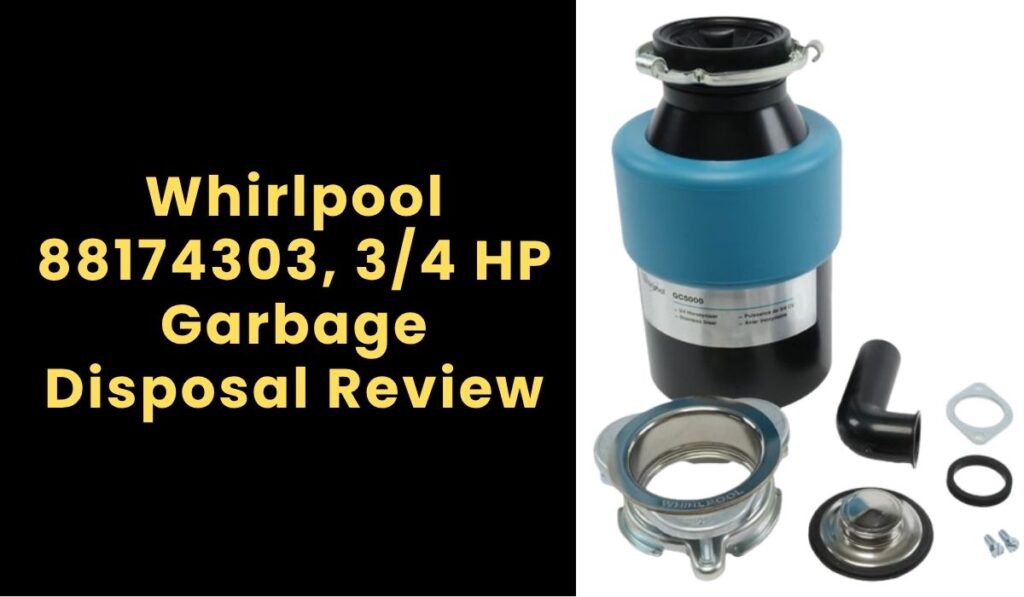
At the 3/4 HP tier alone, where most households land, continuous feed options span a wide range of builds, from the Kraus KWD211-75MCG and its MagnaGrind motor to the GE GFC720N and the Whirlpool 88174303 on the more budget-friendly end. Same feed type across all three, very different motors and price points underneath it.
Continuous Feed Pros and Cons
Pros
Cons
What Is a Batch Feed Garbage Disposal?
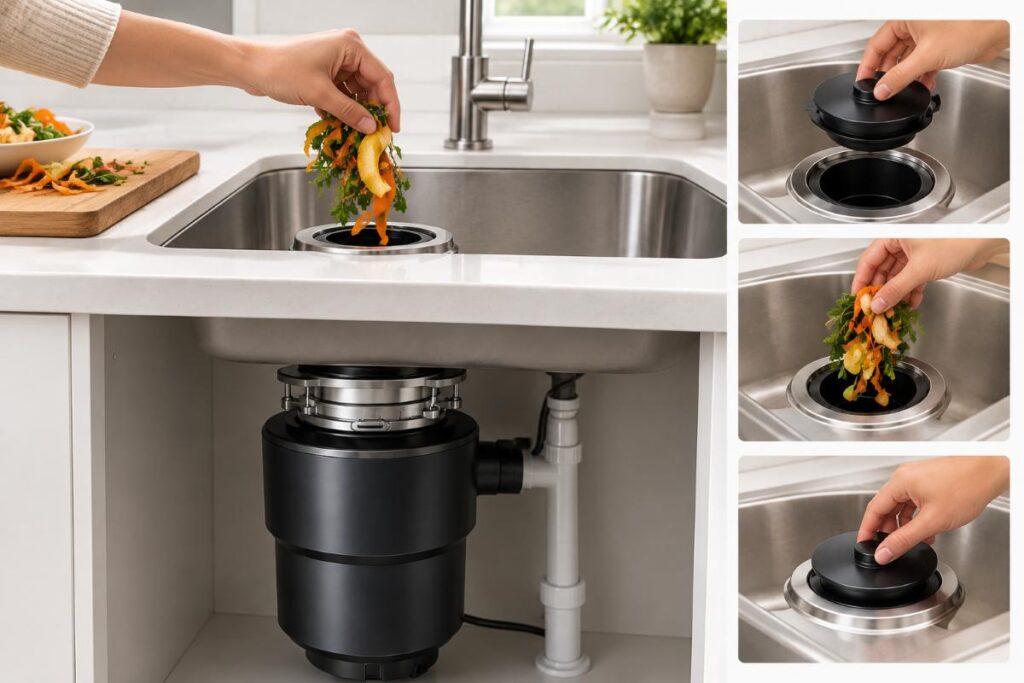
A batch feed disposal will not run at all until you load food waste into the chamber and lock a stopper or cover into place. Twist it, and the motor starts. Lift it, and the motor stops. There is no wall switch involved in daily use, so the disposal physically cannot grind anything while the drain sits open.
We reviewed one of these in depth, the InSinkErator Evolution Cover Control, a 3/4 HP batch feed model built around what InSinkErator calls its Magnetic CoverStart system. Load the chamber, seat the magnetic cover, and rotate it into place, and only then does the 3-Stage MultiGrind system and Dura-Drive induction motor engage. It ships with a 9-year in-home service warranty, among the strongest terms we have seen at this HP tier.
Batch feed units are the minority in most retailers’ disposal aisles, and they are rarer still among the models this site has reviewed model by model. That scarcity is not an accident. It reflects real demand, concentrated in a specific kind of household, rather than a gap in anyone’s catalog.
Batch Feed Pros and Cons
Pros
Cons
The Real Difference: Safety, Workflow, and Noise
Safety is the honest reason most people end up comparing these two types in the first place, and it is also the one place batch feed has a real, structural advantage. A continuous feed unit cannot tell the difference between a fork and a fingertip. A batch feed unit cannot run at all unless the cover is seated, full stop. If there are small children in the house, or anyone prone to reaching into a running sink drain out of habit, that mechanical guarantee is worth more than any warranty length.
Workflow tips the other way. Continuous feed lets you rinse a full sink of dishes and grind scraps in one continuous motion, switch flipped, water running, done. Batch feed asks you to stop, load, cover, twist, wait for the chamber to clear, and repeat. Buyer feedback on the Evolution Cover Control we reviewed backs this up almost word for word: people moving from a continuous feed unit describe a short adjustment period, and most say the extra step feels slower specifically during larger meal prep sessions, not during ordinary daily cleanup.
Noise is where a lot of buying guides get it wrong. Feed type has nothing to do with how loud a disposal sounds. That comes down to sound insulation, motor design, and mounting hardware, the same variables that separate a quiet continuous feed unit from a rattling one. A batch feed disposal is not inherently quieter, it just happens that several premium batch feed models, the Cover Control included, are built with the same SoundSeal insulation found in InSinkErator’s quietest continuous feed units.
Batch Feed vs Continuous Feed Comparison Table
The cleanest way to see what actually changes is to hold horsepower and brand constant and compare one batch feed model against a continuous feed model built by the same manufacturer at the same power tier.
As an exampe, here is the Evolution Cover Control against the continuous feed Evolution Compact, both 3/4 HP, both models of Insinkerator Advanced Series.
| Feature | Continuous Feed | Batch Feed |
|---|---|---|
| Activation | Wall switch, runs while flipped on | Cover or stopper locks in place before the motor starts |
| HP Range Available | 1/3 HP through 1 HP and up | Mostly 3/4 HP and above |
| Price Range | Entry-level through premium | Mid-range through premium, rarely entry-level |
| Grinding Performance | Set by horsepower and grinding stages, not feed type | Set by horsepower and grinding stages, not feed type |
| Noise Level | Set by insulation and motor mounting, not feed type | Set by insulation and motor mounting, not feed type |
| Drain Safety | Exposed while running | Covered, cannot run exposed |
| Workflow | Continuous grind while loading and rinsing | Load, cover, grind in batches |
| Installation | Corded plug-in or hardwired, varies by model | Corded plug-in or hardwired, varies by model |
| Market Availability | Majority of disposals sold in the US | Minority of the US market |
| Best For | Speed and a familiar, switch-operated routine | Households that want covered-only safety |
Does Feed Type Affect Grinding Performance?
No, and the table above is the proof. Grinding power comes from horsepower, motor torque, and the number of grinding stages a disposal runs food through, not from whether a wall switch or a magnetic cover starts the motor. A 1/3 HP batch feed disposal would still struggle with chicken bones the same way a 1/3 HP continuous feed unit does. A 1 HP batch feed unit, if you could find one, would grind just as thoroughly as a 1 HP continuous feed flagship.
What batch feed does change is how waste enters the chamber. Because you load food before activating the unit rather than feeding it continuously under running water, batch feed can actually reduce splash-back and give the grinding chamber a more even, contained load per cycle. That is a workflow and mess difference, not a torque difference. Do not let a salesperson tell you a batch feed disposal grinds better. Ask what horsepower and grinding stage count it runs instead, the same questions you would ask about any continuous feed model.
Which One Should You Buy?
Buy batch feed if safety is the deciding factor in your kitchen. Homes with small children, households that have had a close call with a continuous feed unit left running, and anyone who simply prefers not having a live, exposed drain opening are the clearest fits. The extra step at meal prep time is a fair trade for that guarantee, and the choice is not limited to one badge either, the Frigidaire FF75DISPB1 runs the same magnetic-stopper idea as the Cover Control under a different brand.
Buy continuous feed if speed and familiarity matter more, which describes most households. It is the disposal type most rentals, new builds, and budget kitchens already ship with, options like the Whirlpool 88174303 sit right in that everyday price range, parts are easier to find, and the workflow needs no explanation to a houseguest or a new tenant. Cost tends to favor it too. Consumer Reports has noted that batch feed units tend to ship exclusively at 3/4 HP and above, skipping the cheaper 1/3 HP and 1/2 HP tiers entirely, which is exactly what we found in our own catalog with the Cover Control. That HP floor, not the feed mechanism itself, is what keeps batch feed’s starting price higher.
There is no universally correct answer here. Match the feed type to the actual risk and workflow in your kitchen, not to whichever one a review site ranks first.
Conclusion
Batch feed and continuous feed garbage disposals do the same core job, breaking food waste down small enough to clear your plumbing, and neither one does it better because of how it turns on. The real decision sits on two questions only you can answer: does a covered-only safety mechanism matter enough in your household to accept a slower workflow, and are you comfortable with the exposed-drain operation that continuous feed has always relied on.
Answer those honestly, match the horsepower to your cooking habits the way you would with any disposal, and the batch feed vs continuous feed question stops being complicated.
The Author

Muhammad Nabeel Dar is the founder of GarbageWasteDisposal.com, where he researches and evaluates garbage disposals, kitchen sinks, dishwashers, and kitchen drain systems to help homeowners make confident buying decisions.
After analyzing 30+ garbage disposal models, multiple sink configurations, and a wide range of drain system components across brands like InSinkErator, Waste King, Moen, GE, Frigidaire, and KRAUS, he focuses on what actually matters: real-world performance, build quality, noise levels, installation ease, durability, and overall value.