What Is a Hex Key and How to Use It
You have almost certainly used one of these without knowing what it was called. That little L-shaped metal rod that came in the bag with your IKEA bookshelf? Hex key. The tool the bike shop used to adjust your handlebars? Same thing. And the wrench you stick into the bottom of a jammed garbage disposal to free the grinding plate? Also a hex key.
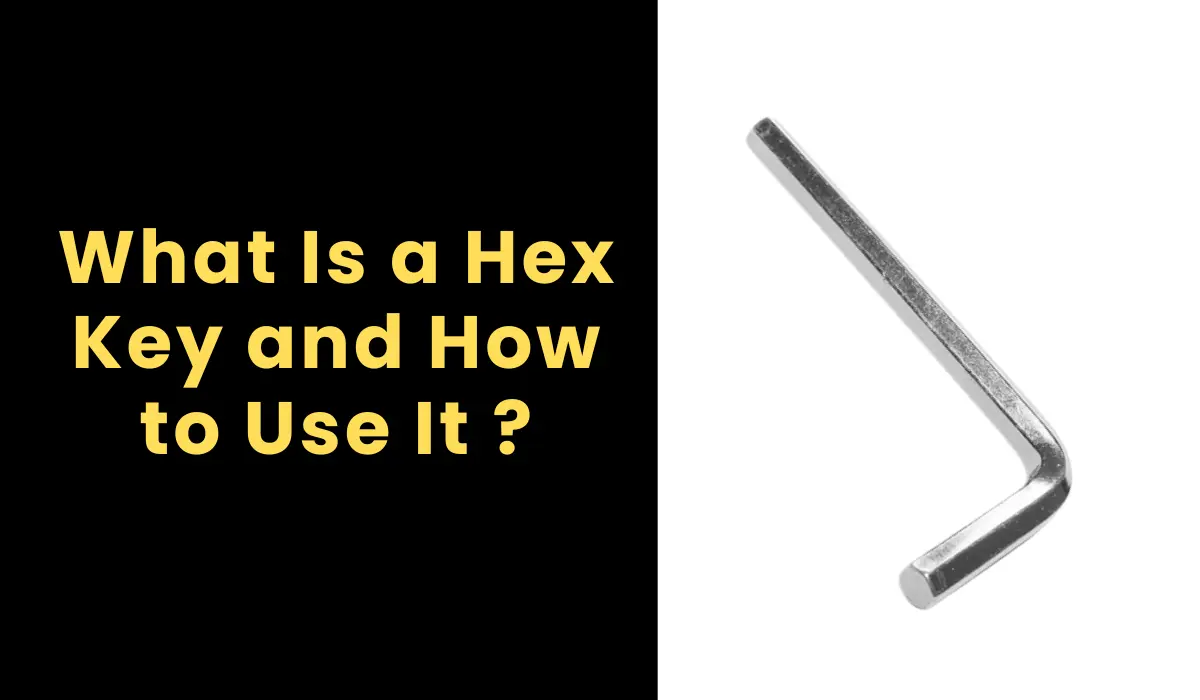
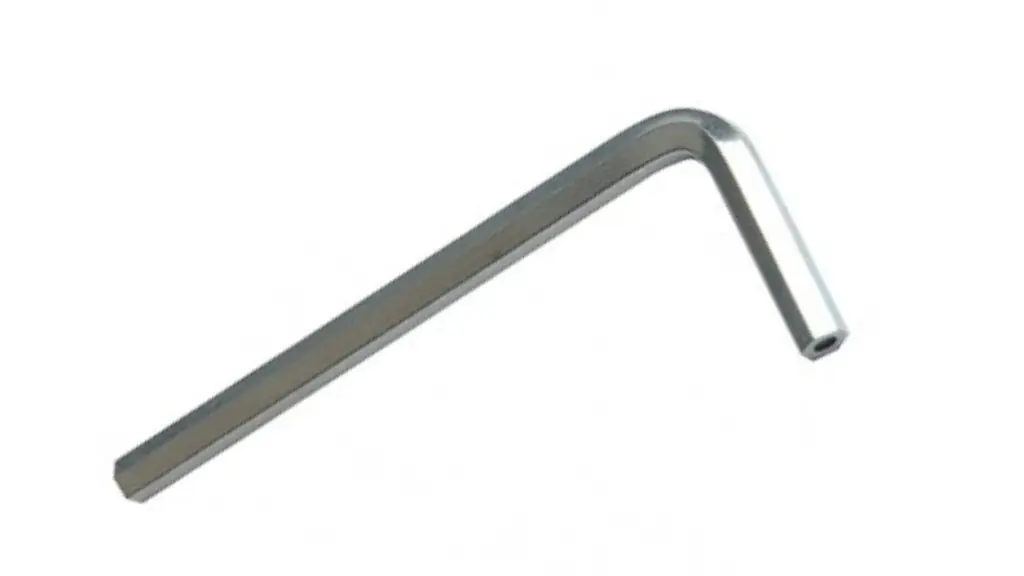
So what is a hex key exactly? Take a steel rod, machine it into a six-sided hexagonal shape, bend it 90 degrees in the middle, and you have one. Both ends fit into screws and bolts that have matching hexagonal sockets cut into their heads. “Hex” just means six in Greek. Six sides, six contact points. That is it. No moving parts, no grip, no mechanism.
Now the name confusion. Walk into any hardware store and you will see these labeled as hex keys, Allen wrenches, Allen keys, or hex key wrenches. People argue about the naming online like it matters. It does not. Is a hex key the same as an Allen wrench? Yes. Completely identical. The “Allen” part is a brand name from the Allen Manufacturing Company, which patented a process for making hex socket screws around 1910. The brand name outlived the patent by a century. If someone hands you an Allen key and you hand back a hex key, you have given them the same tool.
What Does a Hex Key Look Like
Picture a capital letter L made from a single rod of hardened steel. Both arms have the same six-sided cross section. Short arm gives you torque. Long arm gives you reach. Flip it either way depending on what the job needs.
Most individual hex keys are bare metal rods with no handle, no grip, and no moving parts. That simplicity is the whole point. Six contact surfaces lock into the fastener socket with zero slop, distribute turning force evenly, and resist cam-out far better than a Phillips or flathead screwdriver does. This is why hex fasteners show up on everything from Swedish furniture to mountain bikes to garbage disposals.
Hex Key Sizes: SAE vs Metric
Two measurement systems. One mistake strips the screw. Pay attention.
SAE sizes use fractions of an inch. Anything manufactured in the US uses them, and that includes every residential garbage disposal on the American market.
| Size | Where You Will Likely Use It |
|---|---|
| 1/16″ | Electronics, tiny instrument screws |
| 3/32″ | Small machinery, precision fasteners |
| 1/8″ | Bicycles, small appliances |
| 5/32″ | Furniture assembly |
| 3/16″ | Furniture, some automotive |
| 1/4″ | Garbage disposals, automotive, machinery |
| 5/16″ | Automotive, heavy machinery |
| 3/8″ | Heavy equipment, large bolts |
Metric sizes use millimeters. Common range is 1.5mm through 10mm. Imported furniture, European cars, and commercial kitchen equipment are where you run into these.
Here is where people get into trouble. A 5/32″ SAE key and a 4mm metric key? Nearly identical in the hand. Close enough that you can jam one into the other’s socket and it will feel like it fits. But it does not. Not really. That tiny mismatch grinds the internal corners of the fastener down a little bit every time you turn it. Do that enough times and the socket is round instead of hexagonal. Now nothing grips it. The screw is ruined.
Simple rule: if it slides in smoothly with no wiggle, it is the right system. If you have to push or twist to seat it, try the other measurement system.
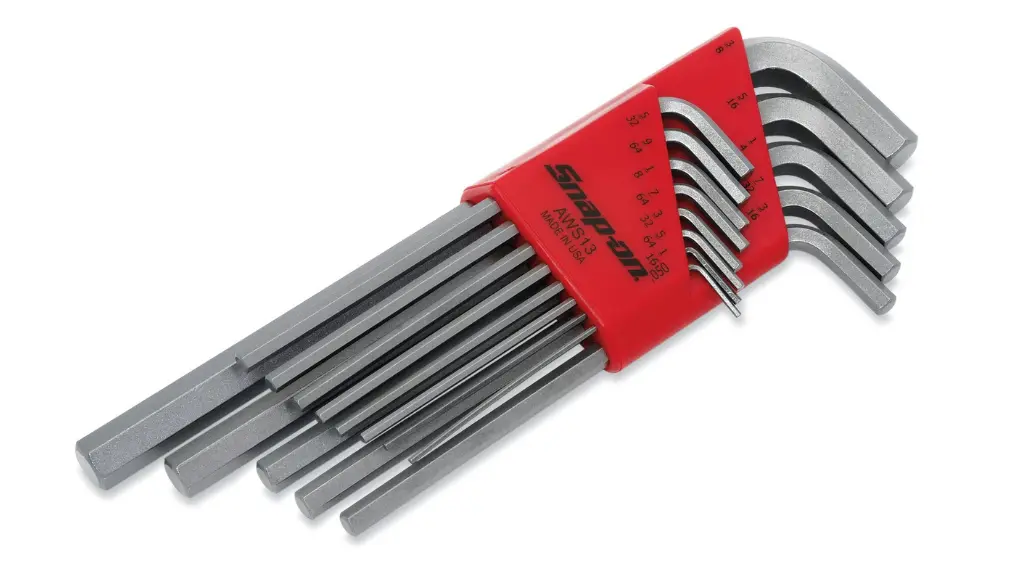
Measuring a loose hex key that has no size printed on it: grab a caliper or even a ruler and measure across the flats. Not corner to corner across the points. Flat side to flat side. That measurement is the key size. Packaged sets usually stamp the number near the bend, but those free keys that come with furniture almost never have markings.
Types of Hex Keys
Standard L-Shaped Hex Key
The one everyone knows. Plain steel rod, 90-degree bend, nothing fancy. You get one free with almost every piece of flat-pack furniture. For general household work and for clearing a jammed garbage disposal, this is the only type most people ever need. Anything beyond this is a convenience upgrade, not a necessity.
Ball-End Hex Key
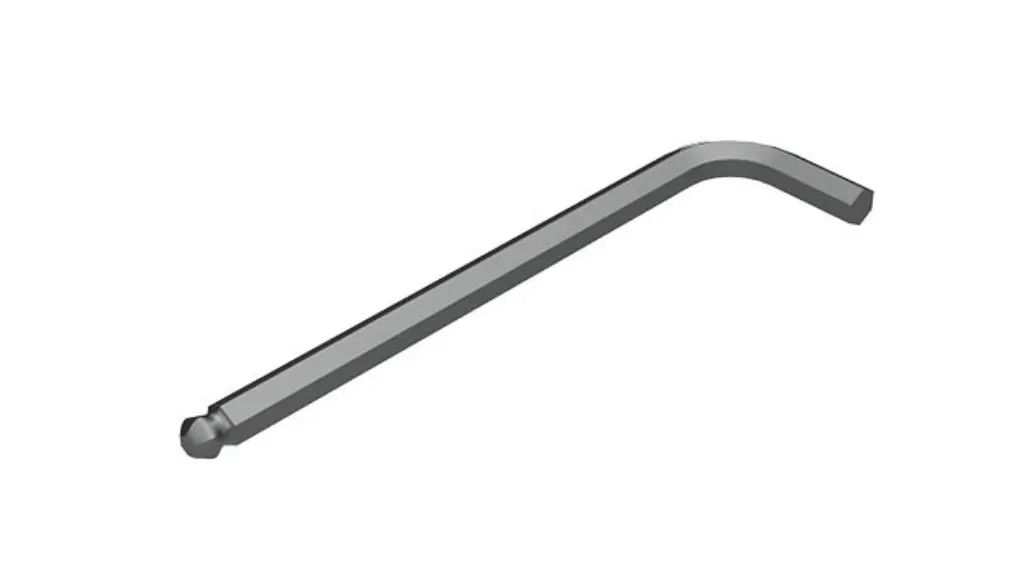
Look at the tip of the long arm and you will see a small rounded ball instead of a flat hex face. What does that ball do? It lets you come at the fastener from an angle. Roughly 25 degrees off-center before it stops gripping. Incredibly useful in tight spaces where a straight shot is physically blocked. The catch is that the ball touches less surface area, so you cannot apply as much torque before it slips. Best approach: use the ball end to get the screw started or loosened, then flip the key around and finish with the flat end for full torque.
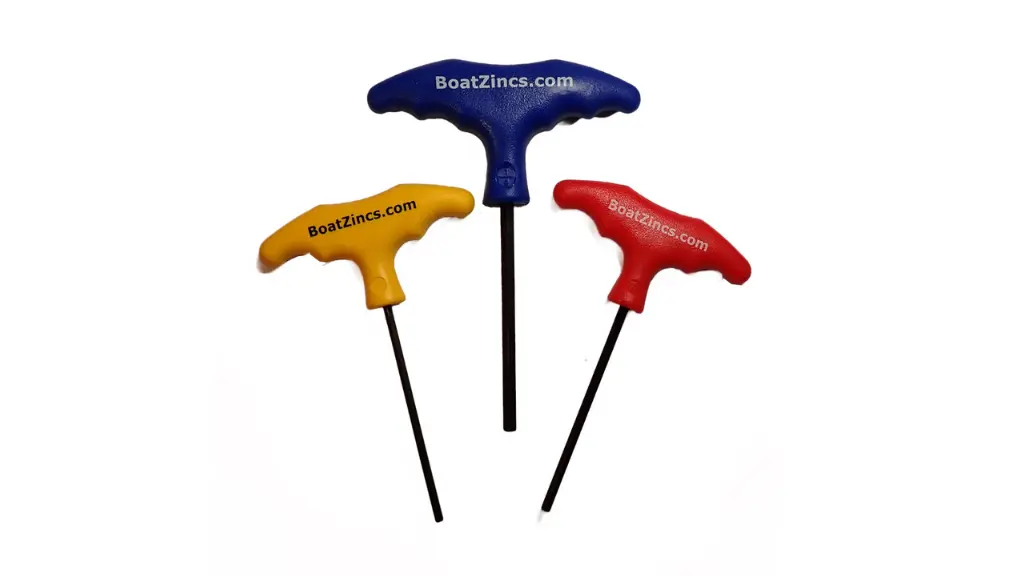
T-Handle Hex Key
Imagine a hex key shaft with a perpendicular handle across the top. You drive it with your whole palm instead of pinching a thin rod between your fingers. Mechanics love these for anything that needs real force. For furniture assembly? Overkill. For pulling a caliper bolt on a brake job? Exactly right.
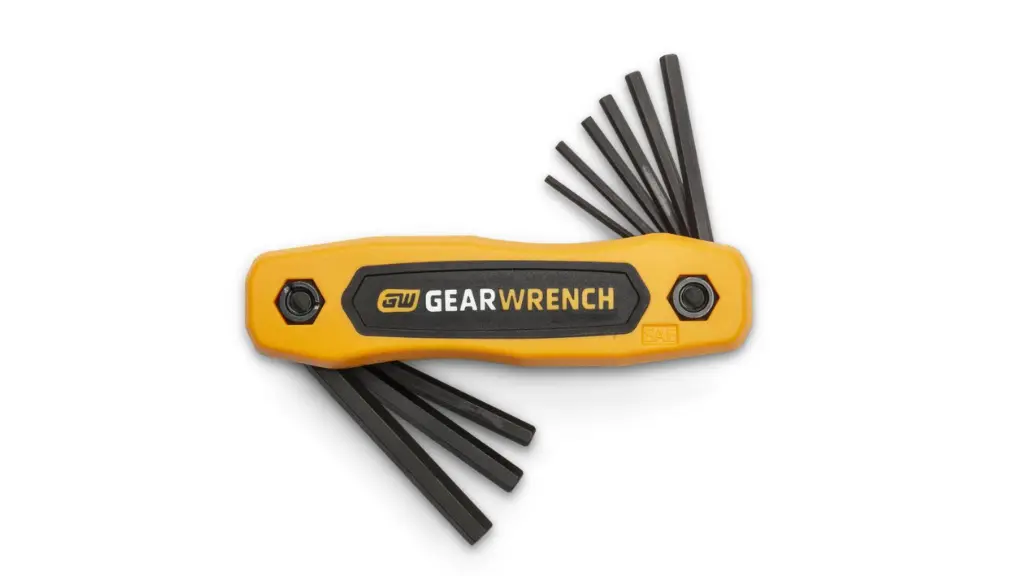
Folding Hex Key
Multiple sizes folded into a single holder that opens like a Swiss Army knife. Cyclists keep one in their jersey pocket because it covers every size for handlebars, seats, brakes, and derailleurs in one compact package. The downside shows up when you need to reach a deeply recessed fastener because the folded body itself blocks access. Good for portability, not always great for tight spots.
Security Hex Key
Small hole drilled into the center of the hex tip. That hole exists to clear a protruding center pin inside tamper-proof fasteners. You find these on park benches, electrical enclosures, vending machines. Residential homeowners will almost never encounter one unless they maintain commercial or public-facing equipment.
How to Use a Hex Key Correctly
Wrong size ruins the fastener. That is not an exaggeration. The key should drop into the socket cleanly. No forcing, no wobble. If it rattles, too small. If you have to push, too big. Either situation strips the internal hex faces under torque, and a stripped hex socket is one of the more frustrating repair problems to deal with.
Once the correct key is seated, put the short arm in the socket for maximum leverage. The long arm is your handle. Clockwise tightens. Counterclockwise loosens. Need reach more than power? Flip the key, insert the long arm, use the short arm as a stubby handle. Less leverage but more clearance in tight spaces.
Stuck fastener? Stop pulling harder. A few drops of penetrating oil and five minutes of patience do more than brute force. Then use the short arm in the socket so the long arm gives you maximum leverage. Steady even pressure. Not jerking. If the key itself starts bending, stop. You are rounding the socket and making the problem permanently worse.
Hex Key vs Allen Wrench: What’s the Difference?
Many people think that a hex key and an Allen wrench are two different tools, but in reality, they are not. Both names are used for the same L-shaped tool, which is used to tighten or loosen screws with hexagonal sockets. The name “hex key” is named for its six-pointed design, while the name “Allen wrench” is named after the Allen Manufacturing Company, which played a major role in popularizing the tool.
The difference is really just the terminology used. In technical manuals and in industrial environments, the term “hex key” is usually used because it is the common name for this tool. On the other hand, “allen wrench” is a brand name that has become so popular in everyday language that it has become part of common usage. So if someone asks for a hex key or an allen wrench, in most cases they are talking about the same tool.
Using a Hex Key on a Garbage Disposal
This is why this article lives on a garbage disposal site and not a general tool site.
Every InSinkErator disposal sold in the US has a 1/4″ hex socket centered on the bottom of the unit. It connects directly to the motor shaft. When a bone chip, a piece of glass, or a stubborn fruit pit wedges against the grinding plate and the motor hums but nothing moves, that hex socket is your way in.
Kill the power. Switch off, breaker off, whatever your setup requires. Get under the sink with a 1/4″ hex key. Bottom of the disposal, dead center, small hex-shaped hole. Put the key in and work it back and forth. What you are doing is physically rotating the grinding plate past whatever jammed it. Expect it to resist at first. Keep working the key. Once it spins a full rotation without catching, the jam is clear. Pull the key, run cold water, flip the switch.
InSinkErator packs a dedicated wrench with most units. They call it a Jam-Buster or self-service wrench. It is a 1/4″ hex key with a slightly longer arm for better grip in the cramped space under a sink cabinet. Lost it? Any standard 1/4″ hex key works. Hardware store, hex key set, whatever you have.
One thing to know: Waste King disposals mostly skip the bottom hex socket entirely. Their jam-clearing method uses a wooden dowel or broom handle pushed down through the drain opening to manually rotate the grinding plate from above. The hex key fix is an InSinkErator feature specifically. Other brands vary. If jams keep happening regardless of clearing method, the problem is usually something other than a one-time obstruction.
One more thing: keep a 1/4″ hex key in the cabinet next to the disposal. Not in the garage. Not in the junk drawer. Right there, within arm’s reach. A jam during dinner prep is a 30-second fix when the wrench is already where you need it.
FAQ’s
The Author

Muhammad Nabeel Dar is the founder of GarbageWasteDisposal.com, where he researches and evaluates garbage disposals, kitchen sinks, dishwashers, and kitchen drain systems to help homeowners make confident buying decisions.
After analyzing 30+ garbage disposal models, multiple sink configurations, and a wide range of drain system components across brands like InSinkErator, Waste King, Moen, GE, Frigidaire, and KRAUS, he focuses on what actually matters: real-world performance, build quality, noise levels, installation ease, durability, and overall value.