
Dishwasher Not Draining? 9 Causes and Fixes
You open the dishwasher expecting clean, dry dishes, and instead find an inch of cloudy water sitting in the bottom. A dishwasher not draining is one of the most common appliance complaints homeowners run into, and it’s usually not the appliance dying on you. The usual suspects are a clogged filter, a kinked drain hose, a blocked garbage disposal connection, a clogged air gap, or a genuine drain pump problem. Start with the simple checks before assuming you need a new part.
One thing worth knowing first. A small amount of water in the sump area is normal on plenty of models, there to keep the door seal from drying out. Water that covers the filter or pools across the tub floor is different. That’s a real drainage failure.
Why Is My Dishwasher Not Draining?
Wastewater leaves through the filter, into the pump, out through the drain hose, and into either the sink’s drain line or a disposal connection. Block that path anywhere and the water has nowhere to go.
Broadly, you’re looking at one of three things. A blockage inside the dishwasher or its drain line. A problem with the sink or disposal it drains into. Or a part that’s failed. The first two take a few minutes to check yourself. The third is where you call a technician.
9 Causes of a Dishwasher Not Draining and How to Fix Them
1. A Clogged or Dirty Dishwasher Filter
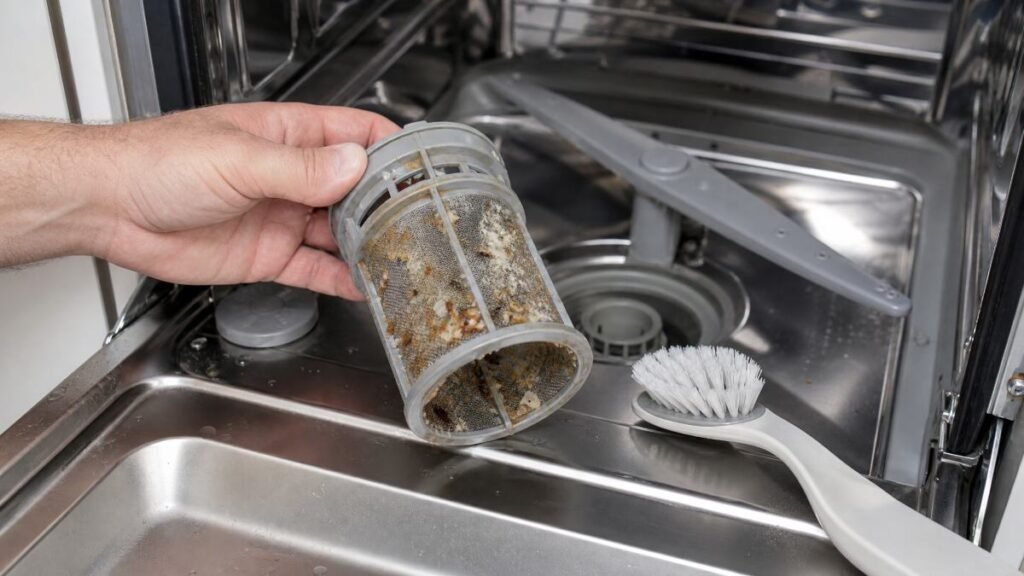
Food scraps and grease collect in the filter over time. Once it’s packed tight, water can’t drain fast enough.
The filter sits near the bottom of the tub, usually under the lower rack. Pull the rack out, then follow your model’s instructions to twist or lift the filter free. Rinse it under warm water and work a soft brush through the mesh. Skip steel wool or harsh cleaners unless your manufacturer says they’re safe. Reinstall the filter exactly as it came out, a filter seated at an angle can block flow just as well as a dirty one.
Filter designs vary by brand, some are a single cylinder, others split into coarse and fine filters. Check your manual if yours looks different.
2. A Kinked, Clogged, or Damaged Drain Hose
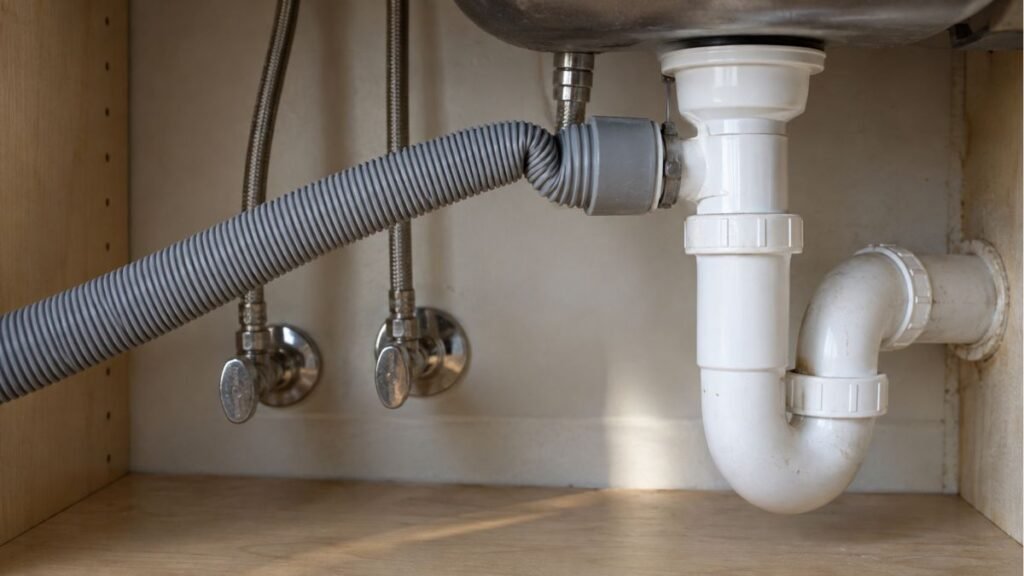
The drain hose carries wastewater from the dishwasher to its connection under the sink, and three separate things can go wrong with it.
A kinked hose has a sharp bend, often from the appliance being pushed back too far during installation. A clogged hose has grease narrowing the inside, even though it looks fine from outside. A damaged hose has a crack or collapsed section, and that one usually means replacement.
Check what you can see under the sink first. Pulling a built-in dishwasher out to inspect the back of the hose is a two-person job. The hose also needs a high loop before it drops to the drain connection, often around 20 inches above the floor, though the exact height depends on your model, so check the installation manual rather than assume. Skip the loop and dirty water can siphon back into the machine. An air gap does the same job a different way, covered next.
3. A Garbage Disposal Blockage or Unremoved Knockout Plug
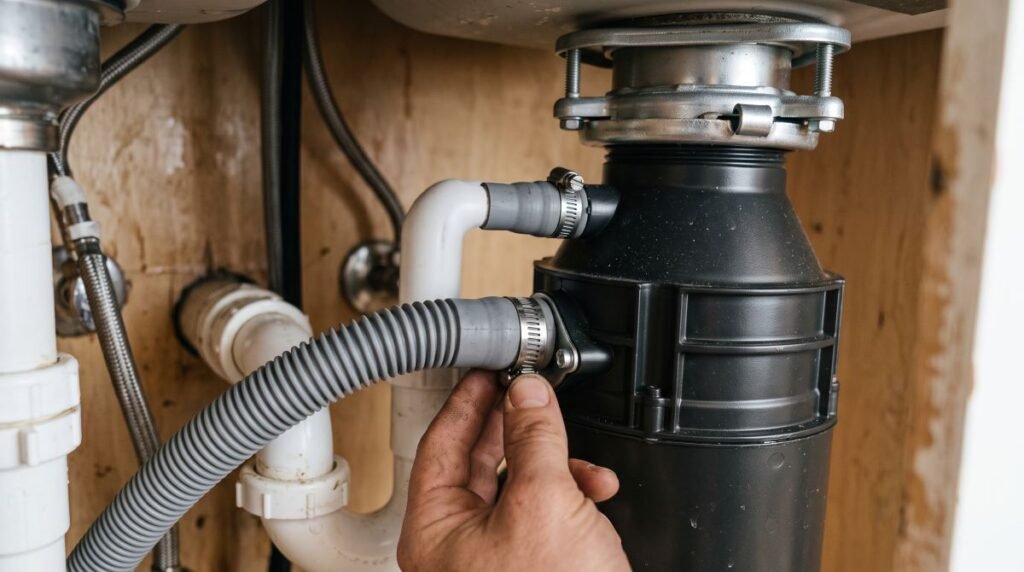
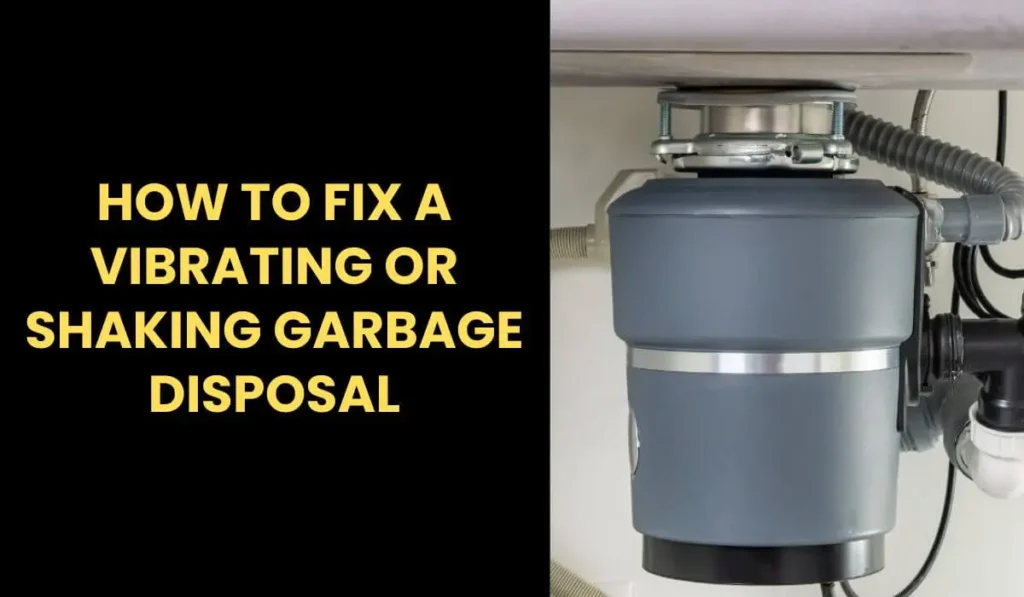
In most American kitchens, the dishwasher drain hose connects into an inlet on the side of the garbage disposal rather than running straight to the drain pipe. That connection causes two different problems.
A blocked disposal or sink drain restricts water leaving the dishwasher, the same way any downstream clog would. An unremoved knockout plug is something else. New disposals ship with a plastic plug sealing that dishwasher inlet at the factory. If nobody knocked it loose during installation, the inlet stays sealed no matter how well everything else works.
If the disposal was installed recently, check the plug first. It’s the most commonly missed step in that connection. If the sink itself is also slow or backing up, a blockage in the disposal or household drain is more likely than a sealed inlet.
Switch off power to the disposal at the breaker before inspecting anything. Checking for the plug means disconnecting the drain hose and looking into the inlet. Removing a stuck one can require opening the disposal, best left to a professional if it’s not straightforward. Never reach into an energized disposal, and don’t expect running the disposal to clear a plug that was never knocked out.
For the full removal walkthrough, see this site’s guide to the garbage disposal knockout plug.
4. A Clogged Air Gap or Improper Drain Hose High Loop
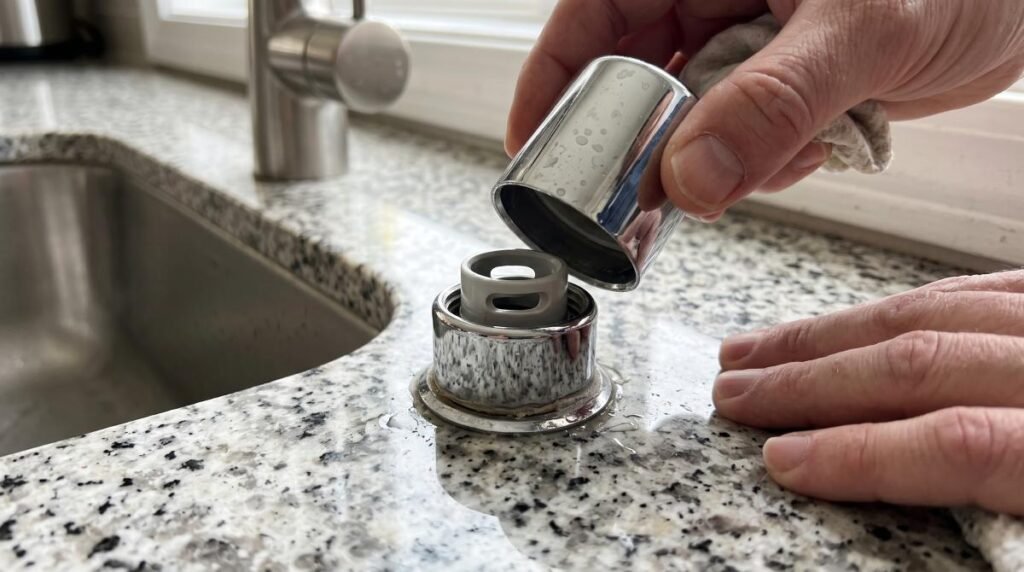
An air gap and a high loop both stop dirty water from siphoning back into the dishwasher. Which one your kitchen uses depends on local plumbing code, not preference.
An air gap is the small chrome or stainless cylinder mounted on the countertop next to the faucet. Water spilling from its cap during a drain cycle usually means something downstream is restricted. To clean it, switch off the dishwasher, remove the cap, and clear visible debris without forcing the fitting.
If your installation uses a high loop instead, check that the hose is still secured at its highest point and hasn’t sagged. Your dishwasher’s installation manual will give the exact height and routing for your model, use that instead of guessing.
Not every home has a physical air gap, and requirements differ by jurisdiction. This site’s air gap guide covers which US plumbing codes call for which setup, along with full installation steps.
5. A Clogged Kitchen Sink Drain or Household Drain Pipe
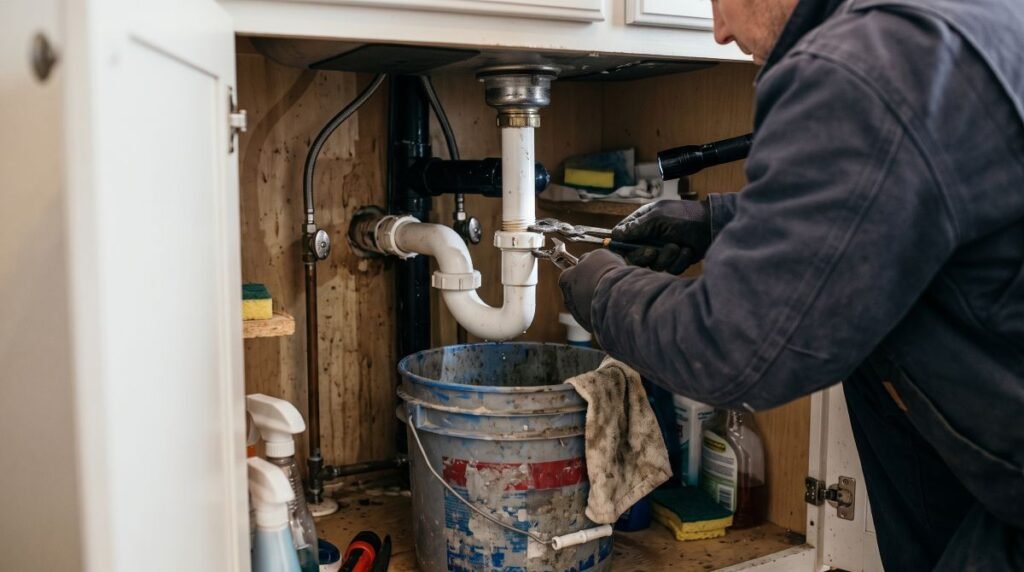
Sometimes the filter is spotless and the pump works fine, yet the dishwasher still won’t drain, because the problem sits downstream in plumbing it shares with the sink.
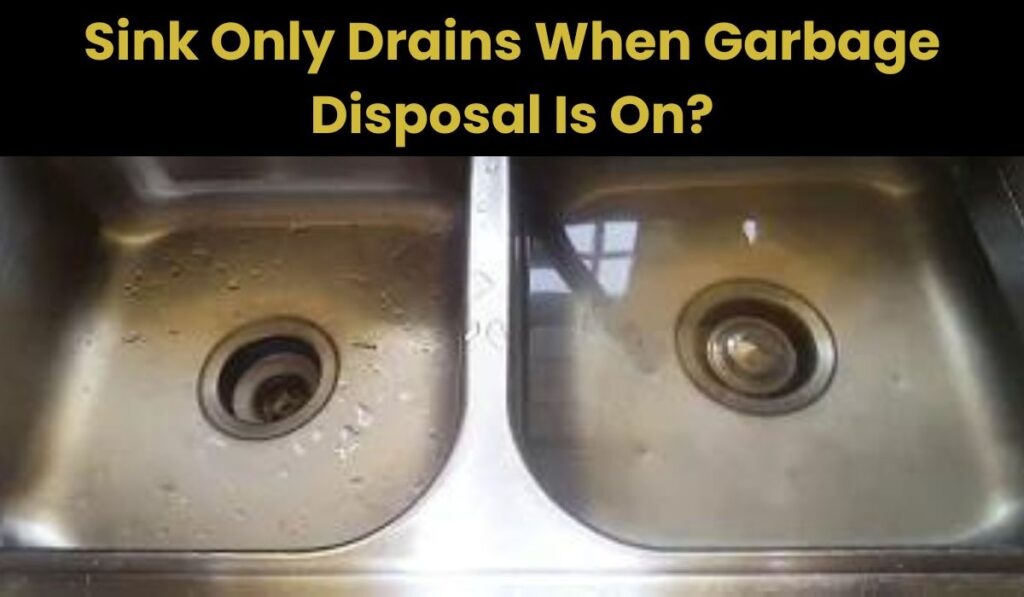
Many dishwashers tie into the same drain line as the sink, often through the disposal’s discharge side. If the sink drains slowly or backs up around the same time, the restriction is probably shared. It could sit in the sink trap, the disposal’s discharge pipe, or the branch line behind the wall.
Address the shared blockage rather than replacing dishwasher parts that were never the problem. Don’t pour chemical drain cleaner into the dishwasher, and don’t disconnect plumbing still full of wastewater without a bucket underneath. A sink draining normally doesn’t fully rule out a restriction further down the shared line. This site’s guide on a kitchen sink drain blockage walks through clearing the discharge pipe, the trap, and the branch line.
6. Food Debris or Broken Glass Is Blocking the Drain Pump Impeller
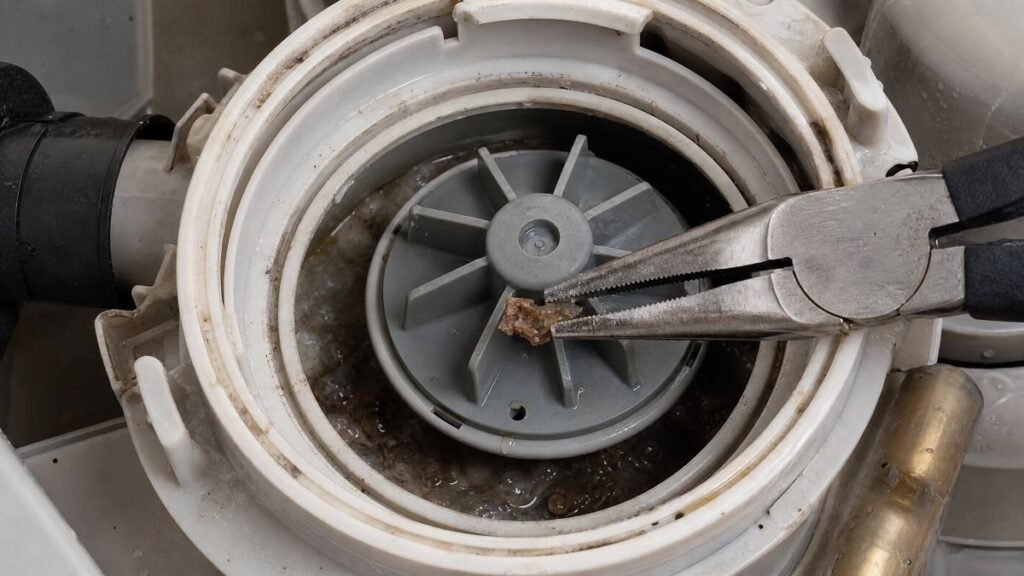
Debris that’s made it past the filter into the sump or pump chamber is a different problem than a dirty filter. The impeller, the blade that spins to move water, can jam on something as small as a seed or a sliver of glass.
A pump that hums steadily but moves no water is a classic sign of a jammed impeller rather than a dead motor. Switch off power and remove standing water first. Some models expose a small pump cover for exactly this check, but only open it if your manual describes it as a homeowner task. If it doesn’t, or reaching the impeller means taking the pump apart, call a technician instead.
If you do have access and see glass or another sharp object, use pliers, never bare fingers. Reinstall the cover securely afterward. A loose cover stops the pump from building the pressure it needs to drain.
7. A Faulty or Burned-Out Dishwasher Drain Pump
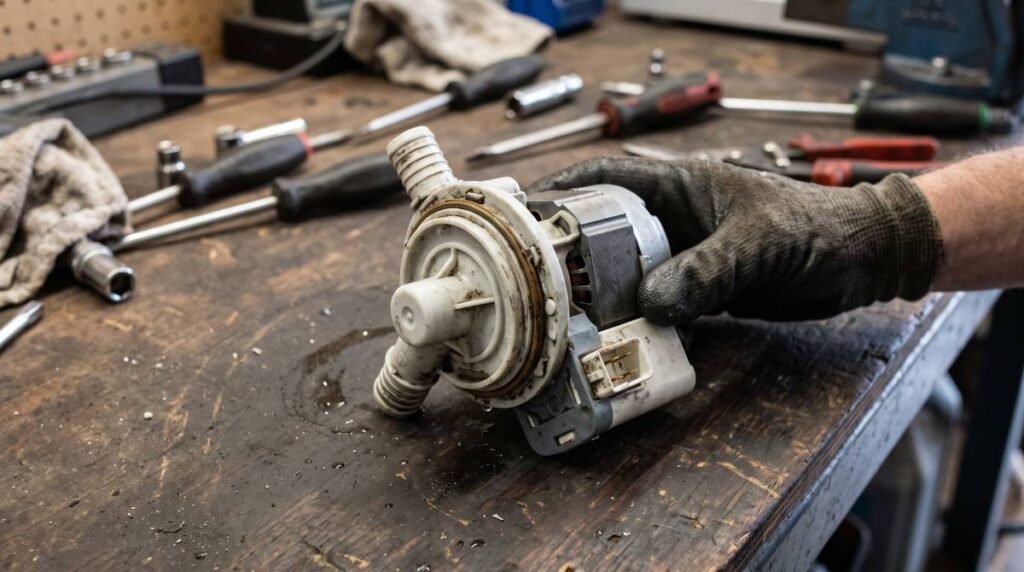
The drain pump actively pushes wastewater out once the cycle calls for it. When it fails, nothing downstream matters.
Watch for a pump that’s silent when it should run, one that hums without moving water, or one making a new grinding or buzzing noise. Water still sitting after you’ve checked the filter, hose, and household drain points toward the pump too.
These same symptoms can come from a jammed impeller or a downstream blockage, so sound alone doesn’t confirm pump failure. Rule out the simpler causes first. Electrical testing and pump replacement are technician-level work.
8. A Stuck or Faulty Drain Check Valve
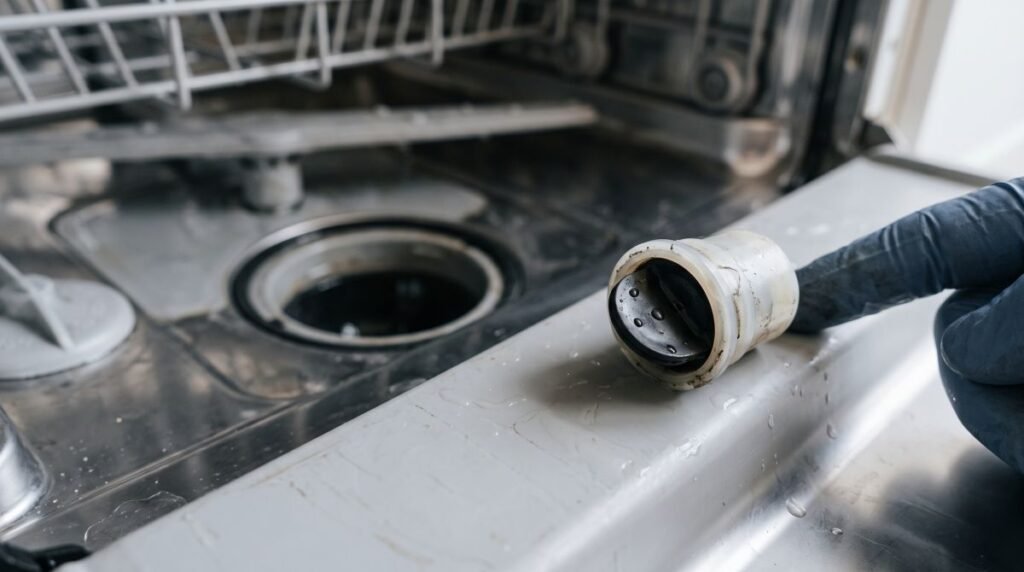
A check valve lets wastewater flow out during the drain cycle, then stops it from flowing back in. When it sticks or gets fouled by debris, water that should have stayed out finds its way back.
The telltale pattern is water that drains, then reappears, sometimes cloudy from already having made one trip through the cycle. That’s different from water that never left the tub, which points to a blockage or pump issue instead.
Valve location varies by model, and reaching it often means getting past internal panels. If a faulty valve is your best guess after ruling out simpler causes, bring in a technician rather than treat it as a weekend repair.
9. A Faulty Float Switch, Water-Level Sensor, or Control Board
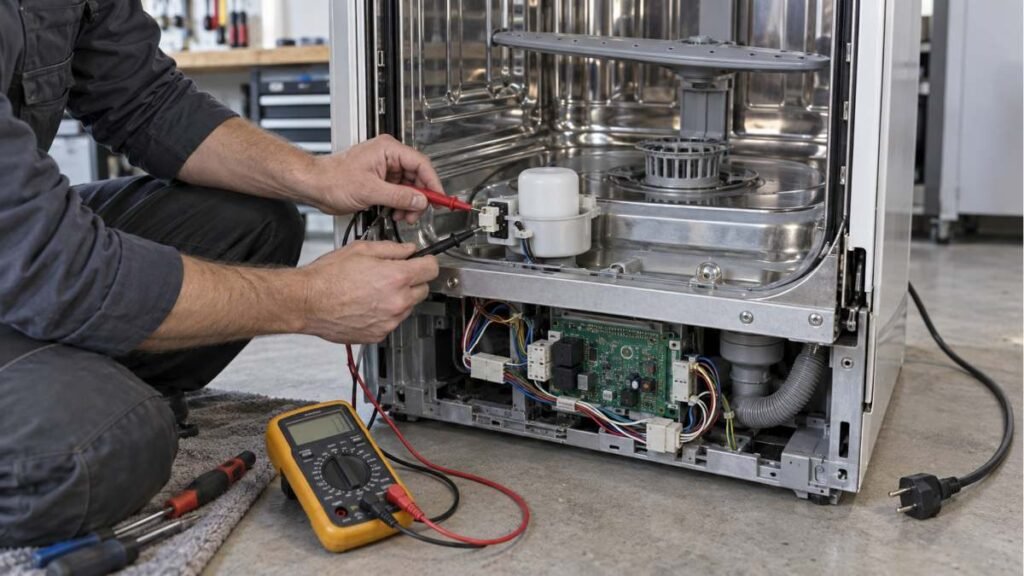
This last cause covers the electrical side, worth ruling out everything above first.
A float switch or water-level sensor tells the dishwasher how much water is in the tub. When it fails, the machine can misjudge levels and interrupt the cycle before draining finishes. A dishwasher that stops mid-cycle, or repeatedly throws a drain error, may point to this fault rather than a blockage.
Error codes differ by brand and model year, so check yours against the actual owner’s manual rather than a generic list. Electrical diagnosis and swapping either component is technician work. A drain error on the display doesn’t automatically mean the control board failed. Blockages and the pump are worth ruling out first.
How to Troubleshoot a Dishwasher That Won’t Drain Step by Step
Work through these in order rather than jumping to the most serious possibility.
- Cancel the cycle, or run the drain function if your model has one, following the manual.
- Turn off power before reaching inside or doing any maintenance.
- Remove standing water with a cup or sponge.
- Pull out and clean the filter.
- Check the visible drain hose for kinks or damage.
- Check whether the sink and disposal are draining normally on their own.
- Inspect the air gap, if your installation has one.
- Look up any error code against your specific model’s manual.
- If water is still sitting there, arrange professional diagnosis.
Don’t keep running a dishwasher that’s humming without draining, leaking, or tripping a breaker. Repeated cycles won’t fix an electrical fault and can make it worse.
Dishwasher Not Draining? Here’s When to Call a Professional
Some of this is safe weekend maintenance. Some genuinely isn’t.
Call a qualified appliance technician if:
- The filter and every accessible part of the drain path are clear, but water is still sitting there
- The pump makes grinding or buzzing noises, or doesn’t seem to run at all
- The same problem comes back after you’ve already cleaned everything
- A persistent error code keeps pointing at a component fault
- Fixing it would mean removing internal panels or testing electrical parts yourself
- There’s a leak near electrical components, a burning smell, or a breaker that keeps tripping
If the sink and dishwasher are both having trouble at once, a plumber may be the better call, since the restriction likely sits in the shared household drain.
How to Prevent Dishwasher Drainage Problems
A few habits catch most drainage problems before they start.
- Scrape large scraps off plates before loading. You don’t need to rinse everything spotless, but bones and big chunks belong in the trash, not the filter.
- Clean the filter at whatever interval your manufacturer recommends, instead of waiting until water stops draining to remember it exists.
- Keep the disposal and sink drain in good working order. A dishwasher only drains as well as what it drains into.
- Check the hose for new kinks after any plumbing work under the sink, since it’s an easy thing to knock out of position.
- Keep grease and large scraps out of the drain system generally, since that’s what narrows hoses and clogs shared lines over time.
Final Thoughts
Before assuming an expensive part has failed, work through the filter, the visible drain hose, the garbage disposal connection, and the shared sink drain. Those four account for most cases of a dishwasher not draining, and none require a technician to check. A pump, valve, or electrical fault that doesn’t clear up after ruling out the simpler causes is worth a professional diagnosis rather than another guess.
FAQ’s
The Author

Muhammad Nabeel Dar is the founder of GarbageWasteDisposal.com, where he researches and evaluates garbage disposals, kitchen sinks, dishwashers, and kitchen drain systems to help homeowners make confident buying decisions.
After analyzing 30+ garbage disposal models, multiple sink configurations, and a wide range of drain system components across brands like InSinkErator, Waste King, Moen, GE, Frigidaire, and KRAUS, he focuses on what actually matters: real-world performance, build quality, noise levels, installation ease, durability, and overall value.