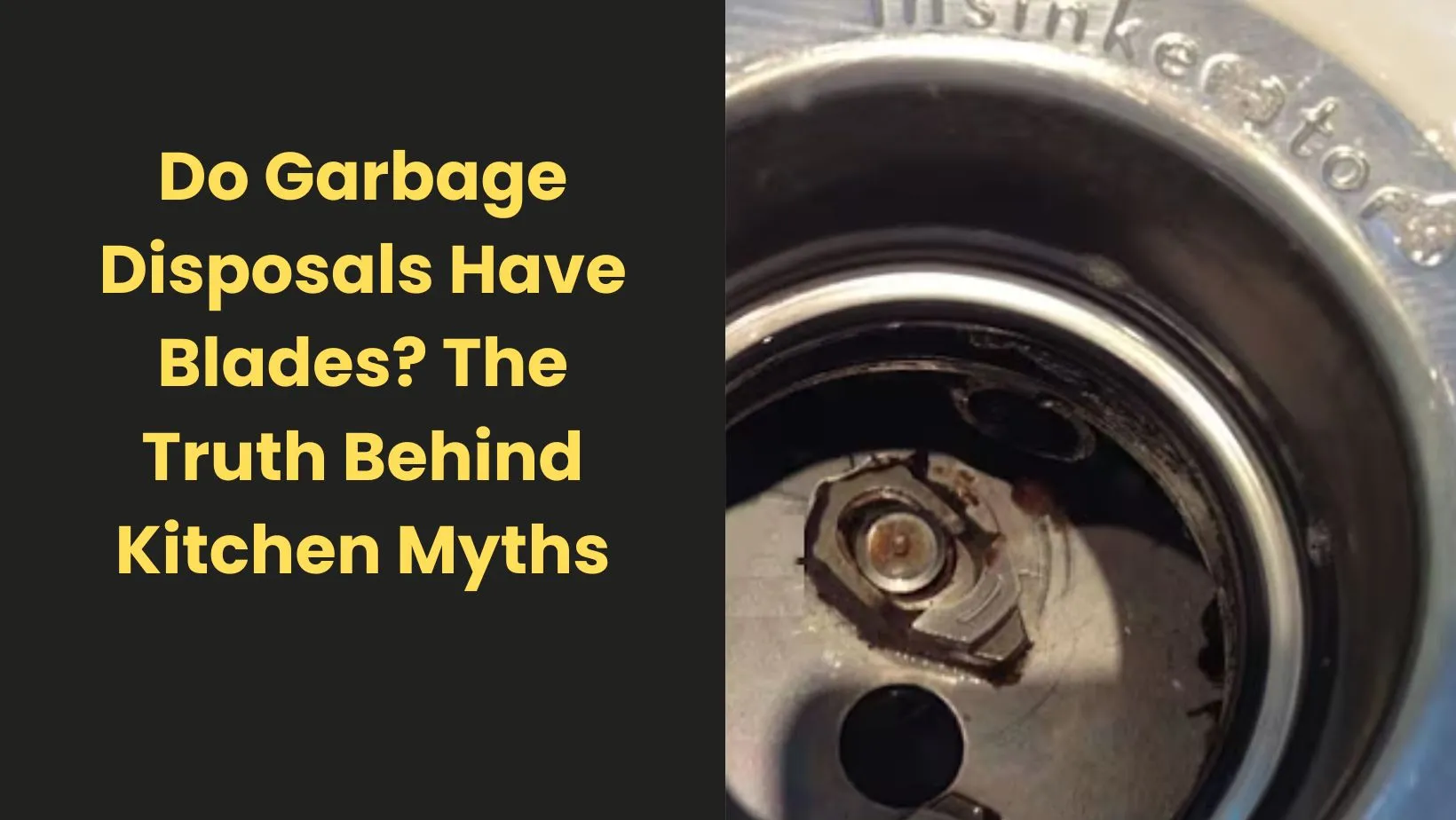
Do Garbage Disposals Have Blades? The Truth Behind Kitchen Myths
Do garbage disposals have blades? It’s one of the most common assumptions — that sharp, spinning blades chop up your food scraps. That’s not how they work at all, and believing this myth leads to a lot of confusion about how disposals actually function.
The truth is, garbage disposals use a different grinding mechanism, not blades. Understanding this helps you use your disposal correctly, avoid damage, and maintain it properly — which we’ll break down step by step in this guide.
What’s Actually Inside a Garbage Disposal
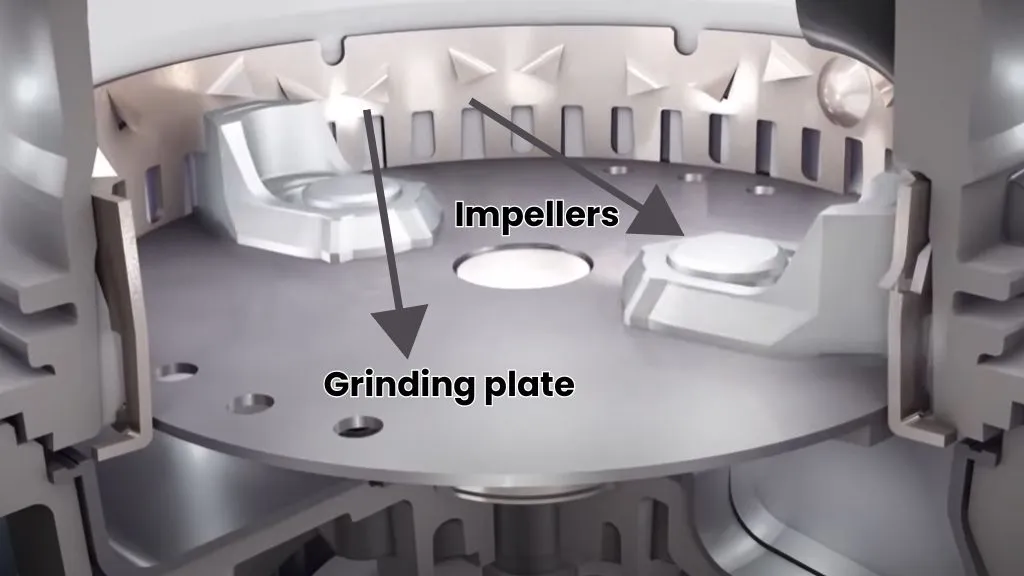
Instead of blades, your disposal uses a system built around centrifugal force. Here are the key parts:
- Grind plate (flywheel): A spinning disc at the bottom of the grinding chamber, powered by the motor.
- Impellers (lugs): Two small, blunt metal pieces mounted on the grind plate. They’re not sharp — they swing freely on rivets.
- Grind ring: A stationary, textured metal ring lining the inside wall of the chamber.
When you turn the disposal on, the motor spins the grind plate at roughly 1,725 to 2,800 RPM (depending on the model). The impellers fling food outward against the grind ring. The ring’s rough surface breaks food down into tiny particles, and water flushes everything through small holes and down the drain.
No cutting. No chopping. Just brute centrifugal force grinding food against a textured wall.
Why This Matters for What You Put inside a garbage disposal
Since impellers aren’t sharp, they can’t cut through everything. Hard, fibrous, or expandable foods create problems because the grinding mechanism relies on impact, not slicing.
Avoid putting these in your disposal:
- Bones (large): Small chicken bones are fine; beef bones and pork chops are too hard
- Fibrous vegetables: Celery stalks, artichoke leaves, corn husks — fibers wrap around the impellers
- Grease and oil: Coat the grind ring and impellers, reducing effectiveness
- Pasta and rice: Expand with water and create sticky clogs
- Coffee grounds: Accumulate in pipes and form blockages
- Fruit pits: Too hard for the impellers to move effectively
For the full list, see our guide on What Not to Put in a Garbage Disposal.
two Common Myths About Garbage Disposals
“Ice cubes sharpens the Disposal blades”
Since there are no blades, there’s nothing to sharpen. Ice does help clean the grinding chamber by knocking food residue off the impellers and grind ring, but it has zero sharpening effect. We break this down fully in Does Ice Sharpen Garbage Disposal Blades?
“A disposal works like a blender”
Blenders use sharp, fixed blades to slice through food. Disposals use blunt, swinging impellers to throw food against a grind ring. Completely different mechanisms. This is why a disposal handles a chicken bone just fine but struggles with a banana peel — it needs hard contact surfaces to work, not soft, flexible material.
Keeping Your Disposal in Good Shape
Since the impellers and grind ring do the real work, keeping them clean and free of buildup matters more than any “sharpening” hack. Here’s what actually helps:
- Run cold water for 15 seconds before and after each use
- Clean weekly with ice cubes and coarse salt to scrub residue off internal surfaces
- Freshen monthly with citrus peels or baking soda and vinegar
If your impellers feel loose or the disposal vibrates excessively, the mounting hardware may need attention. Check our guide on Fixing Loose Garbage Disposal Blades (Impellers) for step-by-step help.
The bottom line
Garbage disposals don’t have blades. They use blunt impellers and a textured grind ring to pulverize food through centrifugal force. Understanding how the system actually works helps you use it properly, avoid jams, and skip the myths that don’t help.
FAQ’s
The Author

Muhammad Nabeel Dar is the founder of GarbageWasteDisposal.com, where he researches and evaluates garbage disposals, kitchen sinks, dishwashers, and kitchen drain systems to help homeowners make confident buying decisions.
After analyzing 30+ garbage disposal models, multiple sink configurations, and a wide range of drain system components across brands like InSinkErator, Waste King, Moen, GE, Frigidaire, and KRAUS, he focuses on what actually matters: real-world performance, build quality, noise levels, installation ease, durability, and overall value.